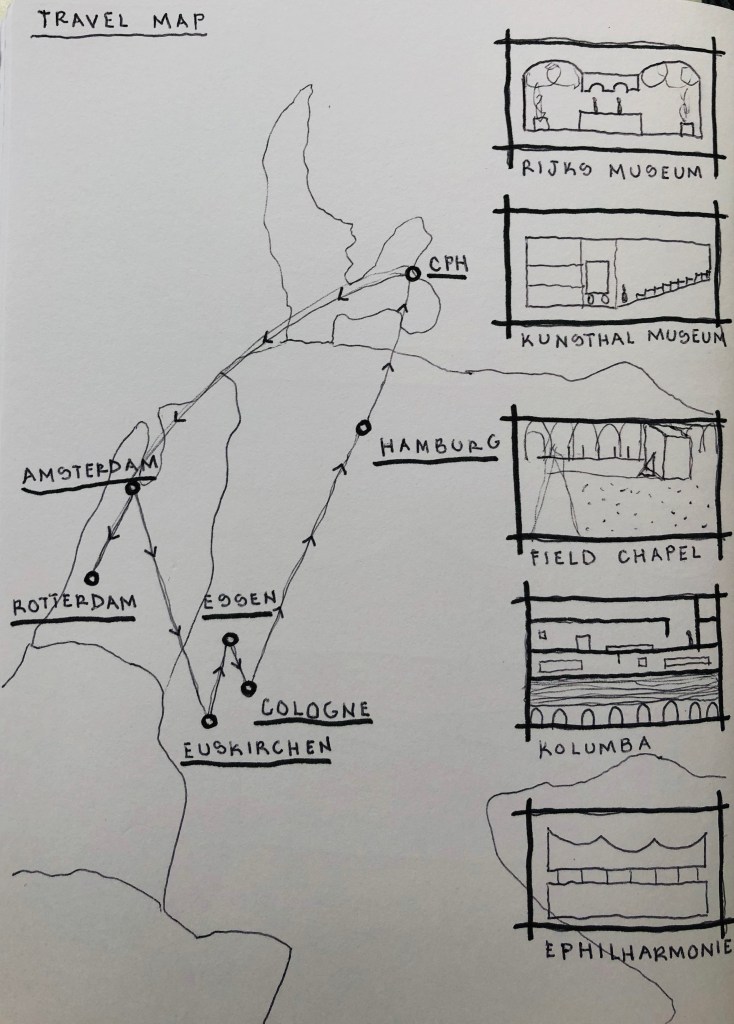
See the above map that shows my route across the Netherlands and Germany.
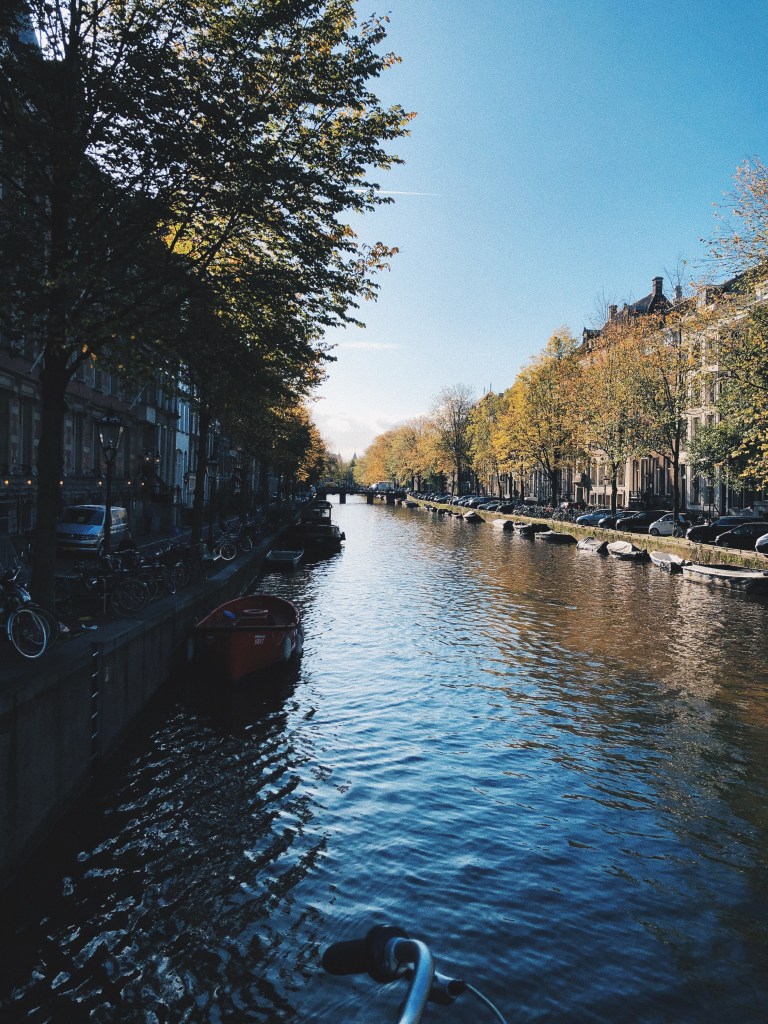
Our first stop was in Amsterdam. During our time there, I spent the majority of my time marveling at the canals and narrowly dodging bikers, as they aggressively pedaled down the cobblestone roads.
Amsterdam Canals
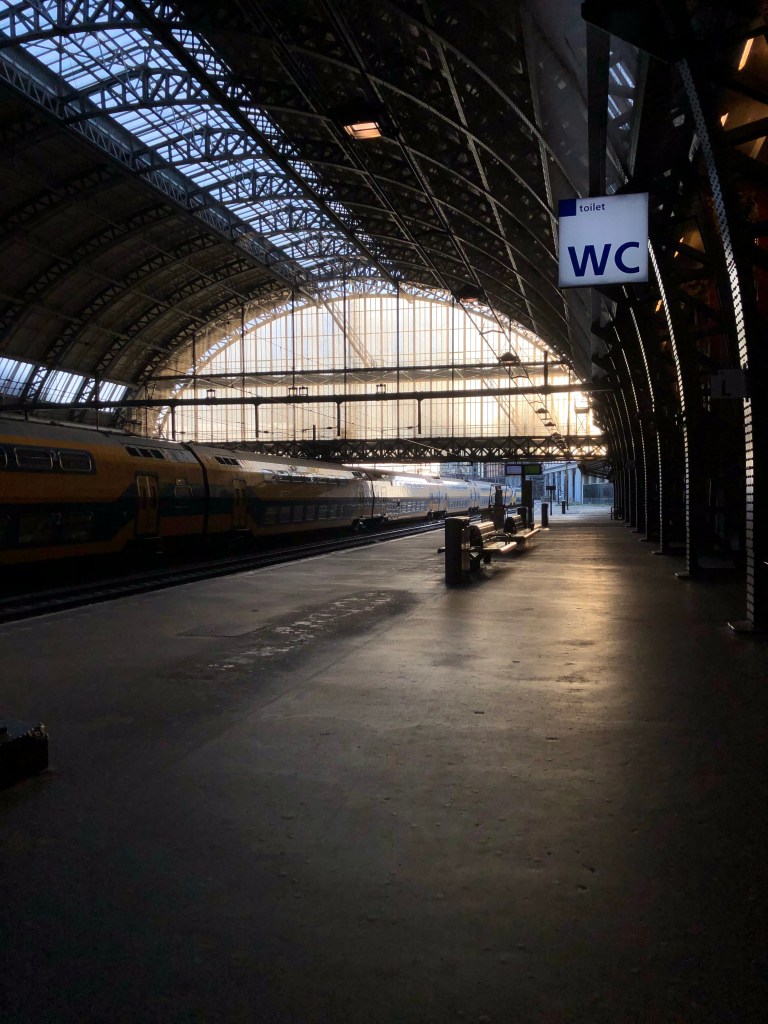
Amsterdam Central Station
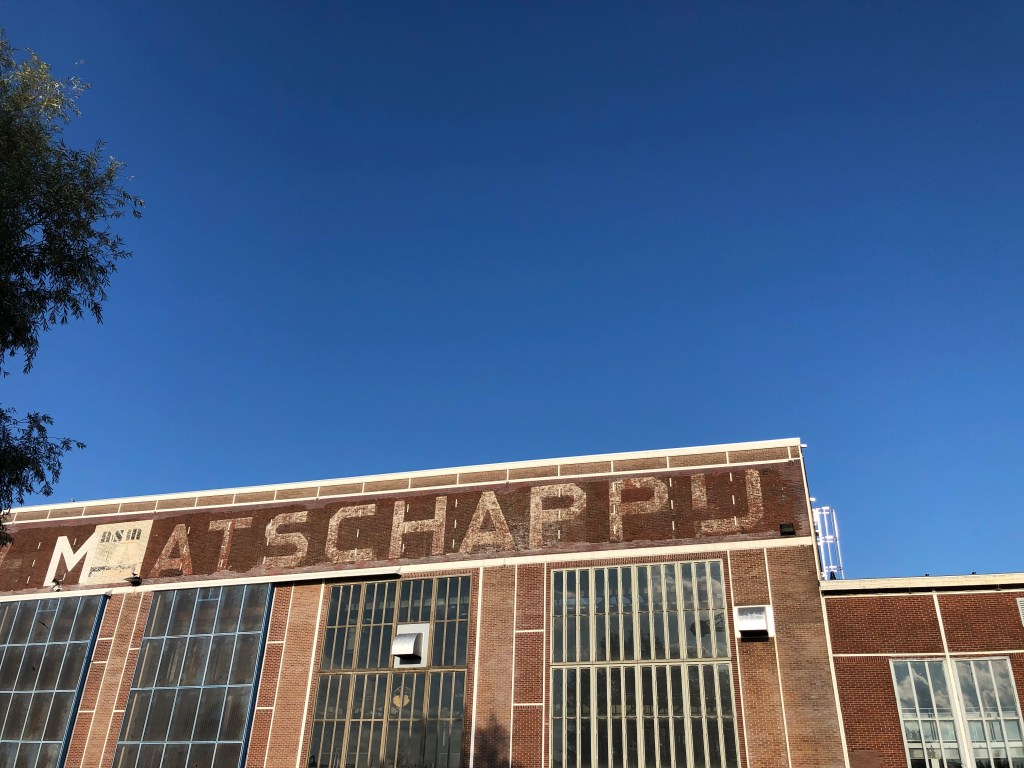
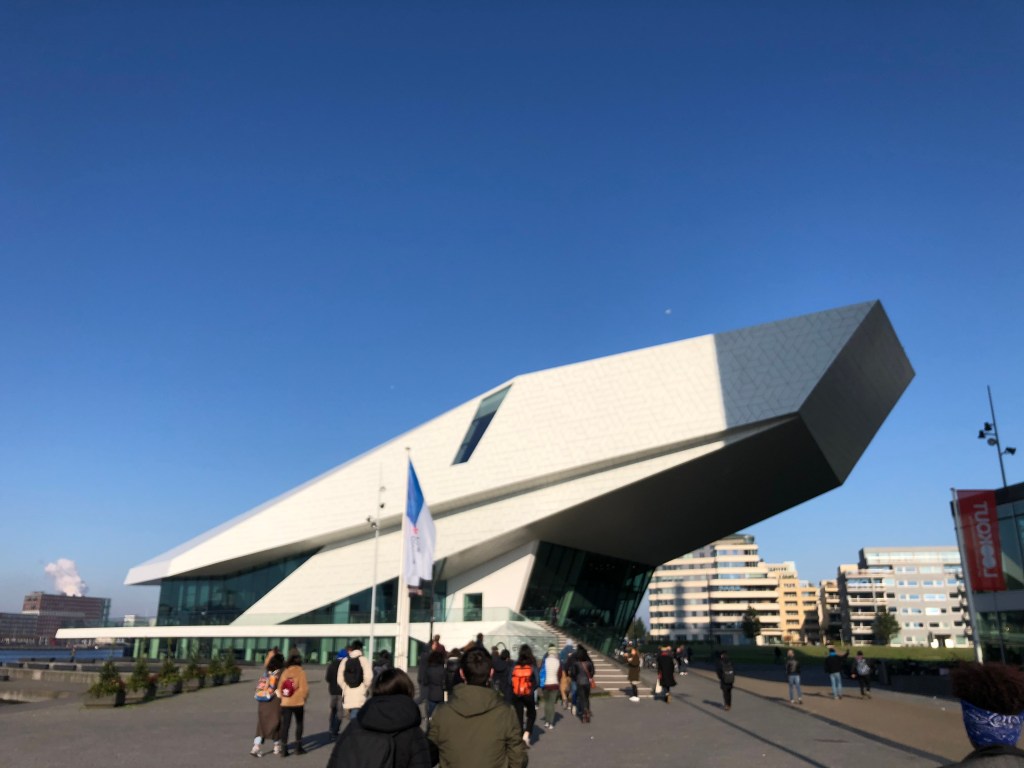
EYE Film Institute, Amsterdam
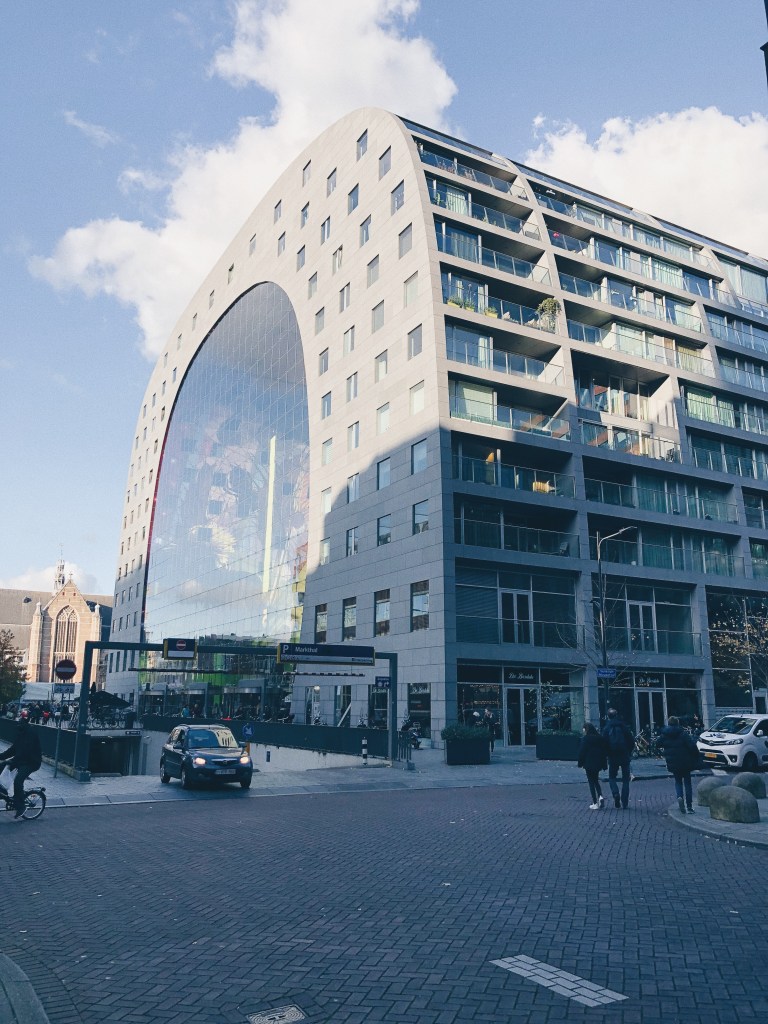
Our second day we visited Rotterdam, one of the more modern cities in Holland because most of the harbor was bombed by the Nazis during WW2. A controversial project that we visited is the Markthall, originally a local farmers market run by small scale family businesses on the central plaza. In its place now sits an enormous enclosed plaza with expensive penthouse housing along the exterior. While the form of the building is rather unique, the change in character of the neighborhood is unavoidable.
Markthall, Rotterdam
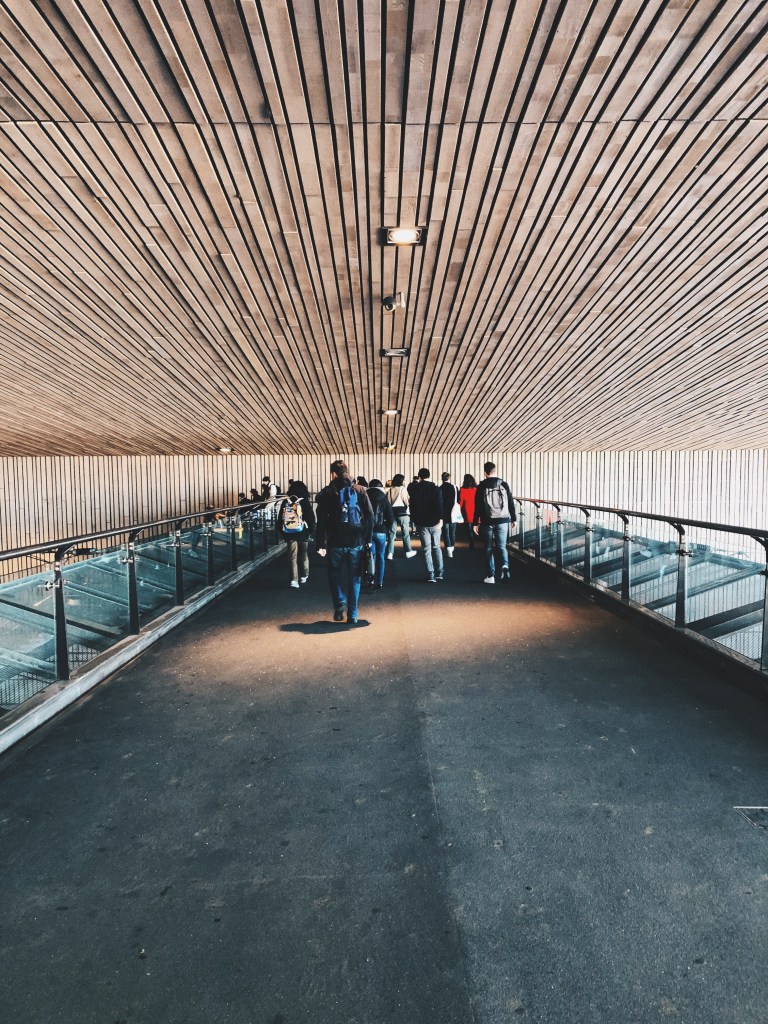
My class walking through Rotterdam Central Station
The highlight of my visit to the Netherlands was visiting the Anne Frank House. It was one of the most sobering visits of my life. I distinctly remember thinking, this house doesn’t feel that old. And then the reality fully set in that the Holocaust occurred 75 years ago. Truly an impactful visit. (The museum asked us not to take any photos.)
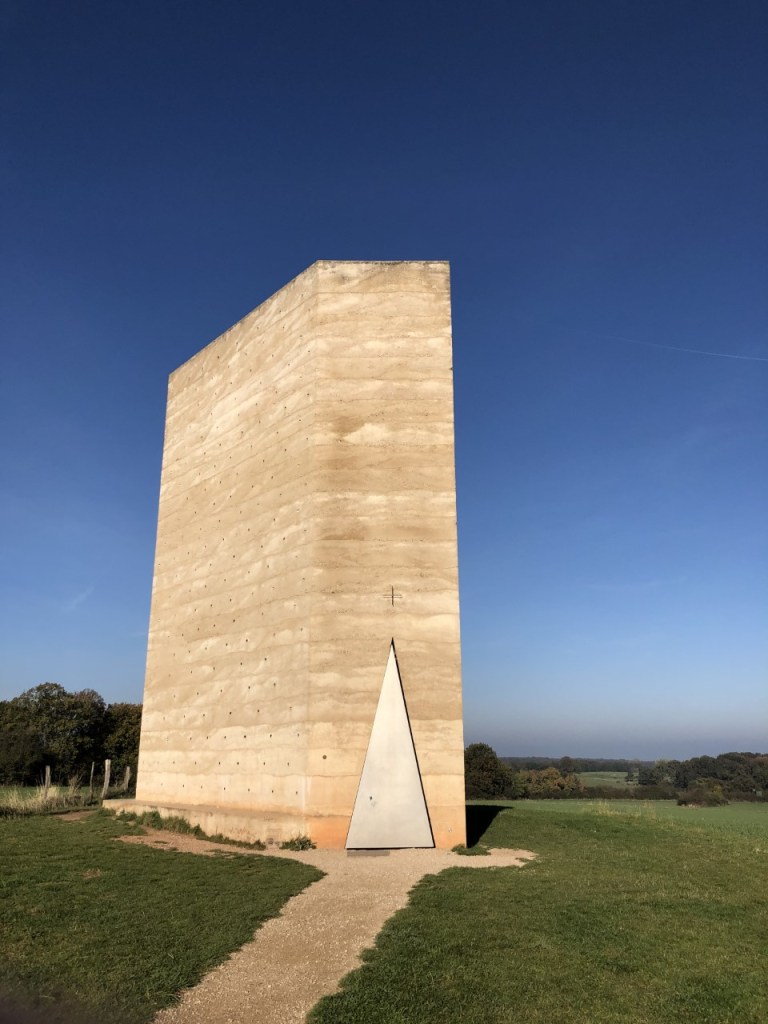
The highlights of my visit to Germany was walking through the spaces designed by one of my favorite architects, Peter Zumthor. Born and raised in the world of Scandinavian design, his work has been praised for integrating local materials and workmanship. The first project we visited was a chapel out in the middle of a hill.
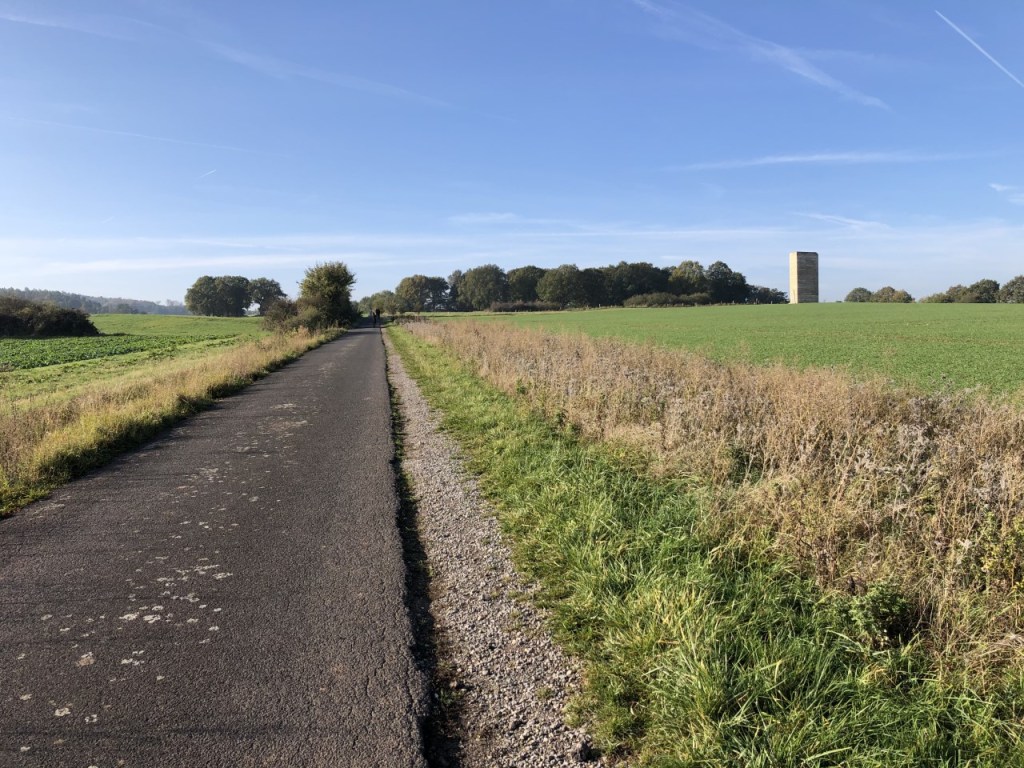
Below are some photos of the approach towards the building where it starts as part of the forest and slowly takes form. Also below is a photo of the interior from the internet as we weren’t allowed to take photos inside. The walls inside were poured by a local concrete craftsman and then burned to give it the color.
Approaching the Brother Klaus Field Chapel, Germany
Brother Klaus Field Chapel, Germany
Field Chapel Interior
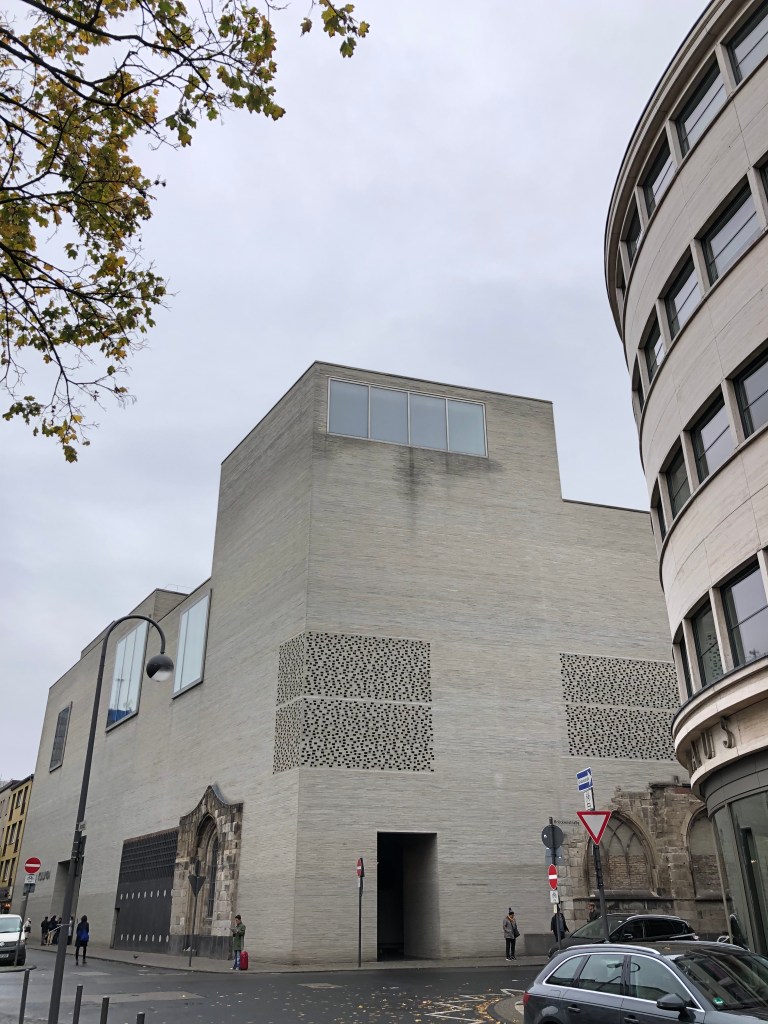
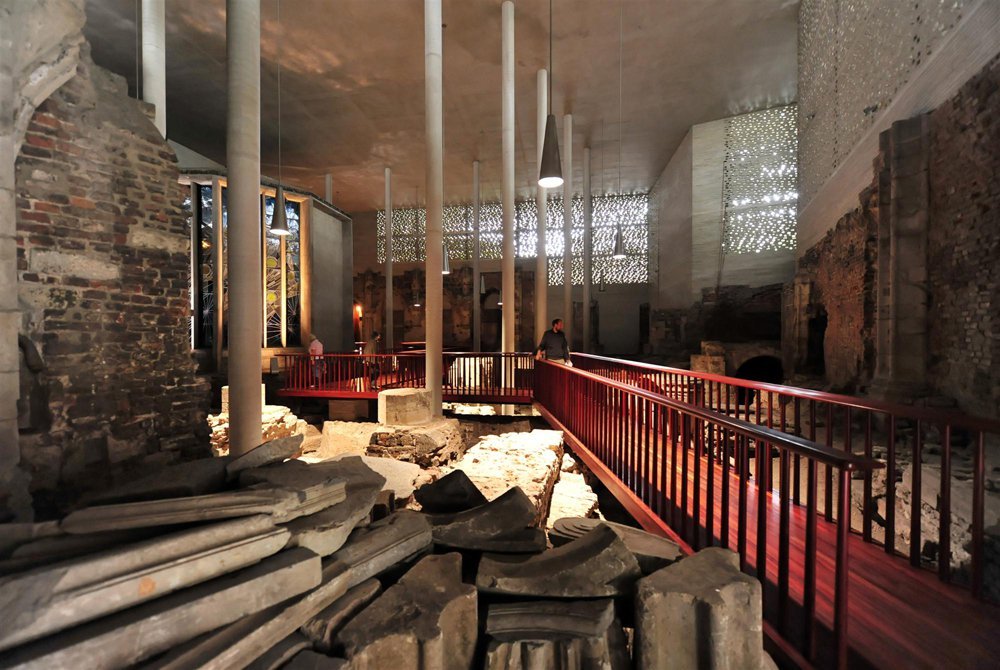
The other Zumthor project we visited was the Kolumba Museum in Cologne, Germany. This was truly a mesmerizing experience as I’ve studied the project in class multiple times, but finally had the opportunity to walk through itself. It was breathtaking. The project is built over a set of Roman ruins that is an archaeological site and integrates with ruins from WW2 bombing. A truly stunning building.
Kolumba Museum, Cologne
Yes, I’m a nerd for superb brickwork.
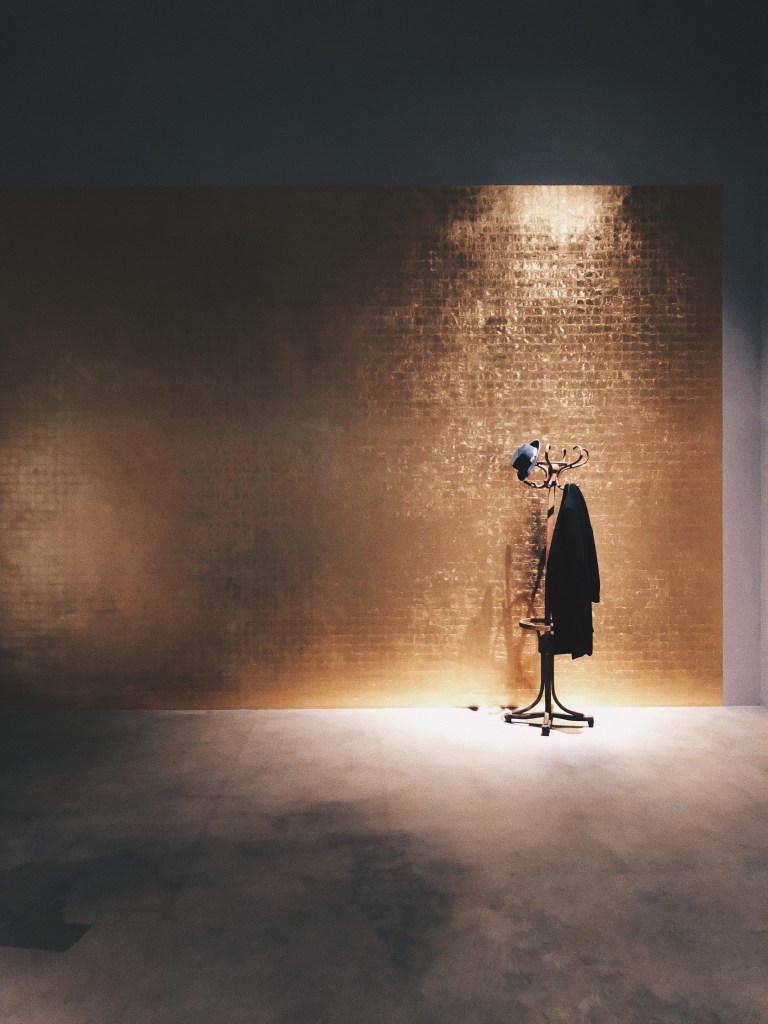
An art exhibit within the Kolumba Museum
The ruins housed beneath the Kolumba Museum
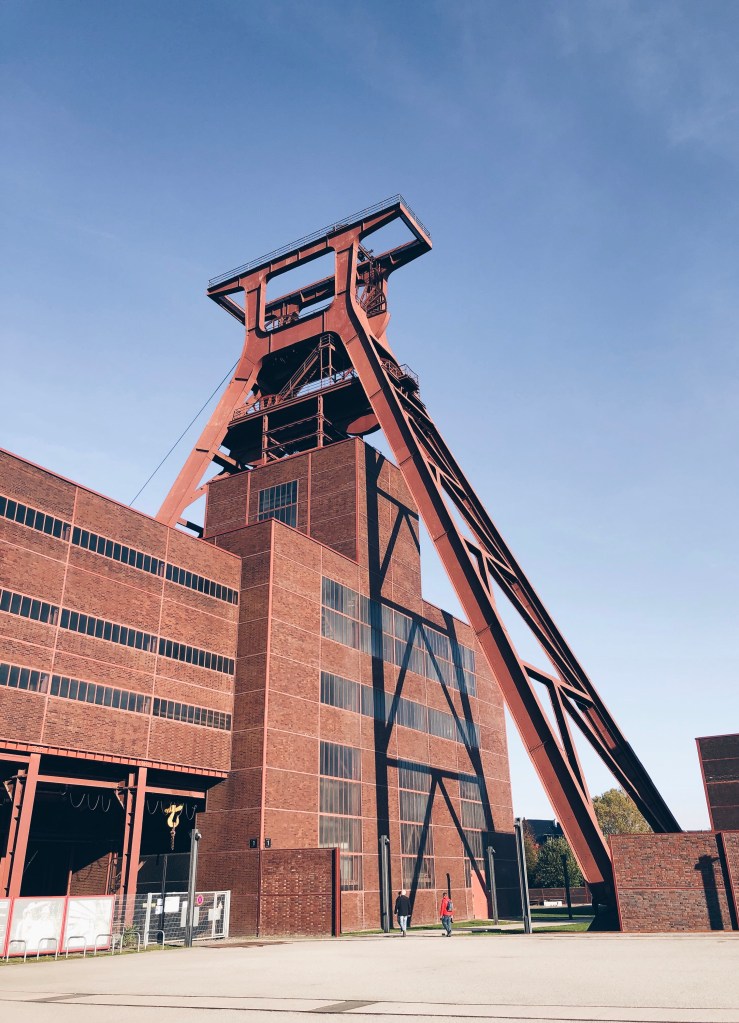
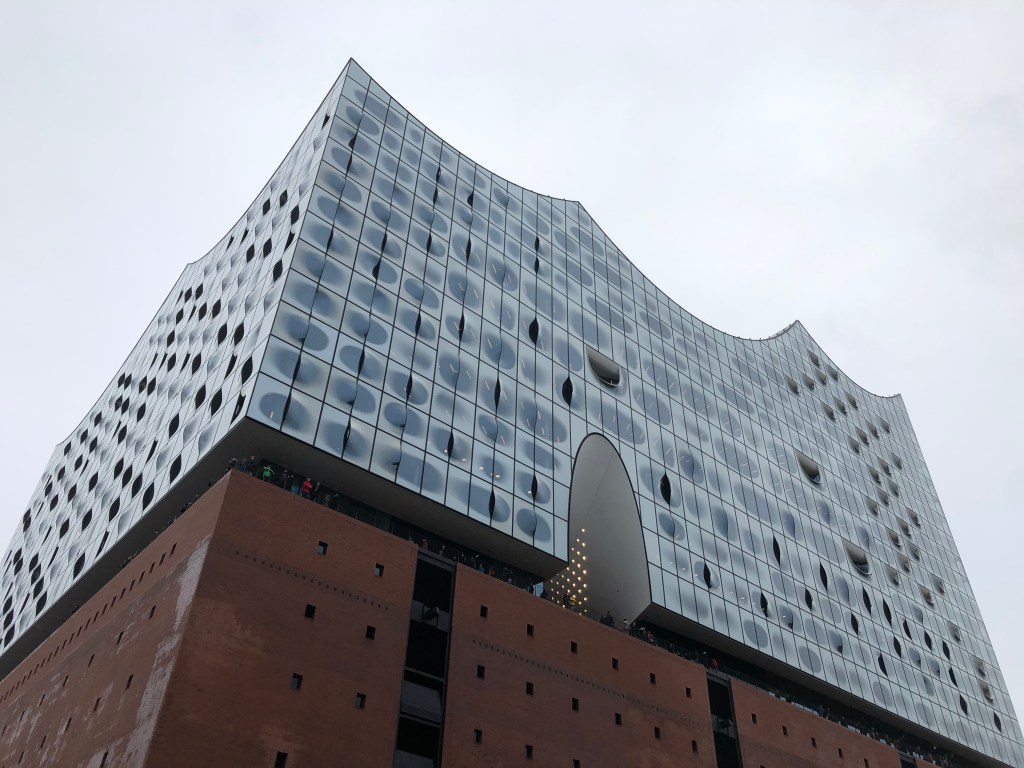
Some other projects we visited included Essen, a preserved coal mining site, the Cologne Cathedral, and the Ephilharmonie, a striking adaptive reuse project in Hamburg.
Essen, Ruhr
Cologne Cathedral
Ephilharmonie, Hamburg
My thoughts in the middle of the trip: During this week I got my next major taste of culture shock when we left Amsterdam at 6 am and I woke up in Germany at 10 am. I entered a gas station still half waking up and realized that fewer things were in English, fewer people spoke English, and I had to pay to use the bathroom. I’ve since grown a little more accustomed to the newness, but have found myself yearning for “home” in the comfortability of Copenhagen.
Upcoming Highlights: My host family and I will watch the Denmark vs Gibraltar game on November 15. If Denmark wins, which they are heavily favored to do, Denmark will qualify for their group for the EUFA EURO 2020. Stay tuned for that story/cultural experience!
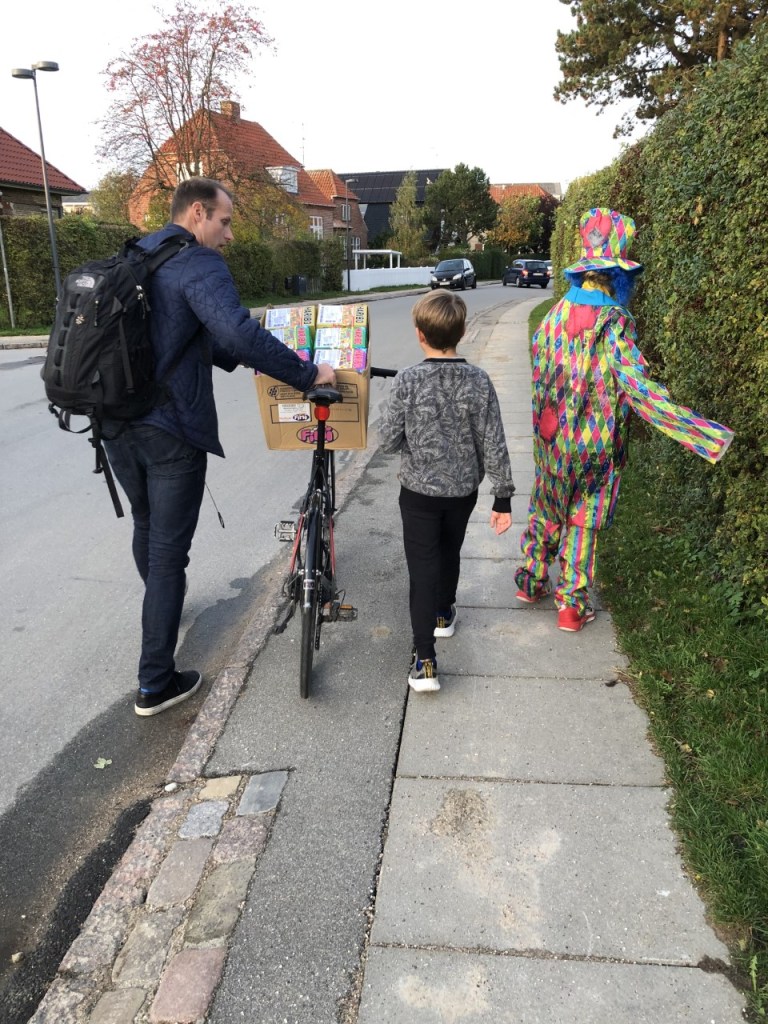
My host dad John carrying 2,000 bags of gummy bears, Felix without a costume, and Freja dressed up as a clown.
“Hej, my name is Alvin and I heard you speak English. Would you like to talk to me? I love to speak English. I learned everything I know from YouTube. Wow, this is so cool to meet you!”
– Freja’s friend, Alvin (11 yrs)
This weekend, I got to experience Danish Halloween and meet Alvin. Both are competing for highlight of the weekend, although Alvin will probably take the cake. Allow me to explain.
The neighborhood that I live in hosts a Halloween carnival the Friday before Halloween every year, and my host family has a tradition of having dinner before it with their family friends and then taking their kids out to get candy. I was invited along, and happily agreed to come. Free food, wine, candy and cake? How could I say no?
My host parents mentioned that their family friends had a son that was in class with my host sister Freja and that he was excited to meet me, as he spoke pretty good English. This was an understatement. He was ecstatic to meet me, and from the moment he introduced himself to the moment we said goodbye, he made only like 5 mistakes. I was floored, but also loved it because my host siblings don’t speak English yet, so it was amazing to have a full blown conversation with someone their age.
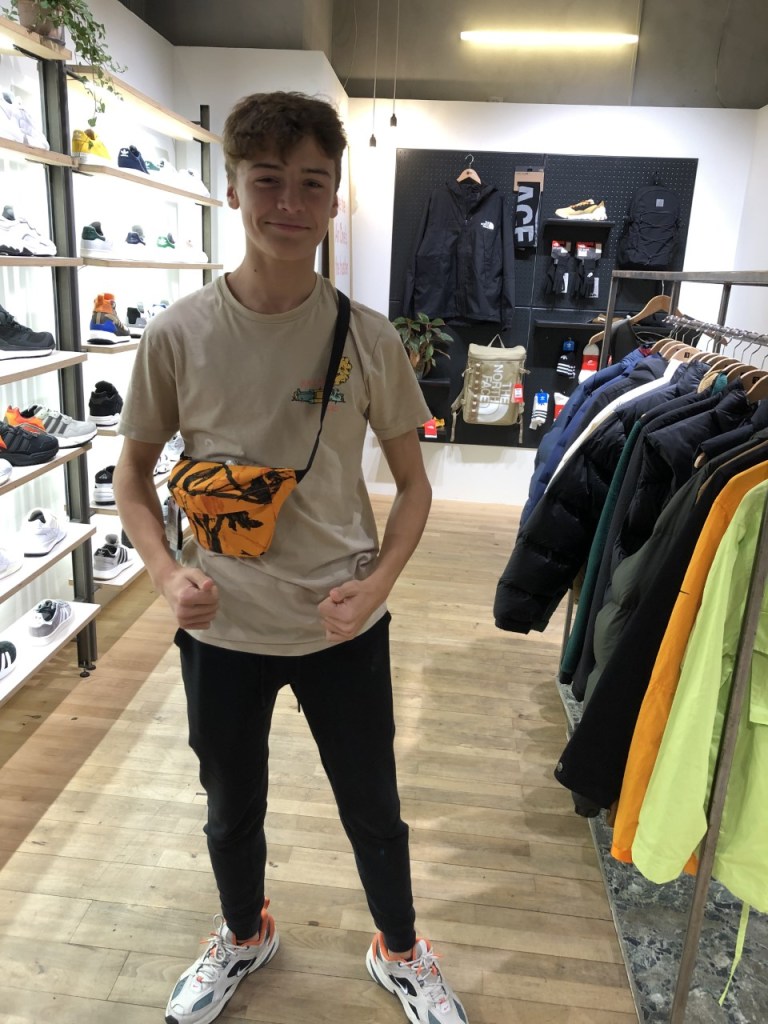
It quickly became apparent that he was an up-and-coming hype beast. I’ve provided a link to Urban Dictionary’s definition, but you’ve all seen a hype beast before. They’re the kids wearing a pair of Jordan’s, sweatpants, and a Supreme sweatshirt with a fanny pack clipped over the front. Here’s a photo of my cousin Pablo demonstrating:
Pablo
I found it wildly entertaining. Although I don’t know much of the clout culture, my brother has made sure to provide a foundation education, so I was able to keep up with Alvin as we spent an hour discussing the trends of Supreme clothing and the street-wear fashion culture in America. The part I was most impressed by was the fact that he totally kept up with my language level! He understood 99% of what I said, even with some complex things, and he only had to pause once or twice to ask his mom to translate a word into English. I was thoroughly impressed.
We also had an interesting discussion about Danish education when he revealed that he was word-blind. At first I didn’t understand what he was saying, and then I realized that he was explaining that he is dyslexic. So he’d much rather watch YouTube videos and listen to them talk in English than read books in class because it’s so much harder for him to learn that way. First off, mad respect to Alvin because he totally applies himself in school even though it’s harder for him than his classmates. Second, I told him that it was awesome that he was finding other less conventional ways to learn, and he said that his school was working with him to help him learn more smoothly.
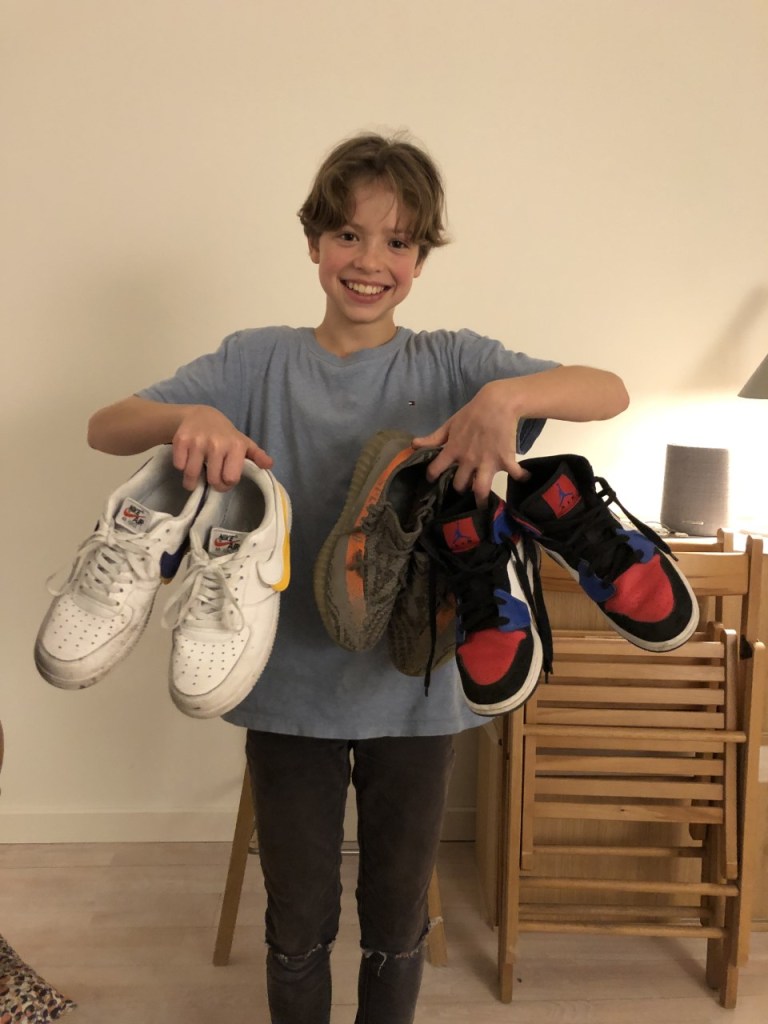
Alvin showing me his shoe collection
Later that night, we went out to the fair, which was such a cool cross cultural experience. Alvin made sure to translate anything he could for me, but so much of it was familiar to me. I saw children dressed up as their favorite characters, heroes, or scary villains running around with plastic bags screaming, “slik eller ballade“. Which translates directly to “candy or trouble“, but is the Danish version of trick-or-treat. It instantly filled me with nostalgia and reminded me of the nights that I would go trick-or-treating in my neighborhood. Wow. Crazy that I could be filled with nostalgia in a different country in an unfamiliar neighborhood, but a very familiar activity.
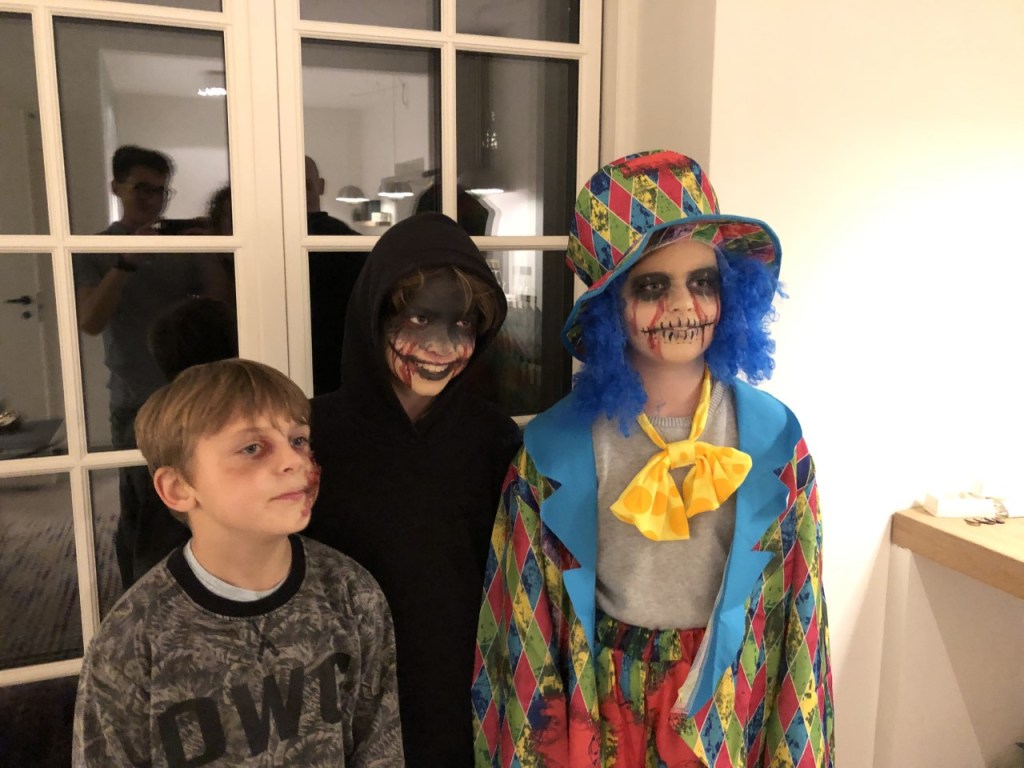
Freja the clown, Alvin the Pennywise from It, and Felix.
As I mentioned in my previous post, I’ll be in Germany and the Netherlands next week, so stay tuned for all the photos to come!
“Oh my gosh, it’s Flying Tiger!!! I’ve missed it so much, I need to buy all the things!!!”
– Taylor
Two weeks ago, my girlfriend Taylor came to visit me for my week long break from school! It was truly a dream. We spent 6 days in Copenhagen/Sweden and 3 days in Scotland. Traveling to Scotland was truly incredible as I got to see the world where Taylor studied abroad last year. We spent a day in Edinburgh, but we spent most of our time walking through St. Andrews so that she could reminisce and show me how this place had deeply transformed her life.
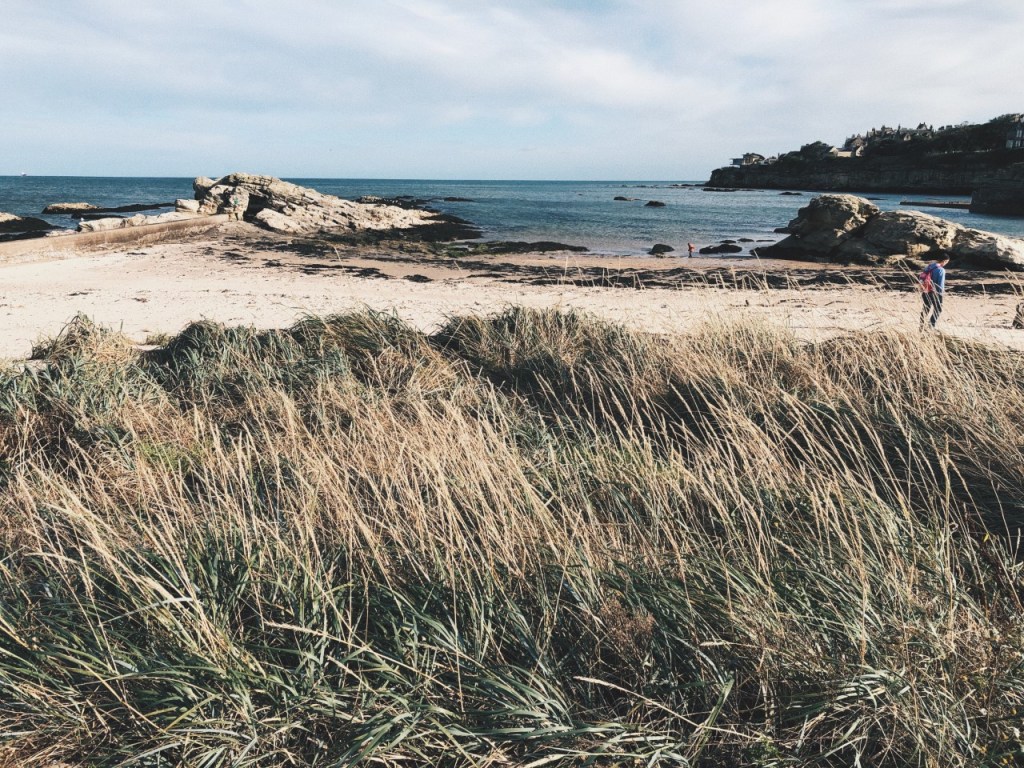
One of Taylor’s favorite places to spend her time was this quiet, hidden cove/beach where she spent hours reading, journaling, and reflecting. When she took me down some stairs to it, I instantly fell in love too. We sat on a rock for half an hour, just being together. So nice!
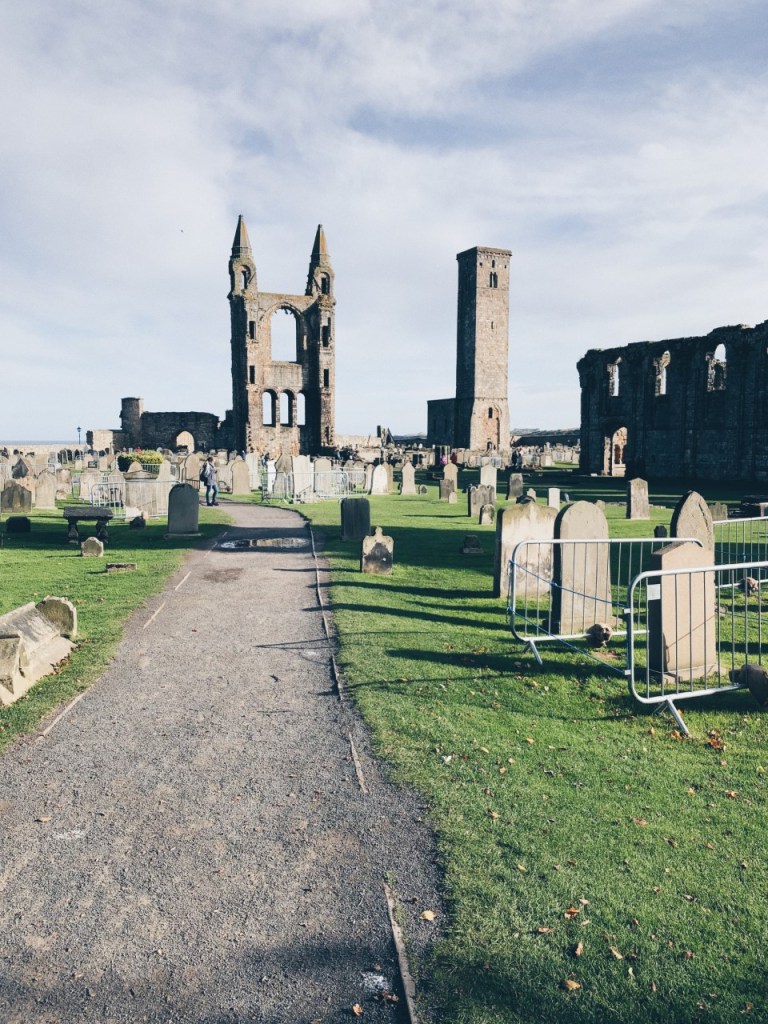
She also made sure to pander to my architecture nerd side and showed me some amazing ruins! One of the oldest churches in the area is nothing but a couple of walls now and a ton of gravestones. It was wild to stand on the site and imagine what life was like 500 years ago! That said, I’ll stay in the present with my iPhone and indoor heating, thank you very much.
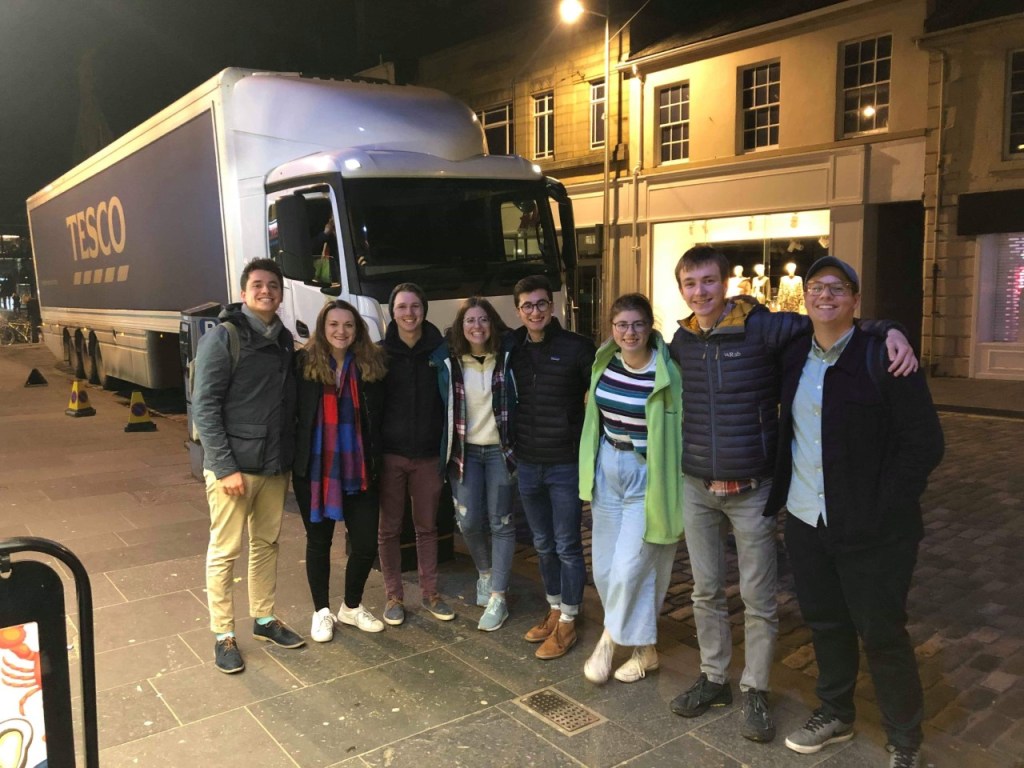
However, the highlight had to be our last dinner in St. Andrews where I got to meet her best friends from her time abroad. We had fish and chips at a local restaurant and we spent the night catching up on life updates. It was so much fun to watch her light up as she was clearly among people that mean the world to her!
Unfortunately, as with all great times that we have, Taylor and I still live the long-distance life, and have to say goodbye when our time comes to a close. Although this goodbye wasn’t as hard as when I left the states in August, it still sat with me, and I definitely have found my homesickness coming in stronger waves now.
The last two weeks have been a bit rougher as a result, but I’ve responded by leaning into my host family and friends. I expected the feeling to come a lot sooner than it did, so I’m happy for that. That said, I definitely am working to balance thinking about home and talking with friends with engaging in activities here in Copenhagen. I’ve found my moments of quiet and alone time to be more important and ever to carve out space for me and my needs.
Next week is my other study tour with DIS, which will also be a nice way to keep myself focused on something else rather than missing home! My group will be traveling to the Netherlands and Germany, with stops in Amsterdam, Cologne and Hamburg. I’ll be sure to share photos after the trip is over!
For those of you who stayed to the end, here’s a list of the things that I’m missing most from home in honor of homesickness!
Driving my own car! (Wow I did not expect this one as much as I feel it now. Public transportation is incredible and all, but I can’t wait to jump in my car and drive somewhere. Traffic included!)
My mom’s Korean food. (My host family actually found a solid Korean restaurant in my neighborhood, but my goodness am I still craving my mom’s cooking.)
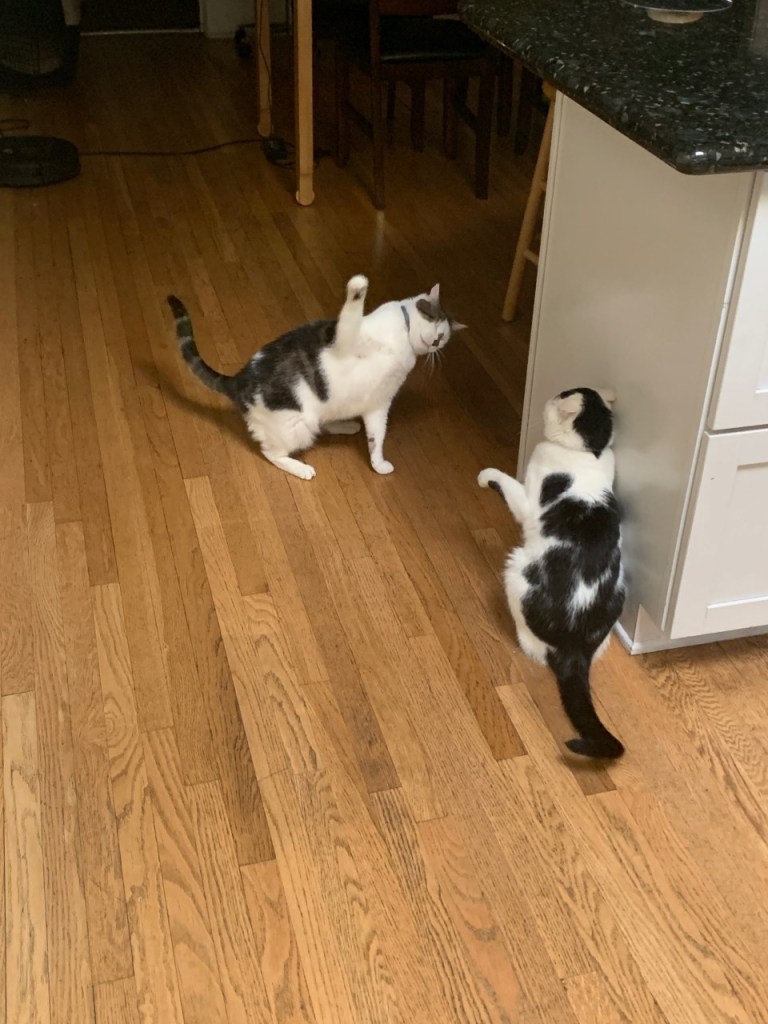
My cats and my dog. (Mojo, the dog here with my host family, is great and all but I miss my little rascals. Here’s a picture in their honor.)
Koala prepping to take a swing at Polar Bear. Photo creds to my mom.
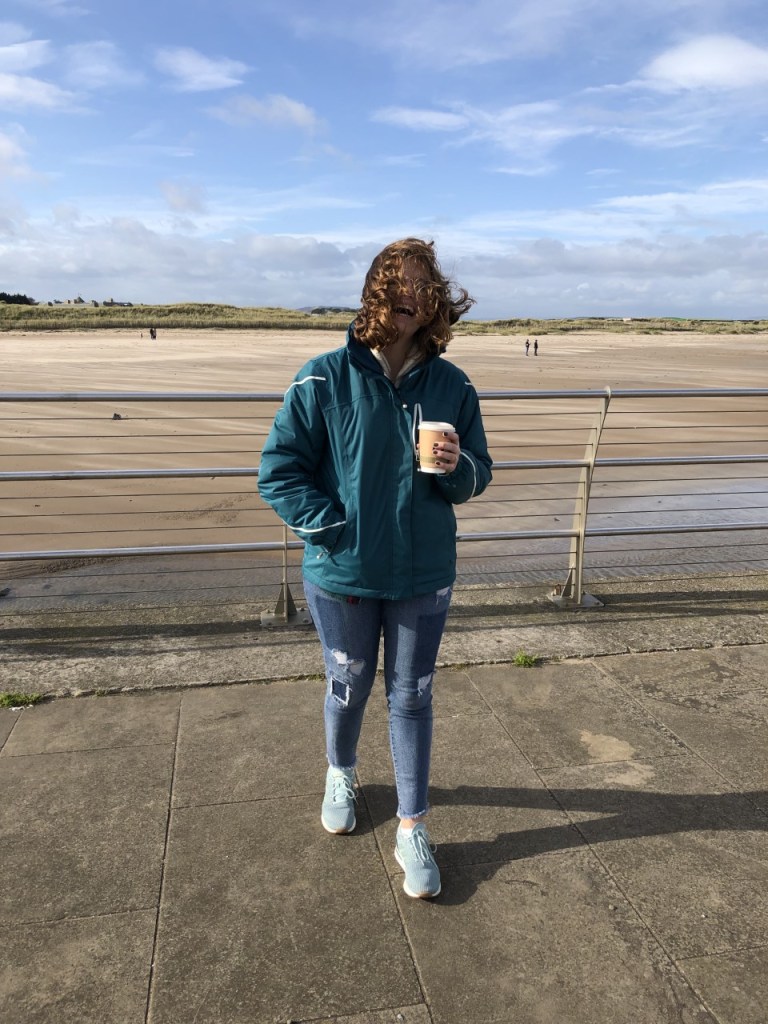
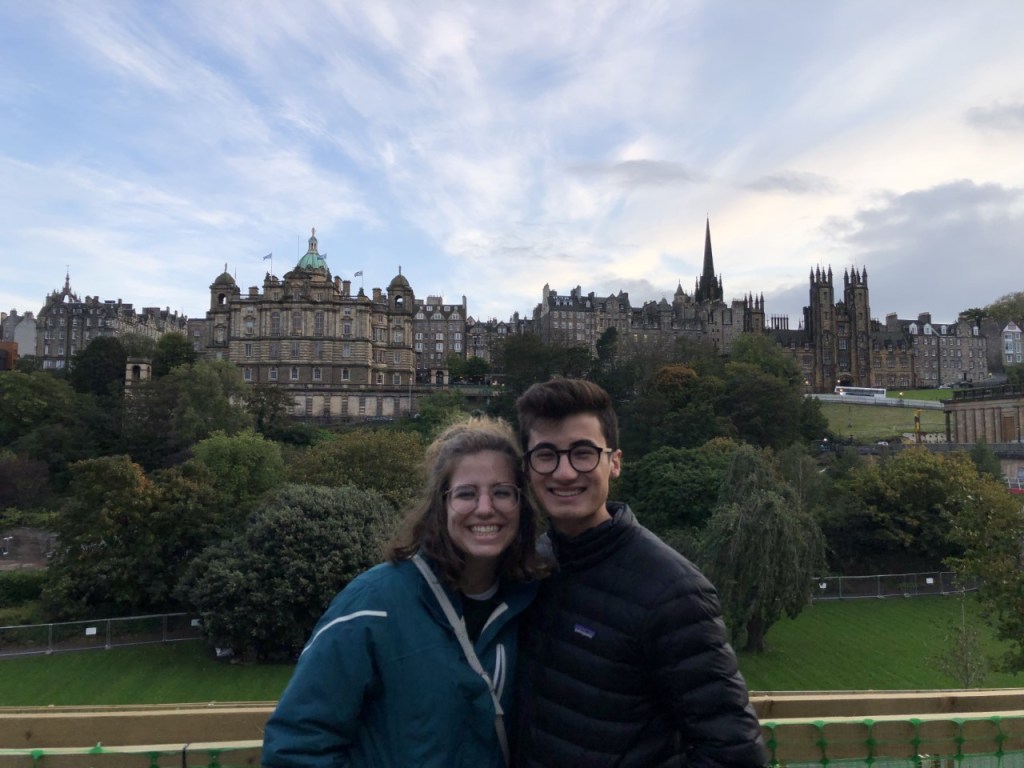
annnnnnnnnnnnd of course Taylor, my family, and my best friends from home. (Here’s a windy photo from our time in Scotland to remember the great times!)
A satirical post in response to President Trump’s offer to buy Greenland from Denmark.
A quick warning! This blog post is part of content for a class for my host university. It will be a little more analytical and a lot longer. However, if you are interested in cross cultural interactions, you might find this engaging! Just a heads up.
Observe the student/teacher relationships.
One of the selling points of DIS was the fact that all professors who are teaching at DIS are also actively working in their field as well. As an architecture student, this isn’t as unusual because most architecture professors run their own firm on the side. However, for other studies, this is a huge selling point. It means that your business professor is actually a consultant for Carlsberg or your “Complexity of Cancer” professor is actually an oncologist.
As a result, there are no official office hours. Most of the time, professors are at DIS to teach their class and then are back at work 30 minutes later. However, while not physically accessible, they are incredibly responsive via email, and are more than willing to meet up and fit you into their busy schedule. I’ve been impressed with the wide range of hats that DIS professors wear. And instead of being annoyed with the professors working off campus, I’ve found it more similar to office environments where scheduling is crucial to working within people’s schedules. In this way, DIS professors are incredibly accessible.
In the classroom, class sizes are around 10-20 students. Discussions occur in every class meeting and you are expected to come to class with questions and thoughts prepared. I’ve found myself learning from my classmates as well as my professors. Professors and students are on a first name basis, creating an informal and comfortable environment that remains incredibly professional. Which I’m just now realizing how impressive that is. DIS professors dance the line of comfortable but professional, and they do it well.
Furthermore, all ideas are on the table, as long as they are backed up with a sound argument. If you make a claim without backup, you won’t be retributed, but your idea won’t hold weight against the others being discussed. And professors aren’t above this either. They are just better than us at defending their claims, but they invite us to challenge their ideas. This is a point that differs to my host university, where all ideas are on the table whether or not they can be proven. I think I like the DIS professor approach better.
From the short amount of time that I’ve been learning from Danish professors, I have found that it fits my learning style well. I need a more comfortable and informal discussion that remains professional and civil because the other students adhere to the guidelines. I also appreciate the openness to well-founded arguments, and that all ideas are on the table as long as you can defend them. This is pretty similar to Tulane’s approach to in class learning, although some unfounded ideas will still get airtime. Still, it was a pretty smooth transition into this new classroom experience.
Watch local TV or read a local newspaper with a host country national.
Almost every night my host parents and I will discuss a new topic of politics or other area of life. Typically after, we will watch the local news and they will interpret the Danish and explain why the background to a policy or event. It has been fascinating!
Political discussions are wildly different in Denmark. Whereas politics in America are polarizing, ostracizing and taboo in almost all settings, the Danes love to converse about it with almost anyone. On the second or third day of my time in Copenhagen, they asked me what my thoughts on gay marriage were and I almost spit out my water. However, it raised a lively discussion that I thoroughly enjoyed and from there it has been a refreshing change in our household!
I make the comparison to political conversations in America in order to deconstruct my understanding of what is culturally appropriate when it comes to discussing politics. To quote our reading directly: “Constructivism is the framework that our understanding of new experiences is built on a foundation of the familiar, what we already know.” It has been fascinating to take my understanding of American cultural values when it comes to discussing politics and turn it on its head.
One of the go-to news networks for my host family is DR (Danish Broadcasting Corporation), which is a relatively objective, moderate news source known especially for its thought-provoking debates and documentaries. We’ve watched on multiple occasions, but the most recent was an evening programming this last Thursday. One of the things that my host parents have emphasized is that the news and politics are decidedly less polarized than in America.
While there are the figures that have been relegated to the outskirts of politics, including a politician that arrived at Parliament wearing a suit made from pig skin, the majority of politicians are amicable and productive no matter their political view. Conservative, liberal, and moderate come together to discuss issues. They may disagree on how to arrive at solutions, but many of the most debated topics, such as health care, welfare, and education, are understood to be crucial to the health of Danish society.
Reflecting on these political discussions has only further emphasized how truly open the Danish culture is to all topics. Whether it is someone in the street asking about who I voted for in the last election to a fast friend made at the local bar inquiring about my views on abortion, I am coming to realize that the overall approach to life is straight forward. And while at first I was taken aback, I am now coming to appreciate the difference, especially because my communication with my host parents is so open as a result.
Service/Internship Observation
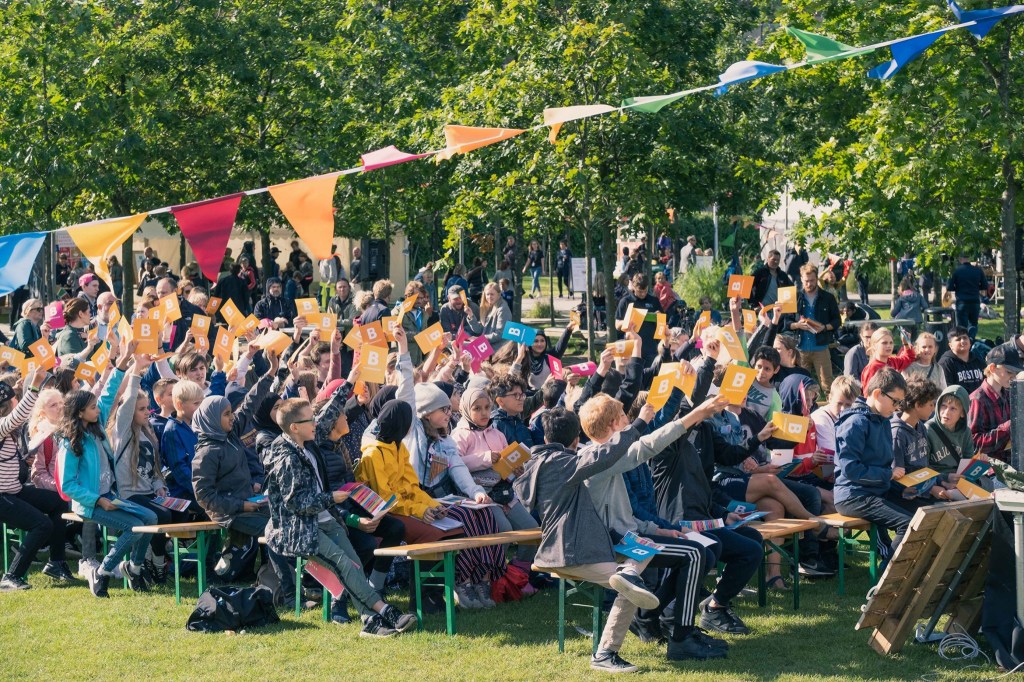
As part of my Service Learning project, I had the honor of volunteering at the Festival for the Global Goals, hosted by Sustainability Now. The festival took place on Solbjerg Plads, a large green area that hosted a range of workshops, activities, debates and dialogues that provided an opportunity to learn more about sustainability.
An interactive presentation about small changes we can make in our daily lives
In a number of ways, this event reminded me of my years working at a summer camp for middle schoolers. The relationship between volunteers and supervisors was informal, but professional, and overwhelmingly positive. The event coordinators were high energy and encouraged volunteers to take ownership over their stations to make the activities as engaging as possible. I found the faith in us invigorating.
The number one expectation at the event was positivity, especially when we were interacting with young people. The goal was to have every person leave with tangible ways to live more sustainable lives. We were also expected to be engaged in the activities, and demonstrate our own personal interest in the issue of sustainability today.
Like I mentioned above, I feel comfortable in high energy, overtly positive festival/volunteer situations. As a result, I felt right at home running an activity where participants used Legos to communicate an idea to make our built environment more sustainable. The only real thing that made me uncomfortable was the language barrier.
My grasp of the Danish language is minimal at best, so I found myself hesitant at first. However, I was mostly interacting with children between the ages of 6 and 14, so any type of positive communication worked, and they were responsive even when I was encouraging them in English. I realized that my tone and body language were much more important than the words I was actually using. Most of the time, I would crouch down next to them at the table and build my own creation to get them to start building too. It didn’t require any deep grasp of language, but rather my willingness to experiment and be creative with them. With a partner, they were much more willing to participate.
I also recognize now the ingenuity behind the activity. Instead of a station where participants draw or write (to which most people would respond “I don’t” or “I can’t”), building with Legos is creative and low stakes. People of all ages were willing to sit down and try their hand at constructing something, casually at first. I watched multiple adults go through a transformation of body language. They would start noncommittal, sorting through the shared pile with one hand and holding a coffee cup or jacket in the other. Yet, as their idea began to take form, and they watched the children around them avidly building and discussing and searching for a specific piece, their language would change. They would put down their belongings, take a seat next to the others, and commit. They would begin to furrow their brows and make something of substance, grabbing a pen to create a narrative for their idea. I loved watching participants go from noncommittal to fully engaged and willing to bring their idea to life.
A wide range of people came to participate in the festival. Families, friends, professionals, professors, and social activists/organizers all gathered around the unifying goal of exploring sustainability and assessing our goals for the future to protect our environment. Strangers were more than welcome as the entire event was intended to increase awareness and personal engagement, and a number of participants were interested passerby who had never heard of the organizations involved or the event.
While there is no typical experience of the people coming to visit, I can talk about the influence of the the larger organization that I am partnering with – Copenhagen Volunteers. The organization connects volunteers with opportunities that match their interest from over 80 events annually. The people the organization engages are active in their communities and care deeply about extracurriculars, whether that is art, sports, health/wellness or individual expression. It has been amazing to meet people and learn more about their personal passions.
I must admit that if I was in charge of the organization, there is very little I would switch up. They have some amazing best practices that include a high level of autonomy among volunteers, an energetic, informal but professional approach to leadership, and top notch communication. I think one of the only things I might change is outreach, encouraging other Copenhageners to participate in volunteer opportunities if they are not already involved.
After my preliminary participation, my highlight has remained watching adults engage the activity I was running because the medium of Legos provided an inviting opportunity for individuals who would otherwise not have participated. This approach has completely piqued my interest, and I wonder what other issues we might be able to invite seemingly other uninterested people into if we switched up the way we presented it. Definitely fascinating!
I certainly felt like I was a part of the volunteer community and the larger community that was served by the festival. CPH Volunteers does an excellent job of helping you feel a part of a larger organization and mission. I think going forward, I want to double down and commit to bringing my Danish to at least a conversational level. There is definitely a higher level of respect when you speak the language of other volunteers and participants, and I know that it would bring a deeper experience of immersion. I think this is one of the main challenges to overcome that is culturally derived.
One of the readings that resonated with my experiences in reflection is Zull’s writing about concrete experiences, and the pathway to experiences becoming lessons. He argues that they are all relative and will yield emotional memories, but these do not automatically guarantee learning. For me, is it not until I reflect on my service learning experiences that I am able to take a step back and begin to realize what lessons can be learned. Zull explains, “We may recall that an experience was emotional but still forget the details. Our goal in reflection is to discover both the facts and the emotions linked to our memory of the experiences. (Because even memory is relative).” James Zull. “The Brain, Learning, and Studying Abroad”. I want to use this framework as I work to answer my question: What am I looking to take away from studying abroad?
Any student who participates in an architecture studio in college will remember reviews. During an architectural review, you place the project that you have put numerous hours of work into and watch it get ripped apart before your eyes. Just kidding (mostly). This example is dramatic, and in reality, reviews will differ professor by professor, from scathing to refreshingly positive. Needless to say, I was curious what review would look like in my Danish architectural studio at DIS.
And I have to say that I was pleasantly surprised. (Although I know you were silently cheering for a ripping story.) The review seemed to reflect the greater values of the Danish approach to work. Across the board, the standards are simply higher than American workforce standards. Employees are treated as people with lives outside work. They have flexible work hours, one to two year maternity and paternity leaves, and required access to both standing desks and a window! There is an allotted amount of outside view and daylight that each employee must receive. That’s next level!
Anyway, our reviews were unusually positive and democratic (compared to reviews at my home university). Our critics, which included both my professor and a guest librarian who was educated as an architect, focused primarily on the strengths of the project and how we could accentuate those, instead of my long list of shortcomings. Which was a welcome change.
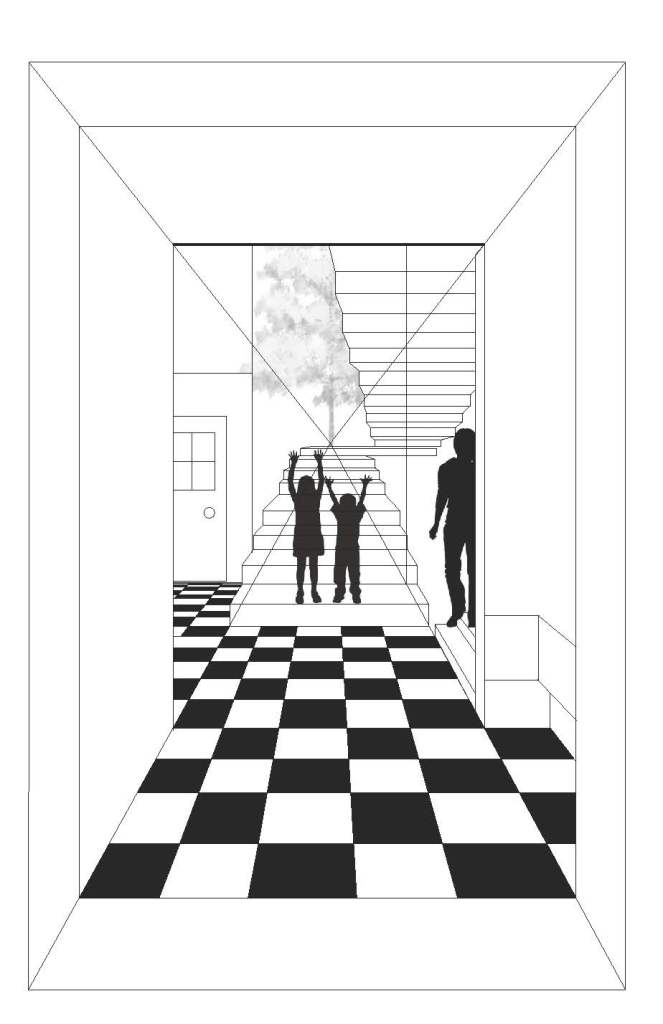
Our project this semester was designing a house for a blind person, which was completely engaging on a number of levels. We began the semester with an experiential workshop where we listened to sound recordings of locations with our eyes closed. It turns out that even we, as seeing people, could use hearing as a more powerful tool than we expected. We were able to ascertain that the recording was from a nearby airport. We understood that it had just recently rained, although the sun was now shining, and we could guess the model of car that drove by us. Or in another recording, we understood that we were in a hall with wood floors as a young girl approached us and took off her jacket and heavy boots. We could envision these places with 30 second sound recordings! It was trippy.
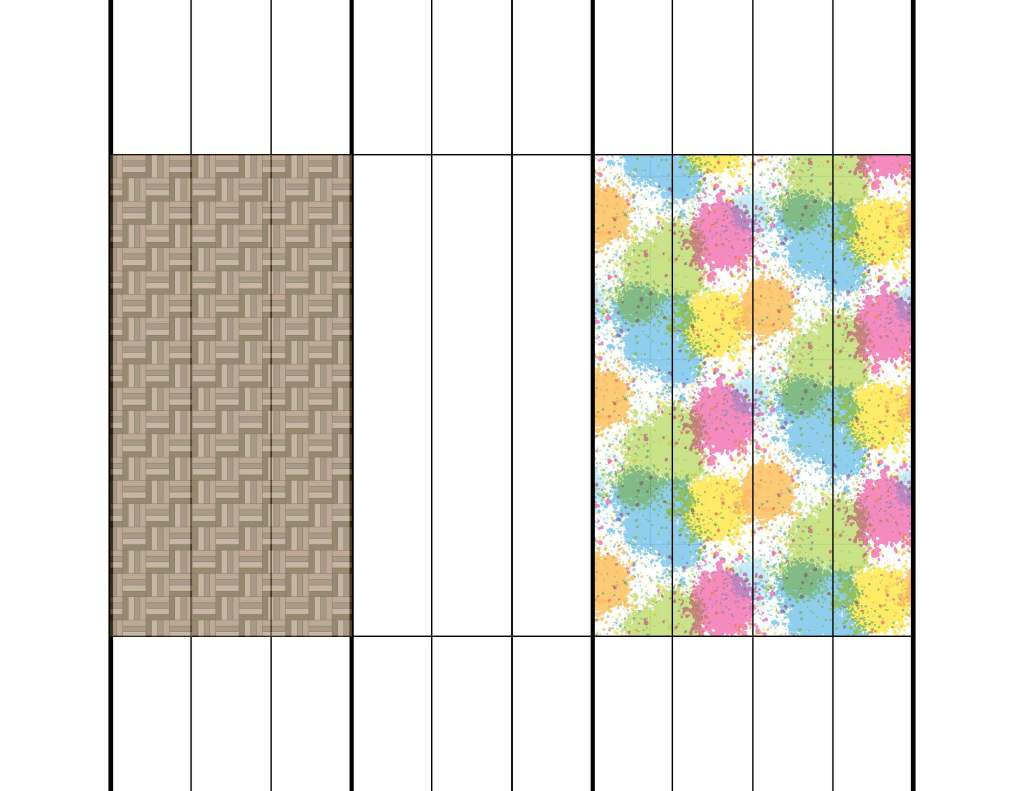
I integrated this newfound experience of sound into my project, using sound to differentiate the sounds of the city from the sounds in my home. I hypothesized that a blind parent might actually be able to tell the difference between their quiet dining room and living room that opens up to the city, depicted in this colorful sound diagram below.
All in all, the critics and my classmates supported the idea, but thought I could have made the spaces more livable. Which I completely agree with. A hallway should be wider than one meter, but I can be a little high controlling and declare that my hallway will only be a meter wide! Okay, maybe a lot high controlling.
Needless to say, I laughed and cracked jokes throughout my review, and gained some deep insight into ways that I could improve the way I think. My classmates participated, and I found myself throwing out suggestions during the rest of my classmates reviews. It was a refreshing change from the high stakes experiences of reviews at my host university, and I have to admit that I enjoyed the day.
As a part of my study abroad experience with DIS, I get to go on two study tours. Which is code for guided tours with other students to see some amazing architecture and landscapes. And some studying of course. This post is mainly photos to show how much I enjoyed myself and how grateful I am for DIS and their organization of these trips!
Two weeks ago, my class took a three day trip to the western island of Denmark called Jutland for our first study tour. Some of the most striking places we visited are below, and if you’re looking at other places to visit in Denmark, I highly recommend them!
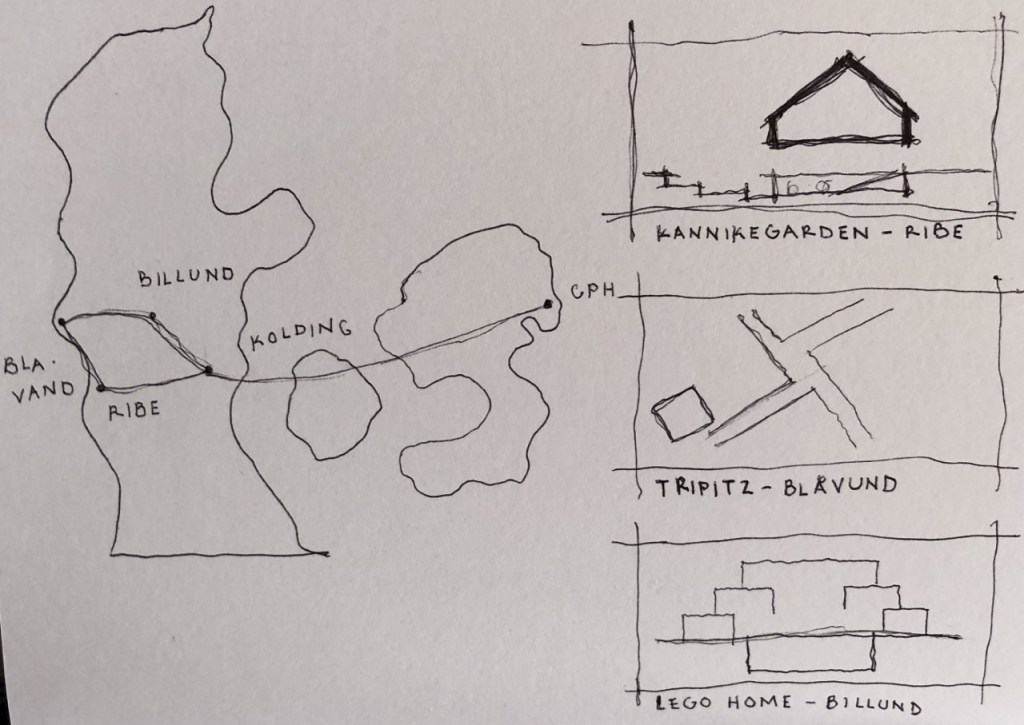
A quick sketch of where my class traveled
My class exploring Kannikegarden in Ribe, a preservation project that protects the ruins of a 12th century monastery.
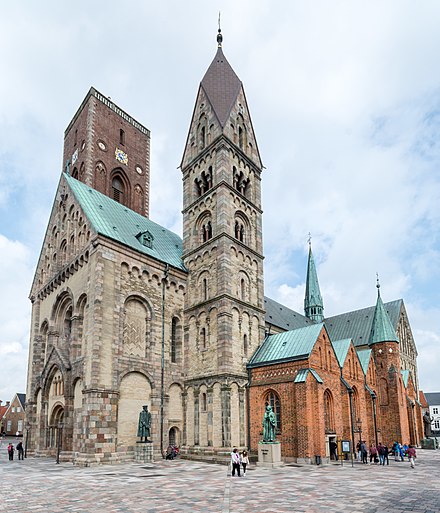
Ribe is one of the oldest cities in Denmark, dating back to the age of the Vikings and beyond. Originally a trading town, now it is a cozy home to 8,000 Danes. The most famous building is the Ribe Cathedral, the oldest Scandinavian cathedral, which still dominates the skyline.
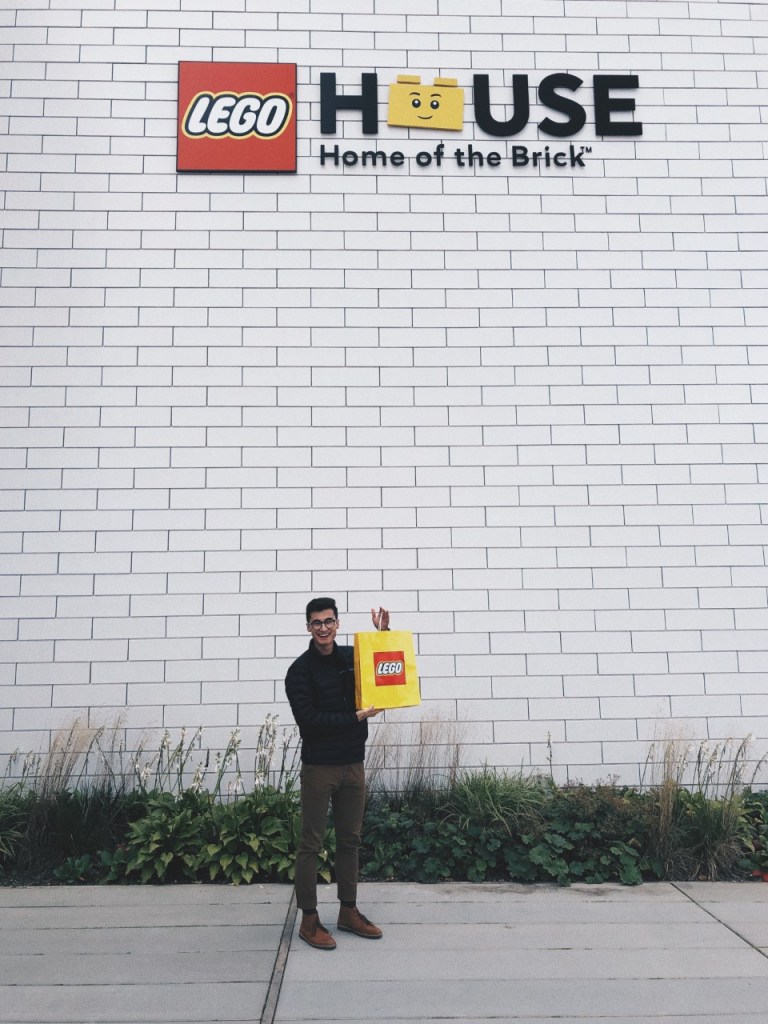
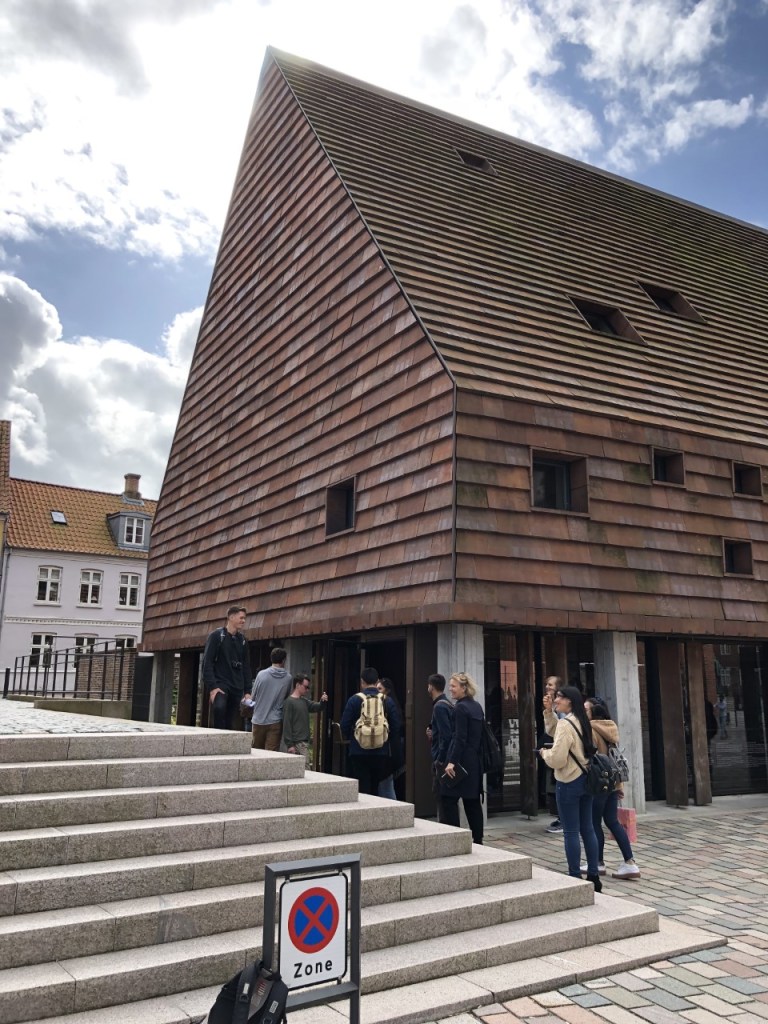
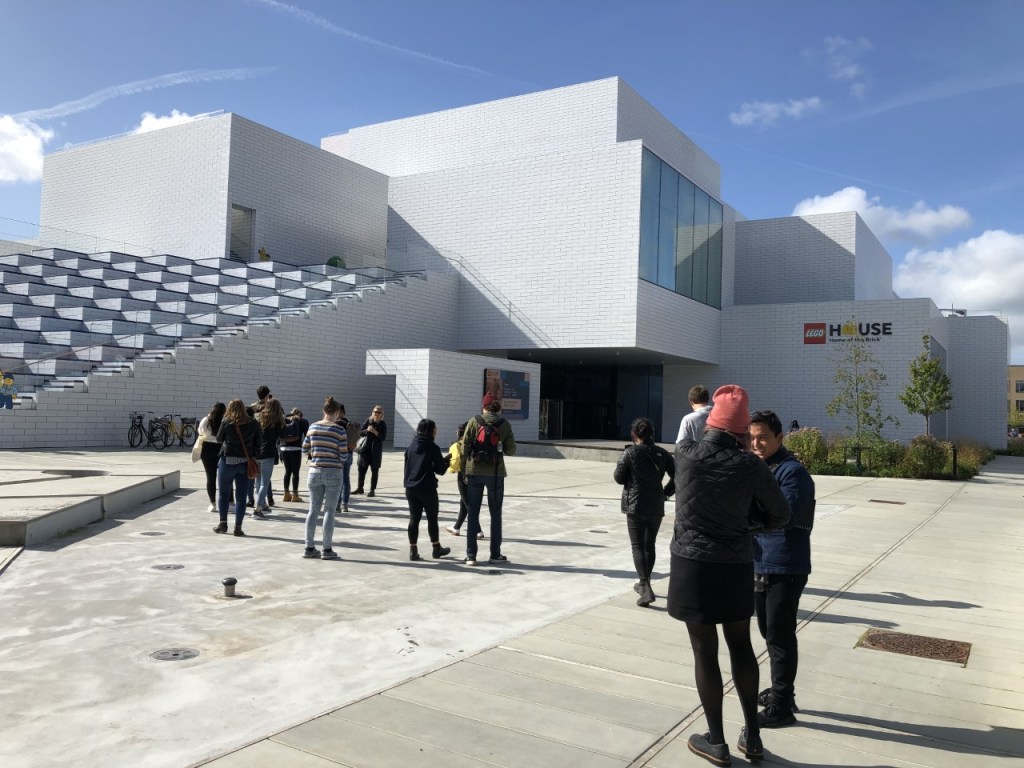
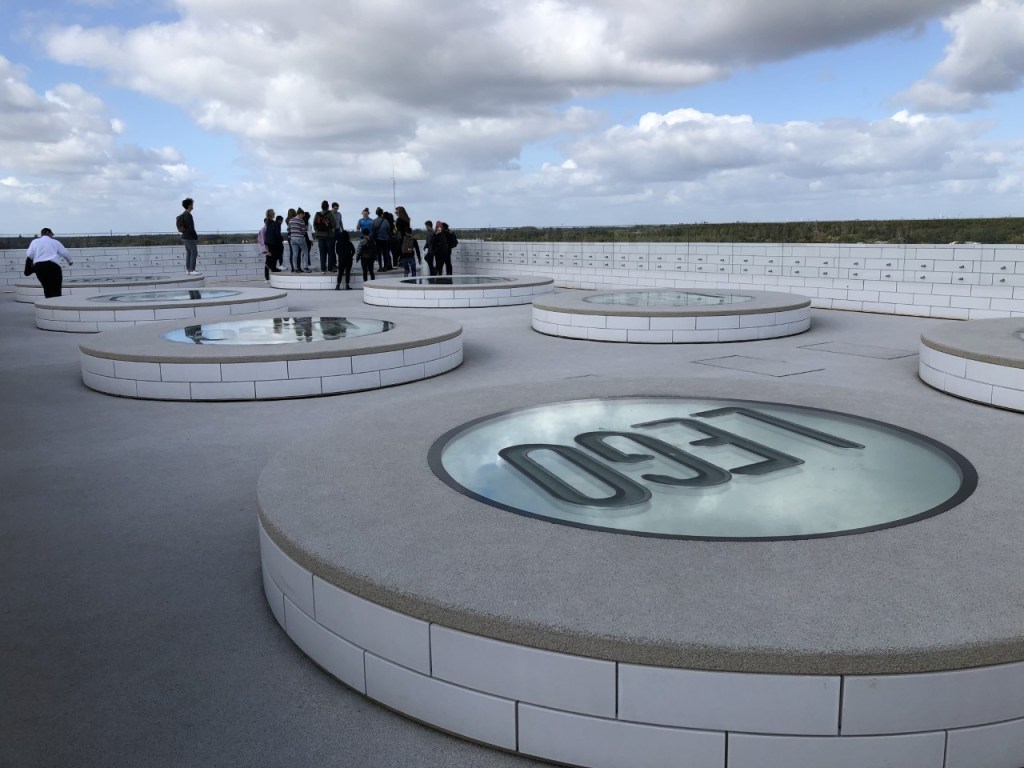
My favorite stop on the trip was the Lego House in Billund. Not only is it a success architecturally, but the museum inside transforms the way that we as humans play! Through a combination of augmented reality and physical Lego worlds, the exhibits entertained my class alongside kids and adults for hours. Our tour guide had to remind us that dinner was next to tear us away. And truly, my words don’t do it justice! I cannot recommend a visit to Billund and the Lego House more!
The roof of the Lego House looks like a Lego brick from a helicopter!
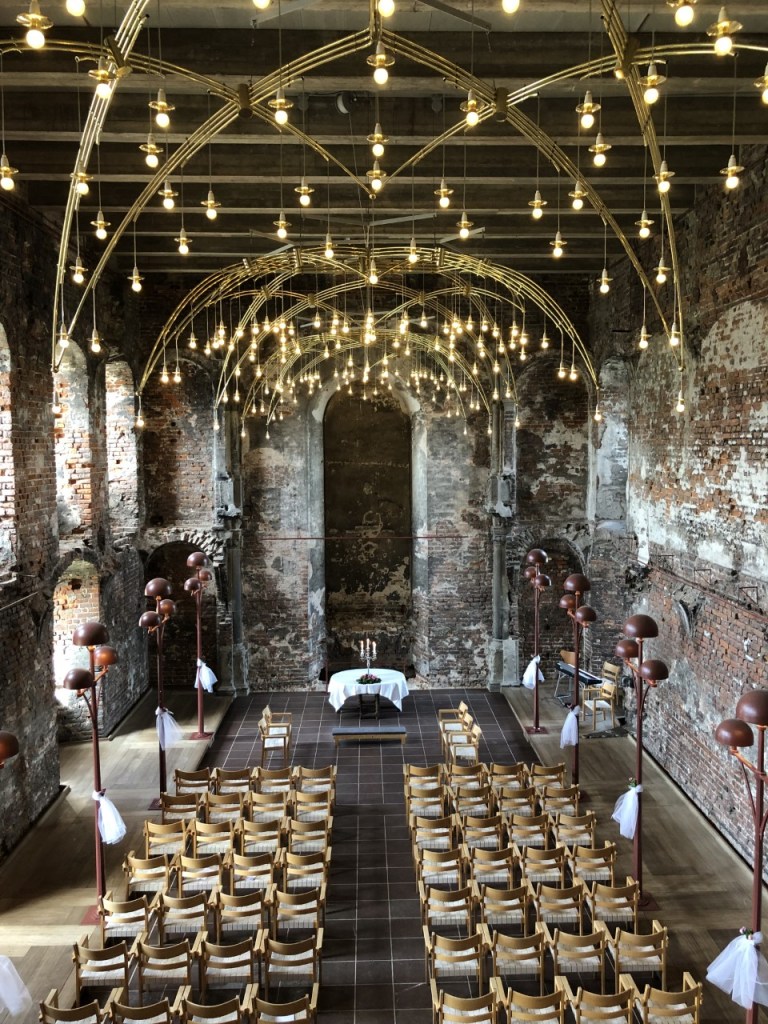
No trip to Jutland would be complete without a visit to the Koldinghus in Kolding! The Koldinghus is a castle that represents many layers of history physically in one place. Dating back to the 1200s, the building is still used today as a museum, for dress up workshops, for weddings, and for banquets. However, my favorite room was the chapel, which presented a combination of brick that is 800 years old and modern chairs and lights.
My favorite room in the Koldinghus: the chapel!
All in all, it was a lovely trip to Western Denmark. In a couple of weeks, my class will travel Germany and the Netherlands for the second study tour, and I can’t wait! Stay tuned for more photos and stories.
Last weekend, I had the privilege of participating in the Copenhagen Half Marathon! While I ran cross country in high school, I arrived in Copenhagen out of shape and with no previous experience running the 21 km that the race requires. However an orientation information session included details about the race, and it planted the seed. (To any incoming DIS students, I highly recommend attending these sessions. They’re invaluable!)
I mentioned considering running the race at dinner that night, and my host dad John’s eyes lit up. It turns out that he is a marathoner and he was looking for an excuse to train and run the half marathon. I ended up being the perfect reason! We signed up then and there, and got to planning because the race was in three and a half weeks.
We began training the next night, and let me tell you – I made SO many rookie mistakes. I didn’t drink enough water, I didn’t stretch, and I ate an entire dinner half an hour before our run. We planned for 6 km, which is almost 4 miles, but around half the way through, I had to slow us to a walk because I felt like a heap of garbage. Needless to say, John seemed a little concerned that we were starting this poorly. However, two nights later, I rallied and we completed 6 km in 30 mins, while managing to hold a conversation! We were on course.
The next week we upped our training to 10 km and set our sights on 15 for the week after. That weekend, my host family generously invited me to their vacation home, which is in the Northern part of the western island of Denmark called Jutland for Americans or Jylland for the Danish. It was an amazing time of visiting family and eating the greatest pastries, but I had my focus on the 15 km run on the beach.
John and I woke up Sunday morning and embarked on an ambitious run. Again I made rookie mistakes: I didn’t drink any water, I hadn’t eaten anything, and I had hardly stretched. And my goodness did it show! After only 5 km, my stomach started growling and I got a cramp in my side. But we pushed on, fighting the wind along the beach. At about the 10th km, I felt my calf tighten and that genuinely worried me. I have a previous soccer injury from high school that I recovered from, but flairs up now and then. Still, we fought on and we finished in under an hour and 15 minutes. An incredible pace all things considered. I vowed to do all the correct prep in the future.
We took a week off in preparation for the race, and the morning of the half marathon rolled around. I ate a healthy breakfast, stretched for 30 minutes and drank so much water. I felt great! John and I arrived at the starting line by the FC Copenhagen stadium and joined the other 25,000 people running the race. It was a sight to see as the mass of humanity slowly began moving their way along the course. It took us a full 15 minutes to reach the starting line. And then we were off!
The first 15 km were awesome. John and I held a conversational pace and stopped for water and to allow me to pee (twice). We got to do some sightseeing along the way, including the Theater and the Royal Library, both which I recommend checking out! People cheered us on the entire way. But trouble hit around the 16th km. My legs started to cramp up, and by the 18th km I was fighting to keep going. We paused to grab a banana, I peed again, and I steeled my nerves to make the final “dash” to the finish line.
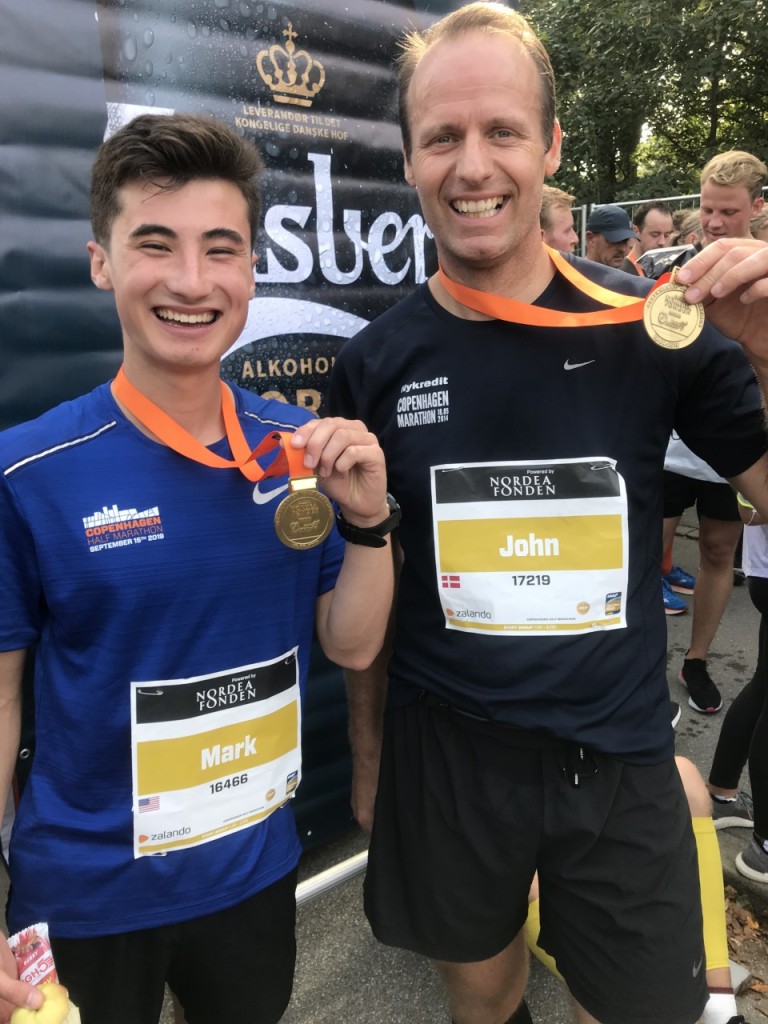
We finally made it to the 20th km and I felt a rush of excitement! I was going to make it. We rounded the final corner and I caught a glimpse of the finish line. John laughed and said, “This is the memory of a lifetime Mark!” As we crossed the finish line, he grabbed my hand and we lifted our arms in triumph! We went to receive our medals and limp the way home on tired legs. We ended up finishing the race in around 1 hour and 45 minutes, setting a pace of around 5 minutes per km.
In retrospect, it’s funny that it took traveling halfway across the world for me to decide to run a half marathon. But I love that I got to share that memory with my host dad and I learned something new about myself: I need a goal to motivate myself to train week after week. A goal that is bigger than “to get into shape”. I have a feeling that this won’t be the last half marathon I run. It’s just funny that it took moving to Copenhagen to learn that lesson.
“Hey America. You going to join us in the shower?”
— Gale
This past weekend marks three weeks since leaving home for a new country. I have felt overjoyed, overwhelmed, peaceful, lonely, and of course, hyggeligt (which means homely, snug, cozy). However, although my emotions have been all over the place, my host family has been indescribably consistent. They have been generous and accommodating at every turn, and I can’t express how grateful I am for them.
Classes are now in full swing and I’ve started to accumulate stories about cross cultural interactions. I’m excited to use this platform as an opportunity to reflect and share my stories with ya’ll. As you come along on the journey, feel free to contact me with reactions, questions, and ideas for future content!
The first thing that I’ve come to realize about Danes (and as you may have heard) is that punctuality is key. Which is a struggle for me as an American and as a member of my home family. We are typically 5-10 minutes late out the door, and more often than not, that’s because I’m in the bathroom.
In Denmark, if you are early, you are “on time”. If you arrive on time, you are considered late. And if you are late, you shouldn’t bother showing up. I learned this lesson the hard way a couple of days ago. My class had an early visit to a church so I made sure to arrive at the metro station with plenty of time to spare. But when I arrived, the signs were showing that one train was out of service and the other wouldn’t show up for another 20-40 minutes. I stood confused among a group of 100 other commuters until a woman came over the loud speaker and said something in Danish. Someone behind me said the F-word as the entire crowd of people ran out of the station. I was left behind confused.
I hurriedly checked my Google Maps app (the real lifesaver of the story) and realized that I could make it with a couple of minutes to spare if I biked. So I jumped on my bike. However, I hadn’t accounted for the heavy rain boots I was wearing and how far 12 km actually is. I arrived at the church 15 minutes late, sweaty and breathing heavy. I tried to compose myself, but at that moment my professor opened the doors, having just finished the tour for the class. He looked over at me and said, “Better late than never I suppose.” We ended up laughing later about my confusion at the metro station, but I have vowed to always be early because of how important it is to the Danes.
I have also come to understand that family is still family, even after break ups or divorces. This one still blows my mind. In America, divorce usually means the end of a relationship. But not in Denmark. My host family brought me along to an extended family reunion and my host mom’s ex-husband was there, along with several other people’s exes. I steeled myself for a tense gathering with bitter exchanges and was prepared to back my family no matter what. But what I walked into couldn’t have been more than the opposite. The atmosphere was warm and full of laughter, and I distinctly remember watching my host dad clap the ex-husband on the back and hand him a beer. I was mystified.
I pulled my host mom aside later in the party and asked, “So who do we not like here? Because I am loyal to your family and your family alone! No matter what.” She laughed and told me to calm down, explaining that “These people are still my family and I’ll keep a place for them in my lives and at these gatherings.” I was floored. This was more than an amicable break-up. They were still family and continued to reunite for children and grandchildren. We Americans could learn a thing or two!
One of the most challenging, but also most enjoyable, experiences has been playing with a local football (soccer) club. Challenging because physically they are better than me, but also everything is in danish. The coach will explain a drill, and then I will play catch up, attempting to understand as I go. However, when we line up to play a regular match, any language barrier disappears and I truly enjoy myself among people who have a different background from me.
That said, this one of the environments where I most have to play cultural sleuth. And there was no more cross cultural experience than the locker room after practice. Allow me to set the scene. I walk into the room after a long practice and they hand me a bag for the dirty clothes I’m wearing. Now, in an American locker room, we’d change our shoes and head home sweaty to shower. But apparently in Denmark, children start showering together at a young age after exercising. It’s not just appropriate, it’s expected. So, I’m holding my bag and taking off my shirt as the other men strip naked, grab a towel and head into the showers. And it’s a party. They’re pushing each other and laughing and sharing soap. Who’s the only one who is still standing fully dressed? Yours truly.
So Gale, one of the players notices and asks loudly, “Hey America. You going to join us in the shower?” I turn bright red, mumble something about needing to be home for dinner and wave goodbye as I grab my stuff and go! As I walked away, I realized that this was the perfect opportunity to step out of my comfort zone into the cross cultural experience. I plan to. But as of yet, I’m still developing the courage to step there! Stay tuned for the story of when I do!
“There are two things we talk about in København: bread and rain. Good bread can fix a bad day, and lots of rain can ruin a good day.”
— Host Dad John.
Allow me to introduce you to my host family, people that I have only hinted at this far. My host dad’s name is John and my host mom’s name is Dorthe. They have two kids, Freja (age 10), and Felix (age 8). John works for the Danish equivalent of Google and Dorthe works for a medication production/pharmaceutical company. They have both shown themselves to be the most generous people I have ever met.
In addition to opening their home and providing me with a fully furnished room, they have opened their kitchen (a dangerous game because of much I can eat), their family, and their lives to me. They now refer to themselves as a family of five, and if that wasn’t incredible enough, they have given me a key for this stay as well as when I return to Copenhagen to visit in the future! They joke that it’s too late, I’m stuck with their family now!
They also are absolute characters. Dorthe is a woman after my own mom’s heart. She is sweet, kind, and insists on doing my laundry for me and making sure that my bed is comfortable enough. Yesterday, I asked if they had tape to cover a blinking a night in my room at night, and she spent ten minutes creating a paper box to block the light at night. Her favorite English word is “Fantastic!” She is truly wonderful.
John is a frat bro turned house husband in the most loving way possible. He loves to eat candy and drink Carlsberg beer or Faxe-Kondi (soda that tastes like Sprite but is 3 times sweeter) or saftevand (translates to “juice water” and is basically kool-aid with twice the sugar). I brought American candy for the kids but John ended up devouring most of it. And somehow he stays thinner than me. That said, I will be the first to say that he is the most doting father in Denmark. He cooks each night in the kitchen, and his project this summer has been teaching Felix to cook as well. He spends evenings working on homework with the kids or running with me and the dog.
John and Dorthe speak perfect English, while the kids only speak Danish and are starting to learn English in school. I think they find both me and English to be quite intimidating, so I have downloaded both Google Conversations and Duolingo to learn Danish as quickly as possible. My goal is to bridge the language barrier as soon as I can. At this point, I can only say “Jaeg er en mand” or “I am a man”.
There are a couple of things they have taught me already. Any bakery in Copenhagen can make exquisite bread (brød) because if they can’t, they’ll close for sure. You want it to be firm (but not too hard), airy (but not too many holes), and heavy (but not too heavy). Apparently, John can lift up a loaf of bread and tell you whether it will be good or not. It all looks like bread to me. They have also explained that Danish talk about the weather. ALL. THE. TIME. Specifically, whether it will rain that day. And I can validate this claim. In the morning, John gives a weather report to the family, which dictates what everyone will wear. In the last couple of days, sunny days have turned gloomy and the clouds have opened up instantly. Thankfully, I was inside when it happened, but I don’t look forward to commuting on a rainy day.
There are also a couple of things they have taught me simply by participating in the family. Any topic is on the table during dinner. Dorthe asked me on day two what I thought of gay marriage, as the gay pride parade had occurred the previous day in Copenhagen. I was flabbergasted, as topics like this are typically off the table with new people. I’m still trying to process some of the other differences that are less apparent, but will keep logging them as I go!
Because John and Dorthe are so generous with their time, money, and home, I have integrated into the family incredibly smoothly. They are the most accomodating and have made my transition from America to Copenhagen relatively seamless. I will admit that the homesickness has start to set in, but with each moment, I look to the amazing things happening that day and hope to continue to remain grateful for this amazing opportunity!
“The only difference between a good day and a bad day is your attitude.”
— T. Middleton.
The last 7 days have been absolute mayhem. Which is typically used to describe a week that has gone particularly poorly, but I jumped in head first and have truly enjoyed myself. DIS (the study abroad program I am traveling with), my host family, and Copenhagen have truly exceeded my expectations.
In the week leading up to my departure for Copenhagen, I was feeling unprepared, nervous, anxious, and overwhelmed. In the midst of the whirlwind of emotions, I prepared my clothes as you see in the image above – each painstakingly rolled and organized by color. Let’s face it: I own a lot of blue/black and am pretty high controlling.
However, one thing that helped level me was my host family. When I received their introduction email, my world settled a little bit. They introduced me to their family of four, plus a dog named Mojo and a cat named Kasper. They included little tid bits about their eight year old son, Felix, trying trampoline lessons for the first time and an invitation to travel with their family to a vacation home during my stay. I was overwhelmed by their warmth, and upon arriving a couple of days ago, I can confirm that they surpass even what I imagined.
So, feeling that mix of overwhelmed by nerves and the excitement of my host family, I chose to take the step of faith and board my plane. I arrived jet-lagged with unbrushed teeth, sweaty palms, and a reminder from DIS to set a good first impression with my host parents, even though it was 3 am for my body.
My host mom, Dorthe, greeted me at the airport, helped me drop my bags off, and then promptly walked us over to the local sports complex, where 20 relatives had gathered to “play soccer”. Now, I thought we were just kicking a ball around, all the way up until I was slide tackled by a 60 year old grandfather and ended up on the ground. I immediately got up, grinned, and tightened my laces because that exactly how my family “plays soccer”. (And yes, they were calling it soccer to make sure I knew which version we were playing.)
The large family reunion continued late into the night with lots of food, wine, and laughter. About halfway through, I excused myself from the table and locked myself in the bathroom. I was overwhelmed and exhausted. My jet-lag was catching up, I couldn’t understand half of the conversations that were happening in Danish, and I didn’t know if the extended family wanted me there. But in this moment, I paused and realized that these are the moments where I could choose to unplug or to lean in further. Pre-study abroad Mark would have stepped back and gone back to his room and went to sleep early. Instead, I chose to return to the table and ended up having some deep conversations with the relatives that did speak English.
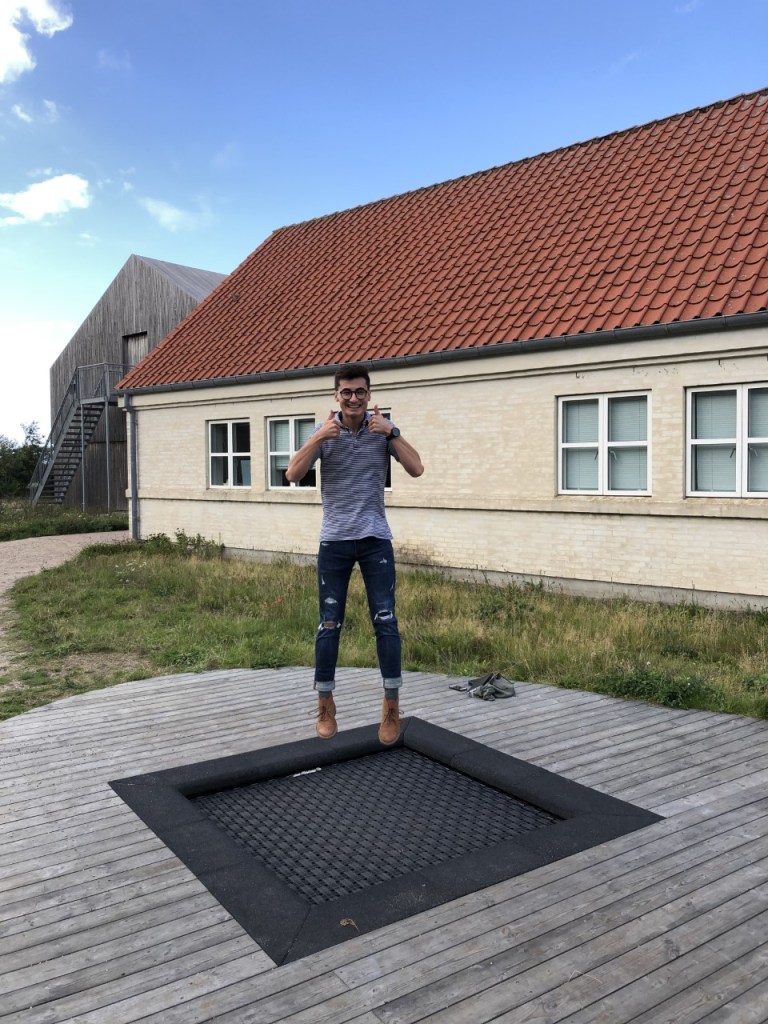
Since Saturday, we haven’t had any other large family gatherings. Just small dinners with the 5 of us around their table. That doesn’t mean that these last couple of days haven’t been filled with adventure. I’m excited to hopefully tell some of my other stories, including a hospital run and stitches after a trampoline mishap, or deciding to run a half marathon with my host dad (John), or Mojo the dog crawling into my bed at 2 am and giving me a literal heart attack.
That first day in Copenhagen showed me a glimpse of what was to come and allowed me an opportunity to choose between leaning into my time in Copenhagen or unplugging. I plan to continue to take opportunities to connect with my host family or the city itself, and hopefully, in doing so, I’ll learn more about myself.






 Follow Me to DenMARK