The first question everyone asks me whenever I tell them my study abroad plans is, “Why Copenhagen?” Typically, that’s followed by a sheepish look and a tentative, “Also, where is Copenhagen?” We stan the American education system.
I will admit that I was similarly befuddled when I actually asked myself where Copenhagen was located. So, for anyone like me, Copenhagen is the capital of Denmark, which is located north of Germany and south of Sweden. If you don’t know where Germany is, Google Maps can become your best friend. Anyway, Copenhagen is a “smaller” city, spanning 35 square miles and hosting 600K people. For comparison, Los Angeles stretches 500 square miles and attempts to host 4 million people! Whether LA succeeds is neither here nor there, but I will say that I’m excited to escape the traffic.
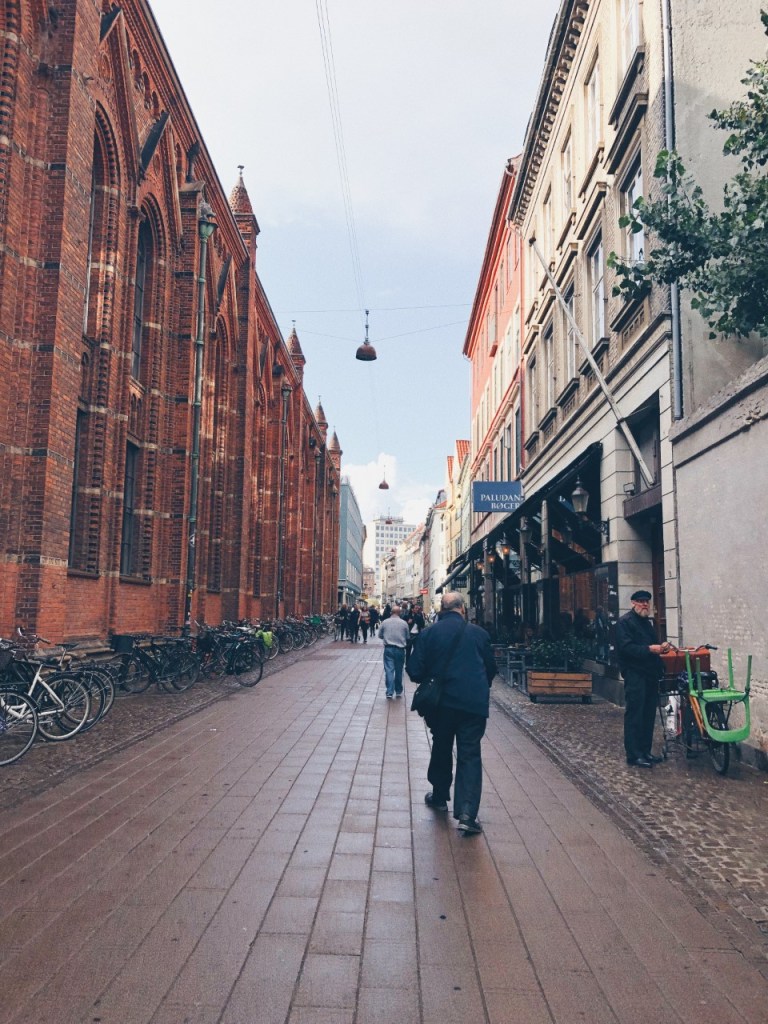
Part of the reason that I found Copenhagen instantly appealing was the urban planning. In my research, the city is great at efficient public transportation that is used by the majority of the general population, and creating/maintaining clean public spaces. I have only lived in Los Angeles and New Orleans, both of which honestly suck at this. Los Angeles is famous for our poor public transportation, our massive traffic problem, and our high levels of smog and pollution. Last year, I shadowed a city planner that works for the Mayor’s Office in LA, and I’m intrigued by how good city planning intersects with architecture. I’m also just excited to be able to breath fresh air again. (I joke, but I do love LA and recognize the privilege it takes to live here, pollution problems and traffic included.)
Besides my academic reasons, I was also drawn to Copenhagen as a place that I could see myself creating a routine that would make me happy. Where the other abroad program cities felt overwhelming, Copenhagen feels like a place where I can slow down and assess what keeps Mark Schaupp happy and healthy. So in the vein of self-discovery and remaining sane, I will be intentionally limiting my trips and stay present in the place that I am in. I hope to pour time into my host family, a local soccer team, and, hopefully, a quality coffee shop.
Now, all of this is based on a gut feeling, which is terrifying to me. However, I am seeking to remain positive and recognize that every day can be a great day as long I as choose to remember it as such.
And, it sounds like my host family are amazing people! In my next post, I’ll talk more about them and how they have already made me feel comfortable, even before I’ve left the US!
In order to close out my post abroad, re-entry experience, I wanted to create a digital story. Please find it in the link below!
My digital narrative that I created to communicate my story about my time in Copenhagen has an underlying message of flexibility. I intentionally leaned into being flexible while abroad. Six hours after landing in Copenhagen, I found myself locked in the bathroom, sitting on the ground, on the verge of tears because I was overwhelmed with the fact that I was so far from my family, and I was already experiencing culture shock.
But I recognized the moment as a deciding moment that would define my attitude for the rest of my four months in Copenhagen, and decided to lean in. Flexibility is not my main mode of operation, but each day in Copenhagen, I decided to be a little more flexible and step a little further out of my comfort zone, testing the new language, seeking new cross cultural experiences, or simply saying yes to whatever new adventure my host family had planned for that day.
My study abroad experience personally inspired growth, but didn’t affect my post-graduation or academic plans because I’m a senior and I have a job lined up for after when I graduate.
As a result, when I met with my success coach and discussed my future plans, and how they’ve been affected by going abroad, I’ve realized that it’s more impactful to consider the skills that I’ve gained, and how I could communicate/utilize them in a work environment.
The main skill that I worked to cultivate while abroad was flexibility. From the very first day, I intentionally leaned into being flexible. On that first day, in Copenhagen, I locked myself in the bathroom and slid to the ground, on the verge of tears because I was overwhelmed with the fact that I was so far from my family, and I was already experiencing culture shock. But I recognized the moment as a deciding one that would define my attitude for the rest of my four months in Copenhagen, and I chose to lean in.
Flexibility is not my main mode of operation, but with each passing day in Copenhagen, I sought to be a little more flexible and step a little further out of my comfort zone by testing the new language, seeking new cross cultural experiences, or simply saying yes to whatever new adventure my host family had planned for that day.
Flexibility is also crucial for me in the work place. Through Mendez’s reading, I was reminded that I am a schedule-oriented person. I often feel blindsided by frequent change and disruption to my plans. I also spend a good amount of time creating detailed strategies, and am forced to revise them when circumstances change. I also may be surprised if I am asked to help in areas outside my normal duties and I can feel threatened by unpredictable environments.
According to his reading, I can grow by understanding that change is a fundamental part of my work environment. I can also understanding and appreciate the importance of flexibility to my advancement. Instead of detailed strategies, I can develop general strategies such as scenario planning to avoid investing too heavily in a single direction, such as prototyping ideas instead of instantly devoting myself to a life plan. Alternatively, I can also create flexible plans that don’t need to be reworked each time conditions change.
A second skill that I worked to cultivate was cross-cultural awareness, or more generally, a capacity to analyze that which is different from what I am familiar with. One of my running observations, both in Denmark and now in the United States, stemmed from my analysis of the differences between Danes and Americans that I discovered while abroad. I think that there’s a stark contrast between our public personas. When I walked around the streets or rode the metro in Copenhagen, I would try to meet people’s eyes, smile, and generally exude warmth. In return, all I received was coldness: blank stares and confused looks. I realized that Americans have warmer public personas (or at least Los Angelenos do), and this was a cultural expectation I carried with me from the States.
I think that this would be an invaluable skill to have in any work environment, particularly when I want to pick up on the indirect communication happening in a meeting or other interaction between colleagues. I’m confident that I will put this to use when I begin work in the summer to read my surroundings, and this case, the micro-culture of my work environment.
A third skill that I gained was my exposure to a different understanding of sustainability through the Danish perspective of the way we approach architecture, and more widely, life. One of the most inspiring moments came through a visit to the architecture firm EFFEKT Studios in Copenhagen. They presented a number of projects that they were working on, and one caught my eye.
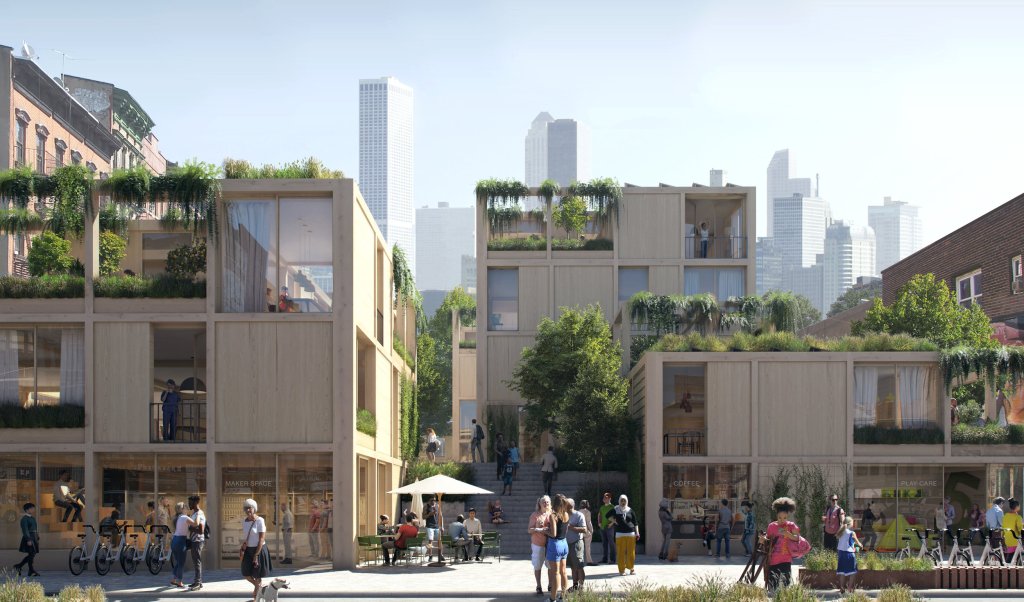
They spoke about the Urban Village Project, a new visionary model for developing sustainable, affordable and livable homes for the many people living in cities around the world. Here’s a little bit from their website about the project:
“Cities all around the world are facing major challenges when it comes to rapid urbanization, ageing populations, loneliness, climate change and lack of affordable housing. It is clear that unless we rethink our built environment, our cities will become increasingly unsustainable, unaffordable and socially unequal.
Urban Village Project envisions:
A modular wooden building system designed for disassembly, that can be prefabricated, flat-packed and quickly assembled on site. This ensures a more sustainable and CO2-reducing construction method and a circular approach to the management and life cycle of our buildings.
A new financial model that drastically lowers the entry point to the housing market, making high quality housing affordable for users of all income classes, while re-establishing the connection between the developer and the consumer.
Cross-generational shared living communities in the hearts of our cities with flexible, high quality homes connected to a variety of shared services and facilities; and a digital interface to support everyday needs.”
I was particularly taken by their proposal, which reflected a number of Danish values when it comes to sustainability. One of the primary ideas is that sustainability should not be a primary goal, but should instead be paired with another goal or issue. In the States, sustainability is incredibly one dimensional in the architecture field.
In the Urban Village Project, the architects decided to tackle both sustainability and our growing housing crisis in almost all developed countries. They were even more clever by pairing these issues with a current solution. They sought to create a modular system by partnering with IKEA and the way that they mass produce interchangeable and customization pieces to create a product. In this case, the product would actually be a home, with multiple parts coming together to create a system to face the looming housing issue.
It was ingenious, and encouraged me to think about and consider solutions/options that are outside of the box. For example, California is seeking to pass a new building code that requires new buildings to be energy neutral in 2022. This is a great step, but I wonder how it could be paired with other issues. I will need to explore this further!
As I reflected on where I wanted to observe tourism in New Orleans, I returned to my time in Copenhagen, and the places that I would enjoy sitting for hours. I’d be present in the urban environment, people-watching in a way that made me reconsider myself and American culture. My favorite place in Copenhagen was Cafe Fiol, where I would spend hours sitting on the corner of Fiolstraede and Rosengarden.
There were a number of reasons that I chose this cafe. Firstly, I enjoyed the ambience of the cafe. Second, there was outdoor seating on the corner of this street intersection. And third, I intentionally chose a spot that was outside of the more traditionally touristy part of Copenhagen. Stroget and the areas around that were clogged with tourists, whereas the area around Cafe Fiol was visited by tourists and locals alike.
As a result, I followed a similar vein of thought with my observation of tourism in New Orleans. Instead of going deep into the French Quarter, which would have almost entirely consisted of tourists, I chose to find someplace to sit along Magazine Street. Magazine is definitely still touristy, but not in the same way as the French Quarter. I hoped to find a blend of locals and tourists, and I think I was able to do that. I also wanted to find someplace with outdoor seating that was near an intersection. I ended up choosing the Dat Dog near the corner of Louisiana and Magazine. Although I knew it wasn’t a cafe, it was overall a pretty similar experience to people watching in Copenhagen.
I spent Wednesday afternoon and evening from 4 to 8 pm at the site. I was sitting with my friend, and we got to have some fun conversations about cross cultural differences while observing the people around us. One of the fun games we played was guessing whether people were locals or tourists based on the way they carried themselves. Locals were people who were just walking down Magazine on the way through their daily routines, whereas tourists were people who were looking around excitedly and taking photos and/or seemed lost/out-of-place. By the end of the day, we averaged that it was probably about 40/60. 40% locals, 60% tourists. However, that number shifted when we thought about who actually entered the Dat Dog establishment. It was probably closer to 60/40. 60% locals, 40% tourists. However, that all shifted in the last hour because Wednesdays are trivia night, meaning that locals dominated the business then.
On the corner/up-and-down Magazine, people meandered. Many people were exploring the city for the first time, and I took a photo for a couple who had traveled to New Orleans for Krewe du Vieux, but wanted to get out of the craziness of the French Quarter for a night. I realized how slow moving people were on the street. People moved down the street in New Orleans slowly, either interacting with the people they were with or other people on the street. People (tourists most likely) stopped to take photos of the buildings and each other. This was extremely different from Cafe Fiol, where most people were rushing to work or the next thing, and moving very quickly down the street. Here people meandered.
Sitting there for four hours reminded me that New Orleans is a city of food and drink. Sitting there outside of the Dat Dog, I was constantly smelling and seeing people eating, both at the restaurant, but also walking down the street. However, one of the things that reminded me of Copenhagen was how comfortable people in New Orleans are about carrying around alcohol. Later at night, and especially during the weekends in Copenhagen, people walking around drinking beer was completely normal. However, there was a stark contrast between night and day in Copenhagen. During the day, people were professional and rushed. During the night, people slowed down and carried around alcohol and unwound a bit. In New Orleans, the relaxed environment, particularly around alcohol was pretty consistent, besides the fact that the traffic picked up significantly after the sun went down.
Doing this activity allowed me to continue to process the realizations about the differences between Danes and Americans that I discovered while abroad. It reinforced my theory about the public versus private persona of the Danes. There’s a stark contrast between our public personas. When I walked around the streets or rode the metro in Copenhagen, I would try to meet people’s eyes, smile, and generally exude warmth. In return, all I received was coldness: blank stares and confused looks. I realized that Americans have warmer public personas (or at least Los Angelenos do), and this was a cultural expectation I carried with me from the States.
By comparison, Americans have a higher expectation of warmth in public, and this was on display on Magazine street. Sitting at our table on the sidewalk, we were constantly waving, smiling, greeting, and laughing with people who were moving down the street. It was a stark contrast to my time sitting outside Cafe Fiol, where the Danes would hardly meet my eye.
Also, this was a refreshing activity because it reminded me how much I enjoyed intentionally taking time to engage cultural activities that crossed cultural lines. To go from a semester of focused time engaging a new culture, and constantly assessing those around me, to basically turning my cultural awareness “off” when I returned to the States was a strong difference that I only realized had occurred through this activity. It’s definitely something that I want to continue to do, but probably more in doses rather than the 24/7 of my time in Copenhagen.
Listening in on conversations further illuminated the difference between Danes and Americans. Although Americans have a higher expectation of warmth in public, we also expect that friendships will slowly and steadily grow over time as we invest time and energy. The process from stranger to acquaintance to friend to trusted person doesn’t happen overnight. We peel back our layers as we each take steps towards each other. By contrast, the Danes are explosive and immediate relationally. They are cold in public, but as soon as you switch from stranger to acquaintance in their eyes, all bets are off. The transformation from public to private is night and day. I experienced this across the board with my host family, my host family’s friends, my professors and even my organizers for service learning. Multiple times while in Denmark, I distinctly remember thinking, “we only met an hour ago” because we were discussing anything from politics to personal trauma to familial drama.
The dynamic was different on Magazine Street. People’s conversations were quite dull. Although Americans are louder, I remember continuing to be confused by conversations I would overhear in Denmark at cafes and in restaurants where Danes would allow their private persona out. I couldn’t believe what people would talk about. On the other hand, the conversations I overheard on Magazine Street were pretty mundane, about what people did that day, etc. There was also so much complaining. It was too cold. They were very hungry. The food was taking too long. They weren’t drunk enough. The list goes on and on haha.
Insider language that did start to crop up as more locals came out of the woodwork for trivia night was around Mardi Gras season, and how to do it “well”. How to avoid the touristy areas. Where to get the best throws. I definitely became more aware of how strategically locals will approach Mardi Gras season as huge numbers of tourists flood into their city. It appeared to be a whole type of conversation that multiple groups of people were having as they prepared to engage Mardi Gras season.
I think some fun questions going forward are these:
Is this ratio of tourist to local typically this close? When does it spike to locals? When does it spike to tourists?
What do locals discuss when it isn’t Mardi Gras season?
What other insider language did I miss due to the brevity of this activity?
What other comparisons exist on Magazine Street between American culture and European culture?
What are the stories that you want to tell? What are the stories that reveal your growth in your own intercultural competencies? What are the stories that were most meaningful for you about your time abroad? In a blog post recount your conversation. What advice were you given during your meeting? How you are thinking about continuing the growth you had during your study abroad semester now that you are back on campus?
Two themes arise for me when I reflect on my time in Copenhagen, and I want my stories to demonstrate those. The first is the fact that my goal for my semester abroad was different than most people. I didn’t want to travel around Europe. I didn’t even travel around all of Copenhagen. I didn’t seek to make a lot of new friends. Instead, my goal was to connect with and invest in a relationship with my host family. And I completely accomplished that. But I don’t want to just say that. I definitely want to communicate that with photos and stories that show that. The moments that I remember most vividly were finishing the half marathon with my host dad, or late night conversations with my host mom about faith, or playing Fifa with my host siblings. Inherently, there wasn’t anything special about the moments, but it was the accumulation of them that made the experience so special.
The second theme has to do with my growth in my intercultural competencies. The underlying approach during my entire time abroad was flexibility, and I intentionally leaned into being flexible. Six hours after landing in Copenhagen, I found myself locked in the bathroom, sitting on the ground, on the verge of tears because I was overwhelmed with the fact that I was so far from my family, and I was already experiencing culture shock. But I recognized the moment as a deciding one that would define my attitude for the rest of my four months in Copenhagen, and I chose to lean in. Flexibility is not my main mode of operation, but with each passing day in Copenhagen, I sought to be a little more flexible and step a little further out of my comfort zone by testing the new language, seeking new cross cultural experiences, or simply saying yes to whatever new adventure my host family had planned for that day.
These are the things that I want my collection of stories to communicate about my time abroad.
In response to my stories, and when I was being more honest about my re-entry experience, my mentor instantly asked if I was taking enough time to process the experience. I sheepishly explained that I probably wasn’t taking quite enough time. He recommended that I really lean into this experience, especially the final project, because he said that often the reflection on the experience can be just as powerful as the experience itself. It can sharpen the lessons, and help to re-live and re-love the experiences that I had!
Going forward, I want to continue this theme of flexibility. Even back at Tulane, and in my life post grad, I want to be a little more flexible and step a little further out of my comfort zone each day. I want to seek new cross cultural experience. And I definitely want to say yes to whatever new adventure my life throws my way.
It’s been about 2 and a half months since I landed back in Los Angeles after my time abroad. Either intentionally or subconsciously, I filled my life and really haven’t given myself time to process my experiences abroad. Sure, I’ve told people how wonderful it is from a bird’s eye or a quick five minute conversation, but today I dive back in by mentally mapping the places that were important to me while abroad.
And my gosh, it’s weird to draw a map of Copenhagen. As I did this exercise, I came to the powerful realization that I haven’t given myself time to process the mundane. Up until this point, I’ve only focused on the overall experience, but as I traced my pen, I relived so many specific moments that came together to form a powerful experience abroad. Riding the metro to class. Riding my bike to class in 30 degree weather after I lost my travel pass and insisting on being a “viking”. Playing soccer with local Danes at the Vanløse football club. Grabbing coffee at Fiol, and watching people walk by. Working on homework in the ancient part of the Royal Library, aka the Black Diamond. Testing my Danish with the barista at Fiol, who I got to know after my frequent visits. It all came rushing back as I traced my pen, and I felt pretty nostalgic.
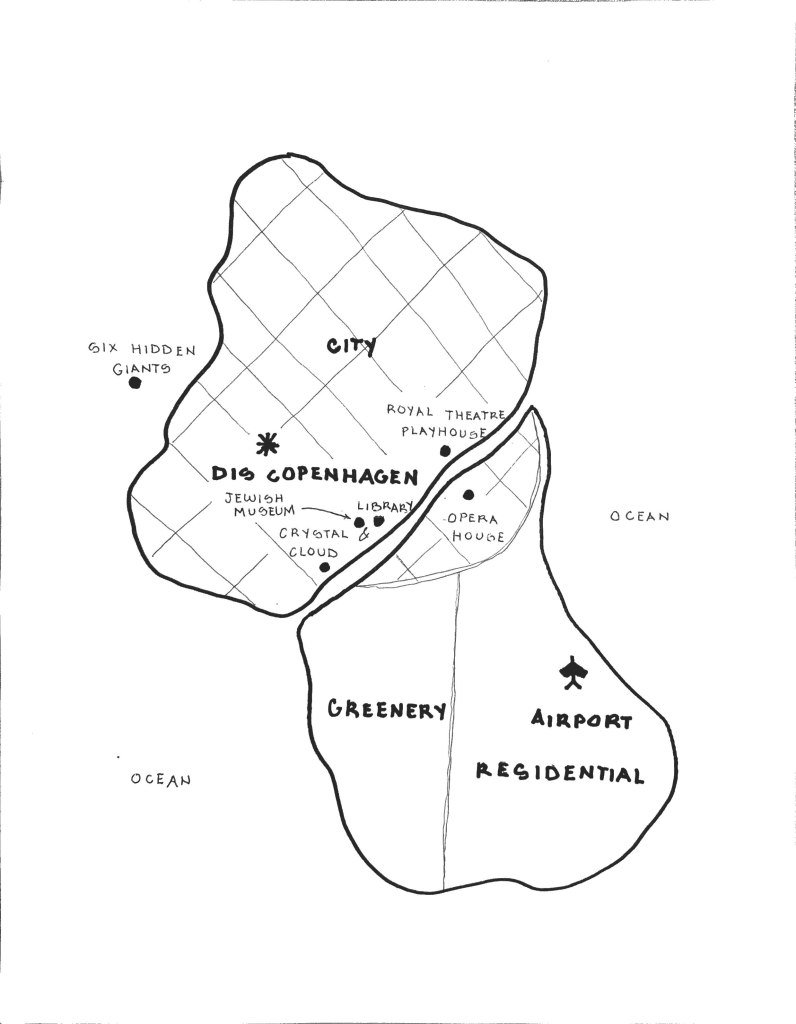
My mental map before traveling to Copenhagen (April 2019)
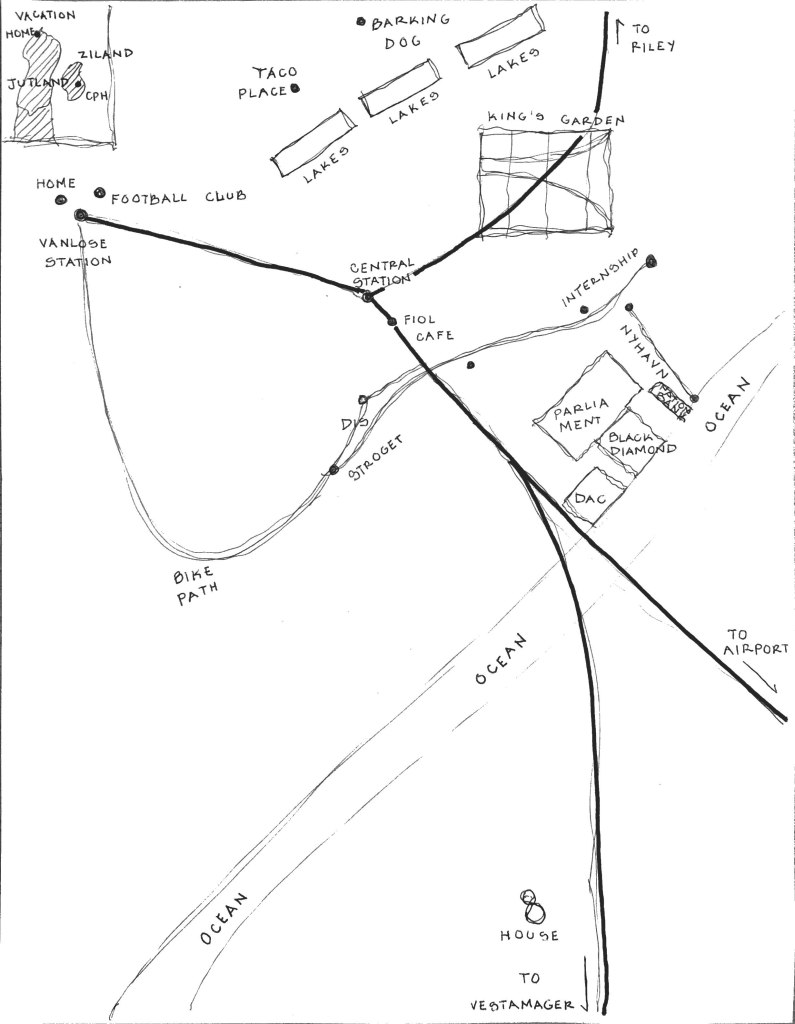
My mental map after traveling to Copenhagen (January 2019)
I think one of the most striking differences between my maps is the way I drew them. In the “before” drawing, I represent the two halves of Copenhagen as these two voids of streets and cityscape, with some architectural sites that I want to visit. In the “after” drawing, I throw out the rest of the city and focus only on the paths that I would follow to my different destinations in the city. I think this shows what I thought my goals were compared to what I actually wanted to do with my time once I was there. Before I departed to travel abroad, I thought that I would spend most of my time visiting different grandiose architectural sites. In reality, I spent much of my time discovering small coffee shops and study spaces where I could watch the world move around me.
Also, before I left, I had no idea where I would be living, or even if I would get a homestay. As a result, it isn’t on my “before” map, but it became a core part of my “after” map. Home became my launching off point at the beginning of the day, and my refuge at the end of long days exploring a foreign city. Like the government article said, “As you evolve as an individual abroad and adopt the culture practices of your foreign post, your perception of home changes.” I certainly fell into the routine of my host family, and the neighborhood around me. If anything, I’m realizing that I’m more attached to the small town of Vanløse and my home away from home, rather than the city of Copenhagen. I miss Vanløse, and the life I lived there.
By comparing the two maps, I’m reminded that there was still so much of Copenhagen that I wasn’t able to explore. One of the similarities between both maps is the fact that there is empty, unexplored space on both. I simply didn’t mark it with a hatch on my “after” map, perhaps as a way to communicate that I’m at peace with the fact that I wasn’t able to see every street of Copenhagen. By comparing the maps, it’s clear that what was important to me was the routine that I built up during my four months there, and the rest of the city fell the wayside as I became familiar, and dare I say comfortable, in my day to day routine. (Which is so weird to actually declare. I never expected to become comfortable in a foreign setting.)
Before I left for Copenhagen, I wrote myself a note, declaring that my goals for my abroad experience were to get to know this city and its people through the eyes of my host family, rather than as a tourist. I wanted to allow myself to step into their shoes rather than feeling anxious that I was missing something that the Americans were doing. I allowed my life to slow down, and intentionally carved out time to simply be at home with my host family, to enter their routine. And I’m proud to say that I think my mental map reflects this. The touristy sites were less important to me, and I spent about half my time exploring Vanløse. I also included a small map in the top left corner that shows the larger geography of the two islands, and where my host family’s vacation home was located, which we traveled to on multiple occasions.
The transportation I used completely affected my mental map. The metro system was impeccable. I used it every day to get to and from school, and after a few days, became completely familiar with the system. On my map, this is represented with the bold line running through the middle of the drawing. I did have a stretching experience when I lost my travel pass about a month before returning home, but ended up embracing the experience as a growth opportunity, and chose to ride my bike to and from DIS in extremely cold weather.
The transportation system was also some of my main sources of culture shock. Sure, there was the learning curve of navigating the system, but my time riding the metro was when I came into the closest contact with Danes who were on guard, and I experienced their public persona. I’ve written about this in earlier blog posts, but I was off put for a couple of weeks by how cold their public demeanor is. In America, people will smile or greet strangers in public. However, Danes are almost rude in the way they conduct themselves in public. A few weeks later, I would experience the warmth that Danes carry themselves with in private, and my eyes would be opened to the stark difference between their public and private persona. Nonetheless, it was still shocking.
Frankly, I loved this exercise to recreate my mental map. It honestly allowed me to revisit my time in Copenhagen after two and a half months of avoiding thinking about it. While it makes me sad to think about the fact that I won’t be in Copenhagen in that way ever again, I needed space to mourn that, which allows me now to be so grateful for the time that I did have. In the coming weeks, I want to look more closely at why my response to returning to America was to bury how much I missed Vanløse. Thanks for facilitating this Prof Gibson!
As I prepare to say goodbye to my host family who transformed my time in Copenhagen, I wanted to write a letter of thanks.
Dear John, Dorthe, Felix and Freja,
Words don’t do justice how much you positively influenced my time in Copenhagen! But I’ll try anyway. Before I got on the plane to travel to Denmark, I was nervous and uncertain about what my four months abroad would look like. I even considered “missing” my flight! But one thing especially convinced me to get on my flight. And that was your warm welcome via email and FaceTime. I was sold.
And my first impression couldn’t have been more correct! You have been incredibly generous, overtly warm and caring, wildly accommodating and more than I could have ever asked for. You have gone above and beyond to make Vanløse feel like home, and that makes it all the harder to leave!
To John, I’ll miss training for a spontaneous half marathon and our casual conversations in the kitchen. I’ll miss Friday walks to “Slikland” and watching football on the tele. I’ll miss your joyous laughter and a dozen bagels magically appearing in the pantry overnight. But more than anything, I’ll miss your jovial “woohoo” and your reassuring “take it easy”.
To Dorthe, I’ll miss our discussions about life and faith and love. I’ll miss your commitment to punctuality and laughing about how I couldn’t lock the front door. I’ll miss your gentle teasing about my caramel coffee and my messy room, and your sweet concern making sure I’m not too homesick. But more than anything, I’ll miss your motherly hugs when you come home after a long day of work.
To Freja, I’ll miss balling up on the “court” in the backyard and losing to you in Fifa. I’ll miss your sheepish grin that would appear when we would beat up Felix together. But more than anything, I’ll miss the moments when you would offer me treats in English.
And to Felix, I’ll miss your insistent “Vel?” at the dinner table, not wanting to be left out of any of my stories. I’ll miss your attempts to escape the dinner table that ended in us wrestling on the floor. I’ll miss our “Du er en hunde” games in the back of the car. But more than anything, I’ll miss the way you said “yeah, tak” when you beat me at Fifa.
My life has changed because I’ve met you, and I promise that I’ll take a part of you with me back to the states!
You are about to embark on a journey that you cannot prepare for. Inherently, you cannot know what to expect, but I can promise you that your host family will be more amazing than you could ever imagine. The hardest part will be the leap of faith where you step onto the plane and embrace the unknown. I know you’re leaving behind your home, your family, your girlfriend, your dog, your cats, and authentic Korean food, but I promise you it will all be worth it. The hardest part will be the first step, because everything else will follow.
Personal Growth
Before I left, I set some goals. I hadn’t looked at them in awhile, and wanted to reflect on whether I achieved them:
Embrace positivity! The only thing I have control over is my attitude. Good days with good moments are GOOD days. BAD days with GOOD moments are still GOOD days. I decide how to view my days!
Develop a quality blog. Take photos! I tend towards not taking enough photos, so take more photos than I normally do.
Join a local soccer team, or find a local activity to work out.
Volunteer! Join an organization to give back to Copenhagen.
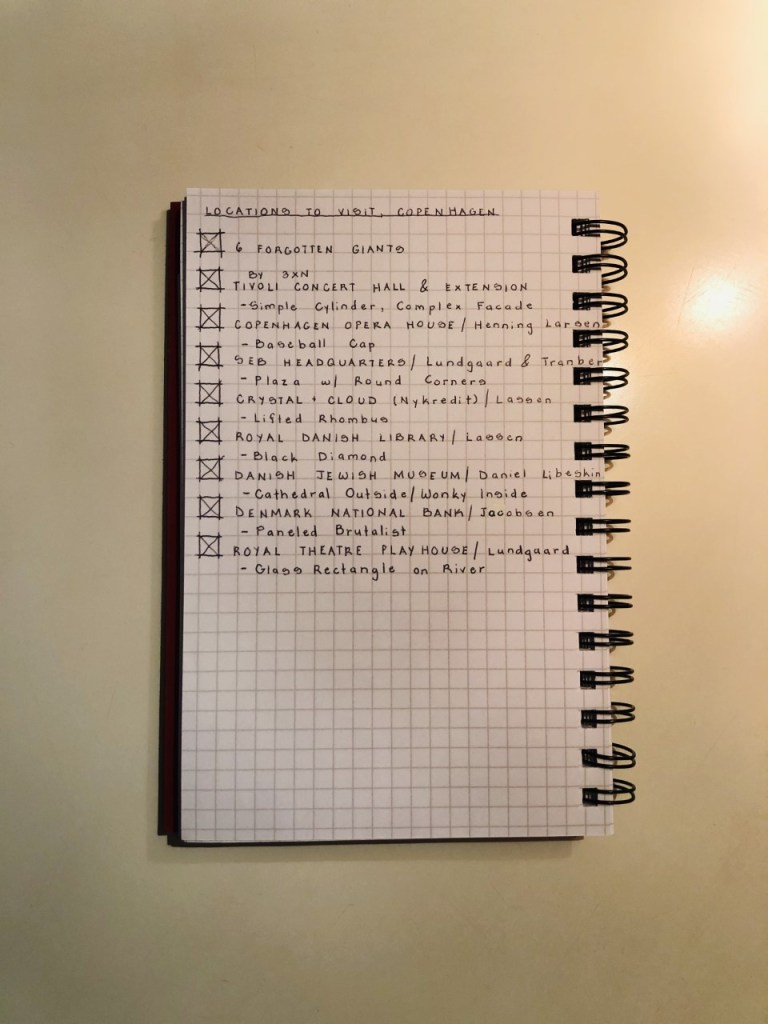
Visit buildings of interest! (See list below)
My checklist of the places I needed to visit in Copenhagen that I made before I arrived.
I think my expectations were realistic. The biggest thing I wanted to focus on was my attitude as I faced the unknown, the new, the confusing, the different each day. No matter what, I sought to find something positive in each day, and allow that to define my day rather than how out of sorts or homesick or worried I was feeling. I think I totally accomplished that. I look back on the semester and recognize the culture shock and homesickness, but I choose to focus on my friends and my host family’s generosity and the beauty around me.
And I think I accomplished my goals! I’m proud of the blog and the content I created. I joined Vanl∅se Football Club and had an amazing time playing with the locals. And I had an amazing volunteer/internship experience with Copenhagen Volunteers. Furthermore, thanks to my commitment to positivity, I also feel that my worldview/behavior has shifted. Although I am still a major planner and love control over my day, I have released some of that in favor of the flexibility that comes with embracing the unexpected. Who knows if the day or an experience will go exactly the way I imagined it, but I now know that everything will be fine, and I can jump headfirst into the unexpected. I’m still working on fully embracing this, but I am making progress!
Host Country Knowledge
One of the most important thinks that I learned about Danes was through my interaction with the overarching stereotype/claim that Danes are the happiest people on the planet. That’s too good to be true…right? Well, yes and no. The studies that yield this information analyze the health care, education, average income compared to living costs, employment rate, and other factors to rate the status of average citizens across the world. So, it’s true. In this case, Denmark is wildly triumphant. The government provides free health care, free education including college, a sizable pension/retirement plan, and a very safe and developed country. But at what cost? The answer is at least 50% of their income. Danes, just like any other country, still gripe about this number, but they recognize that it’s necessary to sustain such incredible public programs.
On the other hand, Danes also aren’t robots that don’t get unhappy, just because they are the “happiest people”. I firsthand witnessed anger, fear, sadness, and explosive joy whenever the Danish national team scored a goal. They, like every other human being, experience the full range of emotions, which may seem like a silly observation. However, before leaving for Denmark, I remember the almost mythical way that we Americans spoke of their title as the “happiest”. So it’s been a powerful realization that this stereotype/expectation (like most stereotypes/expectations) has some amount to truth to it, but also has another side to the coin that can be experienced by meeting and interacting with local. It’s a lesson that I want to take with me back to the States.
Some other important things I learned about Danes is the stark difference between their public and private personas, and I have been blessed to be invited into the private lives of many Danes who were so quick and willing to open their lives to me. I also gained a heightened value for family and the power of hosting to create community around a dinner table. My host family hosted my parents and my girlfriend and my aunt and uncle. They also hosted multiple events with their friends, and demonstrated how important these people were as they labored over food and decorations. I never understood how powerful the act of inviting someone into your home was until I traveled halfway around the world, particularly because I experienced it myself, firsthand. And I came to appreciate how easy going the culture was. “Take it easy” was a phrase thrown around endlessly, and as a pretty high strung dude myself, I loved this mantra.
Some of the things that I still want to learn more about include the language, the cultural nuances, and I’m excited to continue follow Danish politics, as I’ve been brought into the loop by my host parents. I’ve learned about 50-100 words in Danish, but would love to continue that learning process as I plan to return. The learning curve was particularly steep, as the pronunciation is so foreign and different from English, but about three months in, I finally got over the hump and have found myself understanding a decent amount of my host family’s conversations. There are also certain cultural nuances that I still want to work to understand as I get a better grasp of Danish culture. But most of all, I’m excited to watch how the future plays out as the Danish socialist approach to caring for citizens is being considered in other countries.
My classes have inspired me to delve further into questioning my own culture as a white man, as a Korean man, and as an American. Many of my professors asked questions of their own Danish culture and I appreciated the way that they honestly assessed their own preconceptions and cultural values that they accept at face value. It’s something that I hope to continue to do in my academics at Tulane, particularly as I take a government course in the spring. Our cultural values as both a democracy and a capitalist country often come into odds, and I want to assess our culture in the same way my Danish professors did.
One of my favorite intellectual connections was with Henrik, a partner at MTRE Arkitektur. He and his wife have run the firm for 15 years, and they agreed to partner with me in my service learning project of connecting them with Copenhagen Volunteers to create a specific volunteer partnership/project for the future. Henrik is originally from Norway, but came to Denmark in pursuit of an entrepreneurship opportunity. He and his wife desired to start their own company, a spirit that was quite familiar to me, courtesy of my capitalistic American roots that encourage entrepreneurs to turn there visions into realities. Thanks to our series of conversations over the semester, I am interested in nontraditional architecture paths, including consulting similar to the way that Henrik does. I will miss collaborating with him!
Re-entry Reflection
Yesterday, it hit me. I’m leaving. And although I’m insisting that I will return (similarly to excerpts from Maximizing Study Abroad), I am concretely aware of the fact that I will never be back to the country the way that I have been the last four months. That fact smacked me in the face after I left my last class, and I rode the metro home in a sort of melancholy zone. I will miss my friends, and my host family, and this beautiful city. However, I’m glad that the feeling hit me now and I have the ability to sober up in order to say the goodbyes that these people in my life deserve. I would hate to remain in denial until I boarded the plane only to realize it mid flight and desperately regret the poor goodbyes that I gave.
I’m feeling a slew of emotions. I’m incredibly excited to return home. In a week, I will be standing as the best man in my best friend’s wedding, and I could not be more excited for that. My family has a series of holiday traditions that I’m also deeply looking forward to. It’s clear that it will be an incredible winter break.
However, it’s also undeniable that I will also have to grieve the end of this chapter. It was such an amazing four months, and as a result, I already have a sense that leaving will weigh heavily on my heart. I don’t want to push that down. I want to hold it and process it and recognize that it shows how influential this semester was to me. I’m excited for what’s to come, but I know that this was special to me.
I think the most difficult thing about re-entry will be how busy the first three weeks back are already shaping up to be, and how no one around me will have shared experience with me. As a result, I want to make sure that I’m carving time out of my holiday schedule to process and feel and acknowledge the reverse culture shock. Although my transition from the States to Denmark was relatively smooth, I recognize the possibility that the transition back may be less so. Still, I want to approach it with the same attitude of flexibility and embrace the experience the same way I did four months ago. Also, I’m not entirely alone in the experience of returning from studying abroad, as my girlfriend returned from Scotland last year frustrated at the fact that she had to leave amazing friends that she had made in a life-changing semester abroad. I’m going to lean into her in the first couple of weeks because she can relate to the feelings.
I think the biggest things that I’ll have to get used to is the outgoing nature of the public persona and the overwhelming attitude of consumption in the States. Public spaces are simply quieter in Denmark, as Danes are more cognizant of the way that they present themselves. I think I may be overwhelmed at first when I go the public places in my neighborhood at home and how loud they are. Similarly, Danes are also more cognizant in their consumption. From the size of their cars to the food they eat to the way shop, Americans simply consume more than them, and I’m sure I’ll find myself perturbed at the appetites (literally and figuratively) that I simply used to accept as the norm.
It is crucial that I stay in touch with my host parents. I’m less attached to Danish culture, and more attached to my host family specifically. We have already agreed to FaceTime at least once a month, and I have insisted that I will be back in at least three years. They are already inviting me back, and I plan to keep this relationship for the rest of my adult life. They are such amazing human beings! Also, if I’m ever craving more Danish pastries in Los Angeles, there is a small town north of Santa Barbara called Solvang that is notorious for its population of Danes and Danish culture.
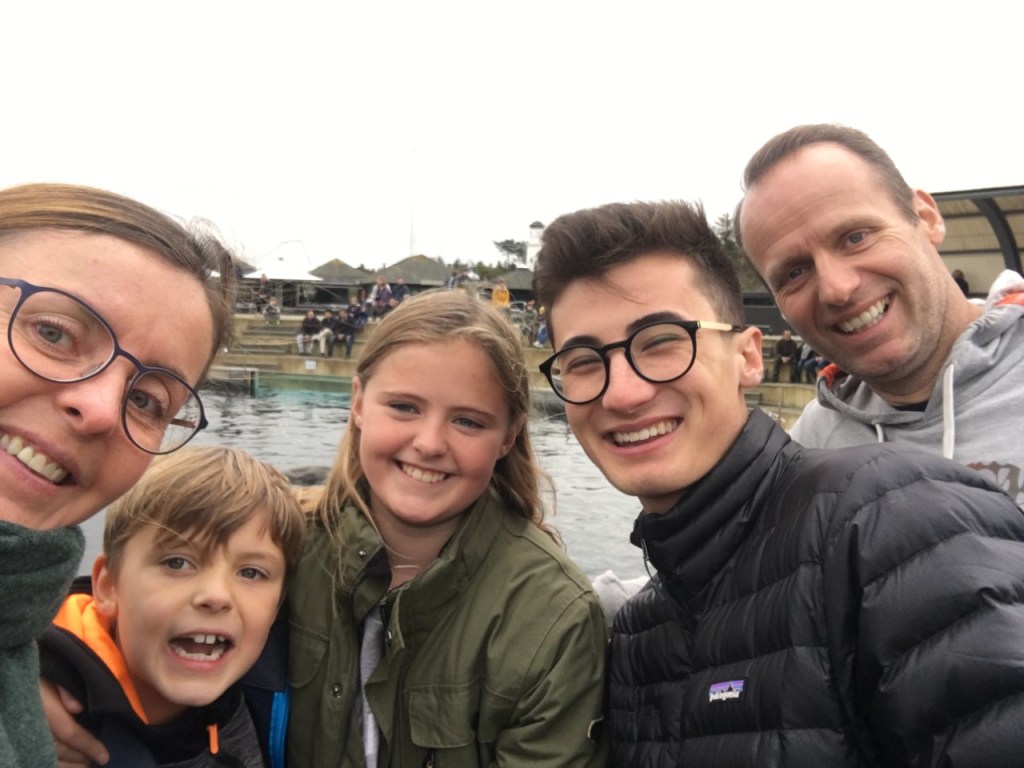
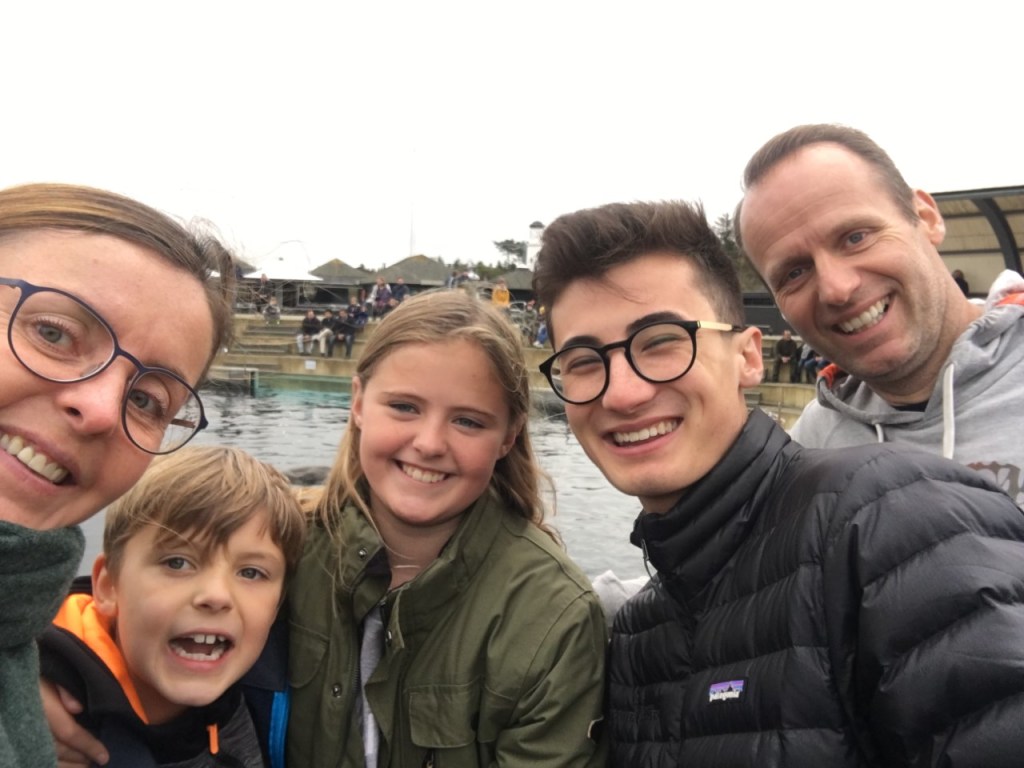
Left to Right: Dorthe, Felix, Freja, Me, and John
I think any changes in me will be celebrated. My friends and family have encouraged and deeply supported any and all growth that I have gone through in college, and I don’t expect this to be any different.
Service Learning Project
As I mentioned in my earlier blog posts, I interned with Copenhagen Volunteers, a local collective of 1,800 volunteers that participate in 80 events across the entire year. After participating in a number of events, I realized that I wanted to create my own in conjunction with this small local architecture consultant MTRE Arkitektur that I had connected with through a friend of my host family. What a small world! Anyway, after a number of hours brainstorming, the three parties agreed upon hosting a think tank about the way that users engage architecture in Copenhagen, similar to the very first event I participated in: the Festival for the Global Goals, hosted by Sustainability Now. My event will take place in September 2020, and will hopefully become one of the repeating events that CPH Volunteers help put on! (fingers crossed) There will be a wide range of activites, but the success will come from the fact that MTRE will be able to compile the data into a report and hopefully create tangible design feedback from ordinary citizens in Copenhagen!
The event will be centered around non-architect citizens, who perceive space and buildings solely through their everyday engagement in it. The hope is to begin a discussion about the way that architecture affects our emotional, physical, psychological and mental health, and see if there are any ways to improve that across the board. My favorite activity will be a feedback wall that will be cataloged, and hopefully used to spot trends in the needs of the local citizens.
As a result of participating in events with CPH Volunteers before creating my project, I was able to understand the process by which events are planned and the infrastructure necessary to create a plan that can be executed next year. I was able to specifically design the event in a way that future event organizers can sit down with the plan and execute. This was because I got a sense of the way the local system worked, and then designed the event/project planning in a way that would fit their system, instead of creating a plan and then becoming frustrated when it didn’t fit their system. The long term effect will be (hopefully) a successful event in September 2020, and a connection between CPH Volunteers and MTRE that could lead to future projects.
Planning this event helped me realize that this is something that is entirely repeatable in the States, even when I’m working a traditional job, but also want to engage a community on the side. The project fit my skills, and I’m absolutely interested in pursuing more partnerships in the future. I also got a taste of how important it is to see connections between organizations with similar goals, and doing the leg work to get them to meet and collaborate on a project. I couldn’t have done it if it wasn’t for partnership from both CPH Volunteers and MTRE. My future personal, professional, and academic goals have widened to include opportunities involving non-profits or volunteer collectives because of how influential this service learning was for me.
If I was going to give advice to my then-self, starting this project just over a month and a half ago, I would say “take it easy!” I was overly concerned with whether it would work out, when in reality being present in the design process and the people I was collaborating with was arguably more important. And everything turned out perfectly, so all the worry was for nothing! In the future, I want to remind myself of the human aspect of whatever I’m working in, and not to lose sight of that even while striving for a goal. That is incredibly important.
As I mentioned above, in July or August, one of CPH Volunteers’ project organizers will pick up my project plan and execute it! Hopefully, all goes smoothly, and I’ve left my contact information with the company if they hit any issues. But the plan is flexible enough for them to edit as they see necessary too. And MTRE is more than capable of calling audibles as they see fit. I’m just sad that I won’t see it come to fruition, but the organization has promised to keep me in the loop!
A last piece of advice to August 2019 Mark (and anyone else considering study abroad)
So Mark, as you stand, poised to board the plane at LAX, I want to encourage you in the fog of the unknown. The truth is that you have no idea what the future holds, but that is life, and I know that you would regret it so much more if you stayed put. So, take a deep breath and embrace the unknown, taking it day by day. The truth is that you can’t know what the future holds, and that’s ok! I’ll see you in Copenhagen!
One of the differences that I remember first noticing between the Danes and Americans was the contrast between our public personas. When I walked around the streets or rode the metro, I would try to meet people’s eyes, smile, and generally exude warmth. In return, all I received was coldness: blank stares and confused looks. I realized that Americans have warmer public personas (or at least Los Angelenos do), and this was a cultural expectation I carried with me from the States. Later, I’ll discuss what it looked like when I discovered the private lives of Danes.
Recently, I got another taste of the Danish social life. After a volunteer event for my service learning, my organizers threw a party, celebrating both the success of our event and that of the Danish soccer team, who qualified for the European cup (peep my jersey). Although I have been to my fair share of social events with my host family, this was different because I didn’t have a designated interpreter for both the Danish language and cultural encounters occurring around me. As a result, I felt more like an outsider than usual to the event and the subsequent jokes, cultural references, and traditions. This was all underlined by my newness to the organization. Thankfully, my friend Eva took pity on my predicament and accompanied me through the second half of the party. If she hadn’t, I surely would have continued to wander, feeling confused and out of place.
Danes, including the organizers of this event, are wildly punctual, but then overly laid back. What do I mean by this? For example, parties in Denmark that should last 2 hours in the States “drag” on for 4-5 hours as the hosts serve their third or fourth rounds of coffee. I was taught that when the host serves coffee, it’s a sign that it’s time to take off. But not here! In Denmark, coffee means “Let’s move to the living room and start a fire and relax. Stay as long as you’d like!”
I felt this difference most strongly when, a week into my time abroad, my host family took me to their grandson’s birthday party that lasted 4 and a half hours. At hour 2, I began to feel unsettled, thinking we were overstaying our welcome. However, I read the room and realized that I was the only one feeling this way. So I relaxed, poured myself more coffee, and let the Danish language wash over me.
Thankfully, I understand this difference now, as my service learning party was no different. There was a loose schedule for the night, but no one was in a rush. People meandered through the night and Eva emphasized the importance in greeting every person she knew at the party. So I followed as she deftly navigated through the boisterous crowd. There was a short speech toward the end of the party thanking us volunteers, but it was clear that the event and the organizers prioritized time for people to connect. If I was organizing a similar event, I would probably have created a more structured schedule, but in retrospect, I enjoyed the flexible plan more.
As I mentioned before, Eva became my bridge between my culture and her’s. Thanks to her, I enjoyed the night so much more. I think after my time abroad my relational boundaries are becoming more flexible. In my opening, I talked about the public persona that the Danes display: blank and non-forthcoming. By comparison, Americans have a higher expectation of warmth in public. We also expect that friendships will slowly and steadily grow over time as we invest time and energy. The process from stranger to acquaintance to friend to trusted person doesn’t happen overnight. We peel back our layers as we each take steps towards each other.
By contrast, the Danes are explosive and immediate relationally. They are cold in public, but as soon as you switch from stranger to acquaintance in their eyes, all bets are off. The transformation from public to private is night and day. I experienced this across the board with my host family, my host family’s friends, my professors and even my organizers for service learning. Multiple times while in Denmark, I distinctly remember thinking, “we only met an hour ago” because we were discussing anything from politics to personal trauma to familial drama.
I think this dynamic is causing a shift in my view of relational steps. I’ve found that even in the four months that I’ve been here, I’ve grown more forthcoming with my story and life experiences, as I’m more willing to match the Danes in their relational courage. Now, I’m also aware that there are ways that both over-sharing and over-vulnerability can be inappropriate. However, I think that our relational culture in the States has grown rather guarded, and I think there’s ways I can continue to push myself to the edge of my comfort zone and be intentionally vulnerable in courageous ways. This is an area of difference that I want to maintain upon return.
Also, the Danes have an enormous value for hosting. Hosting events are no small matter and this is another value I want to bring home. Both my mom and my girlfriend’s family have huge values for hosting and making people feel at home in your space, and this is something I want to tap into more while home.
An aspect that I’m excited for and that will be refreshing is the public warmth in Los Angeles. While I recognize, understand and respect the Danes’ value for a protected public persona, I love to smile at passerby and it’s a habit that’s hard to kick. I’m ready to be back in a place where that’s culturally acceptable.
While at the party (thanks to the Danes’ value for going all in relationally), Eva and I struck up a conversation about her/Danish public opinion of Americans/USA. And most of her thoughts aligned with my host parents and other host country nationals I’ve discussed it with. Every Dane I’ve interacted with around this topic are incredibly direct. There is no beating around the bush when it comes to political, social, or cultural values. It was a bit shocking at first, but I have since grown appreciative of their candor.
Conversations about the States always open with some sort of apology on my end for whatever current issue is in the news, courtesy of our sitting president. Recently, it’s been all the talk of the impeachment. That always puts a lovely spin on the conversation as most Danes, and Europeans for that matter, are well educated on international politics, and are mystified by the Trump administration. For that reason, most of my views have aligned with both Eva and other host nationals when it comes to the status of the States. However, they don’t hesitate to ask, “Why did Trump do this?” and “Why did Trump do that?”. I’ll typically respond with a sheepish shrug.
By comparison, I knew shockingly little about Danish politics and culture. I have since been well educated by my host parents, but I am always surprised as I talk to other host nationals because of how nuanced the topic is. Eva was no different as she reminded me that there’s always another couple of sides to the story, and how important it is to consider those. I often forget that lesson. Many of her explanations for those nuances aligned with my interpretations of local culture, as my host family has been my interpreter for both the language and culture during my stay.
In these conversations, language and culture are intertwined, both in content as well as the way we communicate. Discussing political/cultural differences in a foreign country remind me to pay attention to non-verbal communication/read the room, as this is also a form of language that communicates just as much as speaking. One of the main observations I continue to make is how comfortable Danes are, even when speaking about topics that are considered taboo in the States. It’s a refreshing cultural difference discerned from both their verbal and nonverbal communication.
Analyzing the party, and Danish social interactions in general, connected to Gordon’s writing in “Going Abroad” in a number of ways. Firstly, his categories hit the nail on the head. If I was going to define the way that Danes related to America, I would classify it as “amusement”. From our political divisiveness to our health insurance issues and general capitalistic values, we may still be a world power, but are a bit of mystery to local host nationals that they chuckle and shake their heads at.
Secondly, I reacted to when Gordon wrote, “It is the [power, status] that makes is seem as if they are popular after all.” In Denmark, as I said above, I’ve experienced the opposite. Not only are Danes comfortable around Americans, they consider Denmark’s current state of affairs to be superior to America (perhaps rightly so). The States consider to experience mass shootings, racial tension, a polarizing presidential figure, etc. As a result, I should have less power in Denmark. Instead, thanks to both the accepting nature of Danish social settings and my apologetic presentation as an American, the Danes mostly approach me graciously and weigh me as an individual, rather than a cultural representative of the entire American culture, and the slew of issues that come with that identity.
Thirdly, I strongly associate with the idea of an exit option. I, as a traveler, am able to engage with activities in Denmark and not necessarily have to live consequences, or at least the onerous ones. This leads me to tread lighter culturally. I definitely feel the privilege in this, especially the privilege that travel inherently carries thanks to the high monetary bar.
The bottom line is that I feel incredibly grateful and blessed for this opportunity to study abroad, and there are certainly social practices that I hope to take home with me! Thanks for reading if you stayed this long!
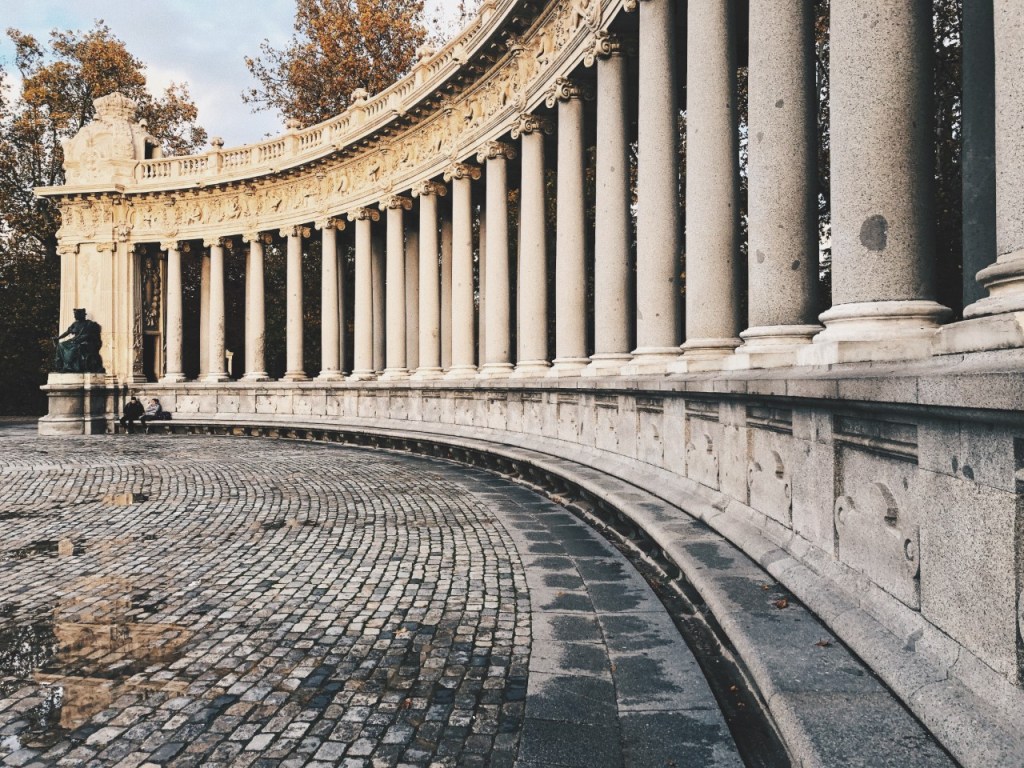
A small plaza in the middle of Parque de Buen Retiro
This last weekend I popped over to visit my aunt and uncle that live in Madrid! It was an incredible trip that consisted of many portions of huevos rotos, a “thanksgiving” dinner, and some rusty Spanish! Some of the fun differences between Copenhagen and Madrid:
Hills! As soon as we exited the airport we wove through some “hills” and I immediately got excited, as that is something that I’ve definitely been missing from home! Copenhagen is extremely flat.
The local language is NOT English. I know, I know, this is rather obvious. But, it’s jarring to go from one city where the baristas understand and respond in English, to Spain, where they will only take your order in Spanish.
Madrid has significantly more people. The population difference between Copenhagen and Madrid is almost 6 million people, so when we attempted to navigate the metro station, we were overwhelmed by the number of people pouring out.
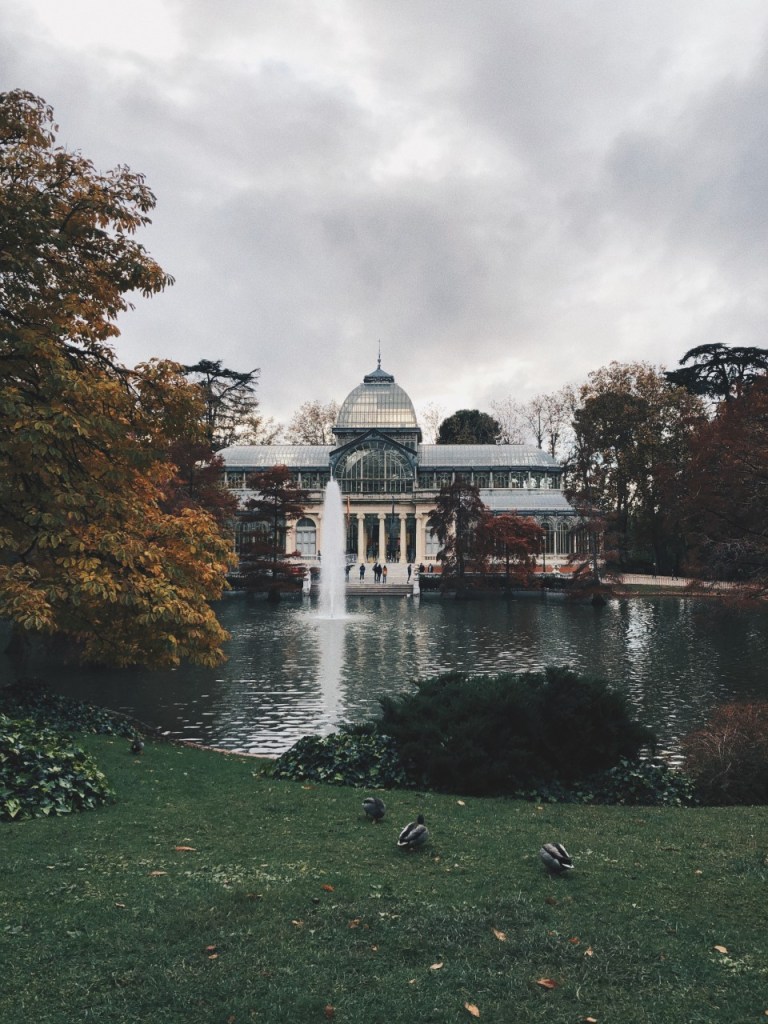
One of the highlights from my trip was wandering through the Parque de Buen Retiro, a huge park with a number of small buildings and other public areas built in to rest. Here are some photos!
The Rose Garden
The Lake
The Crystal Palace
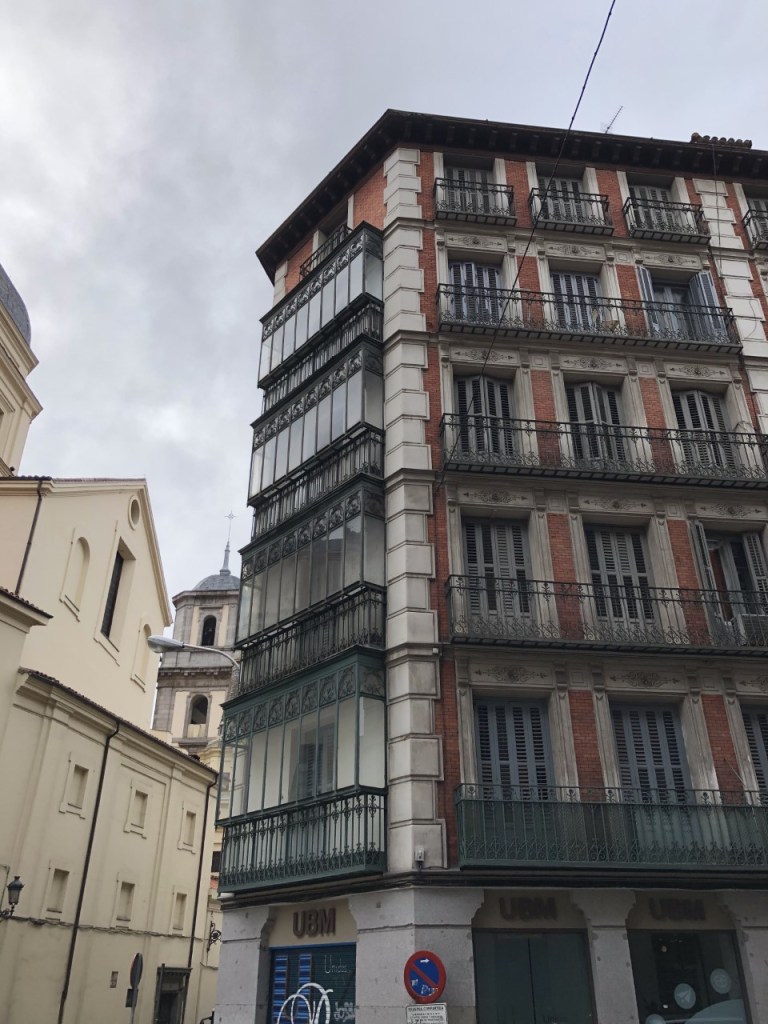
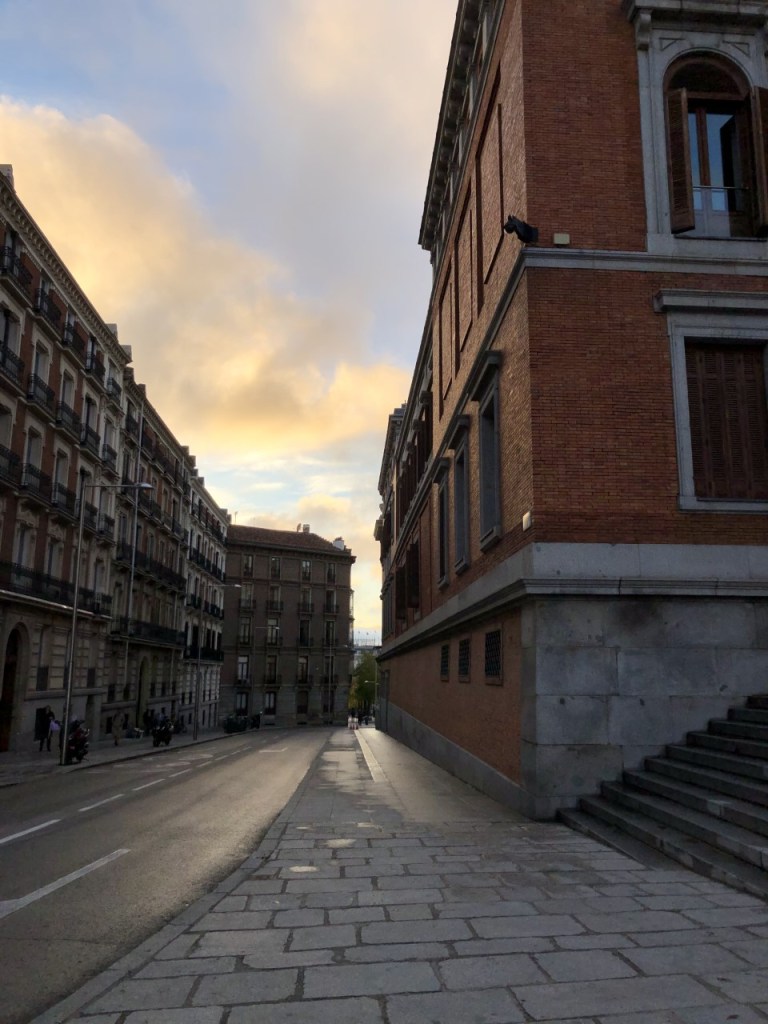
One of my favorite ways to explore cities is simply to wander down streets, so here are some photos of my favorite buildings I saw.
My uncle took us out to experience the night life, and specifically the world of tapas.
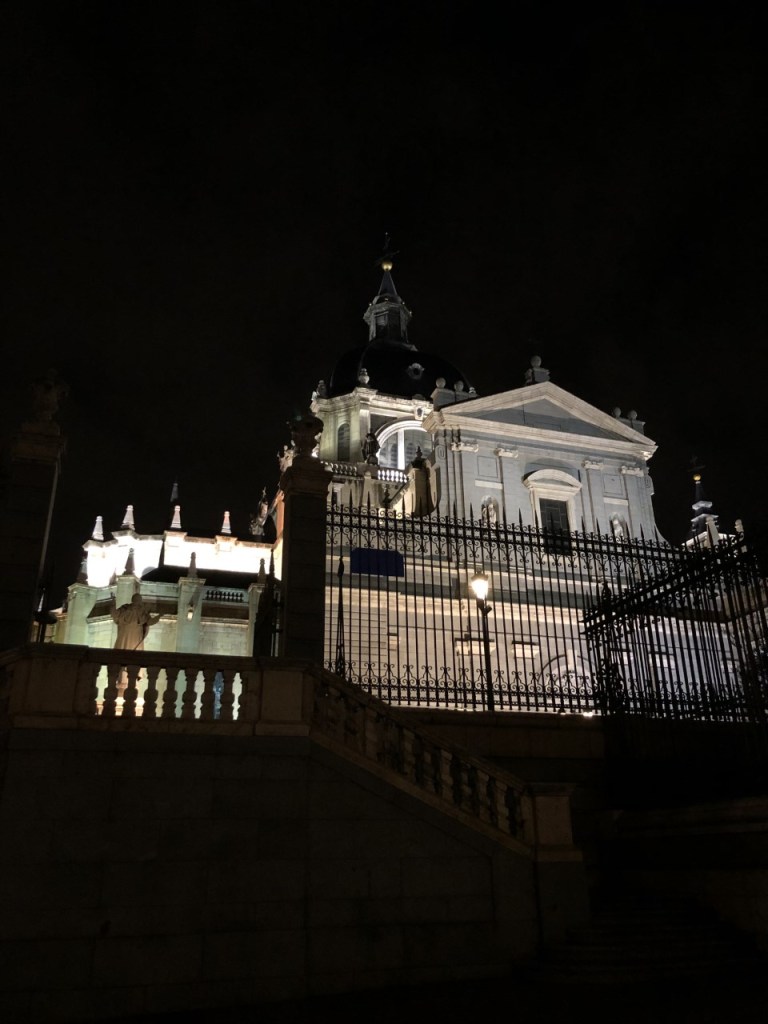
The Cathedral at Night
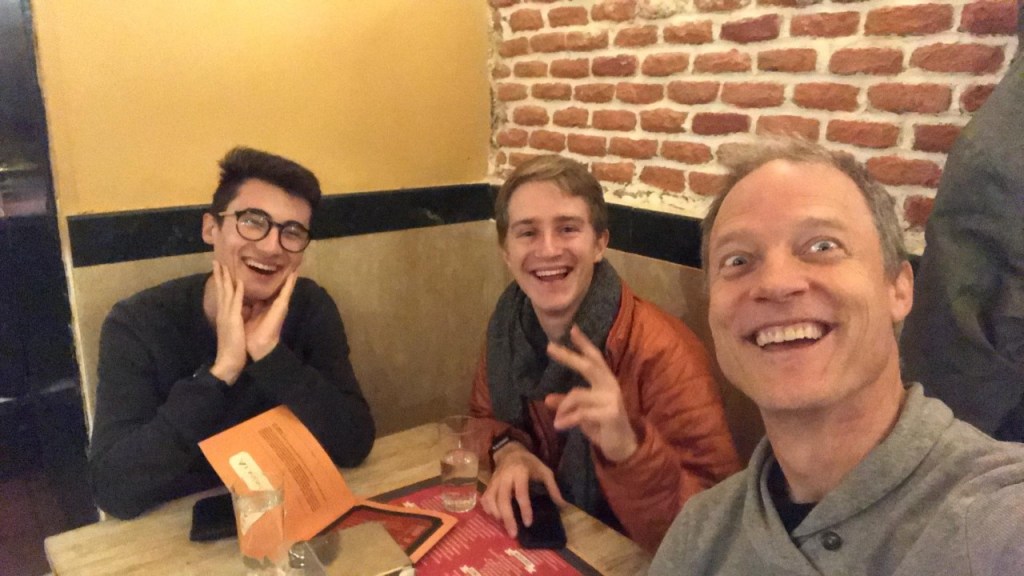
A successful night on the town!
Thanks Uncle Mike and Auntie Raquel for hosting me! Hasta luego y te amo! Muchos besos!
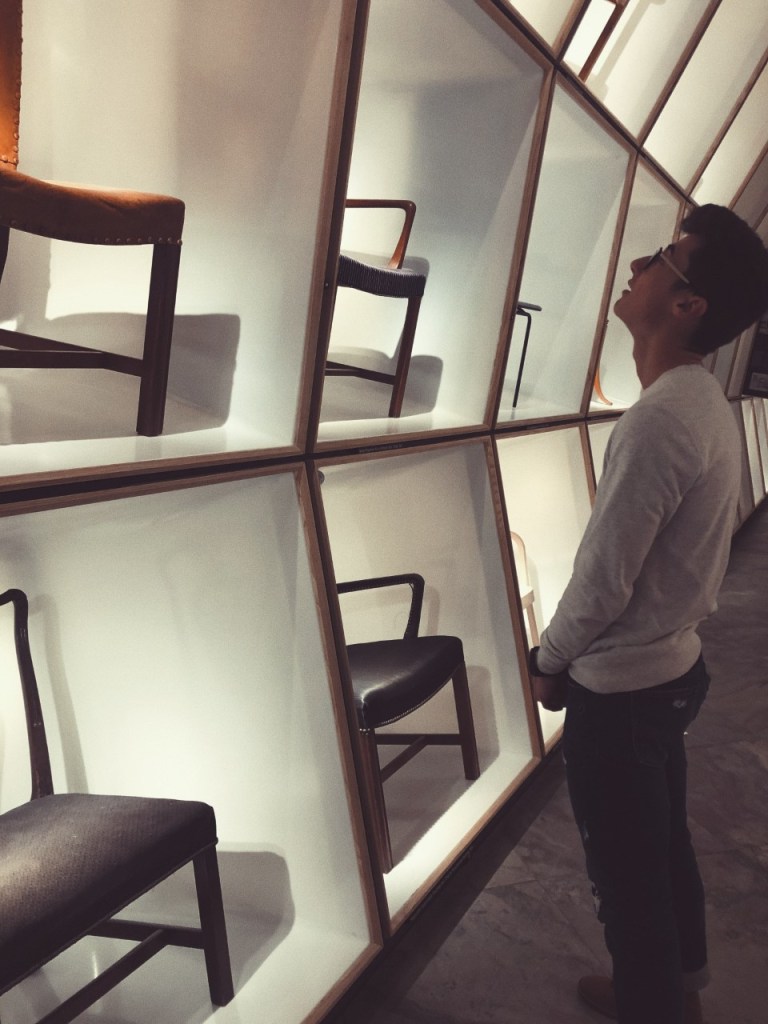
Standing in awe before the chair exhibit in the Design Museum, Denmark.
Fair warning! Another long blog below!
What Student Tourists Do and Learn from Travel
George Gmelch is an anthropology professor at the University of San Francisco that specializes in studying the way that students engage with other cultures via study abroad experiences. In his article “What Student Tourists Do and Learn from Travel”, he writes about different trends that he sees in the way that students learn from studying abroad – and my goodness – it resonated with me! With 28 days left in my time in Denmark, here are some of my preliminary thoughts on the experience:
“The journey itself was much less important to the students than the destination.” I am entirely guilty of this! During my travel both in Denmark and in the larger part of Europe, you would find me watching whatever movie or show I had recently downloaded on Netflix. Looking back, this meant that I missed two things: the changing landscape outside the bus, train or plane that I was riding in, and any interactions with local people. What a shame! One of my favorite memories of Scotland was when Taylor told me to turn my phone off and watch the city of Edinburgh disappear as we sped through the green, rolling hills of St. Andrews.
“Americans approach their leisure activity much like work…they exhaust themselves running about trying to get in as much as they can.” Coming into my time in Denmark, I knew that I wanted to be intentional with the way I spent my weekends, setting them aside so that I could be with my host family at a birthday party, instead of in a new country. While this means that I haven’t seen nearly as many different places as my fellow students at DIS, it does mean that I have had more time to connect with my host family and see the world of Denmark through their eyes. Furthermore, I’ve found myself to be more energized and less abroad fatigued than some of my fellow students who have seen new countries every weekend. That said, everyone has different study abroad goals! I just think that it’s important to be honest with yourself and recognize the value of investing time into exploring your host country.
“I was surprised by the superficiality of their engagement with the cultures they visited and how little meaningful contact they had with local people.” I’m also completely guilty of avoiding contact with local people and seeking out the familiar. When my class traveled to Germany, we spent lunch time at a local rest stop. Instead of stepping up to the plate and ordering a sandwich at a local deli, I made a beeline for the McDonalds! Instead of embracing the unfamiliar, I desperately bought over-priced chicken nuggets to avoid a potentially embarrassing, but arguably more rich cultural interaction with a local vendor. Many times a day, I choose the easier way out, but for the next 28 days, I want to choose the “harder” path and engage my host culture more fully! This starts with willingness to shower with my local soccer team!
Gmelch also seeks to understand why student tourists experience growth. He concludes “Personal development is different from cognitive development. Personal development is the unfolding, growth, evolution, expansion and maturation of the individual self.” I would fully agree with describing my study abroad experience as “unfolding”. When I got onto the plane at LAX, I began the process of unfolding myself and embracing the experience of entering a foreign and unfamiliar environment. What would my host family be like? What kind of food would I eat? How would I handle the cold? Would I enjoy my classes? These were some of the questions that wanted to keep me from crossing the ocean to arrive, but I accepted the unknown and traveled. And I’m so glad I did! It was a powerful experience of taking a risk and realizing that my host family was actually incredible, that the food I ate was fantastic and less foreign than expected, that with the cold comes with the Christmas season, and that my classes would be amazing! However, I think that the word “unfolding” is a great way to describe the first couple of weeks in a new environment. It can be so intimidating!
“Traveling/life abroad is not PREDICTABLE.” This is my study abroad thesis! I am Captain I-need-to-know-what’s-coming, and this semester has been anything but. Sure, I knew what the big pieces would look like, but the day-to-day was unknown, and that terrified me. That said, because of my time abroad, I have grown to be incredibly more flexible (there’s still a lot of work to do, don’t get me wrong). Changes in the plan are no longer the end of the world because changes in the plan happen all the time! I have learned to embrace the unpredictable nature of studying abroad and have found myself enjoying the challenges in my path.
One of the thing Gmelch also encourages student tourists to do is to reflect on their visits to museums and other cultural landmarks, so see some of my thoughts below!
Museum Day!
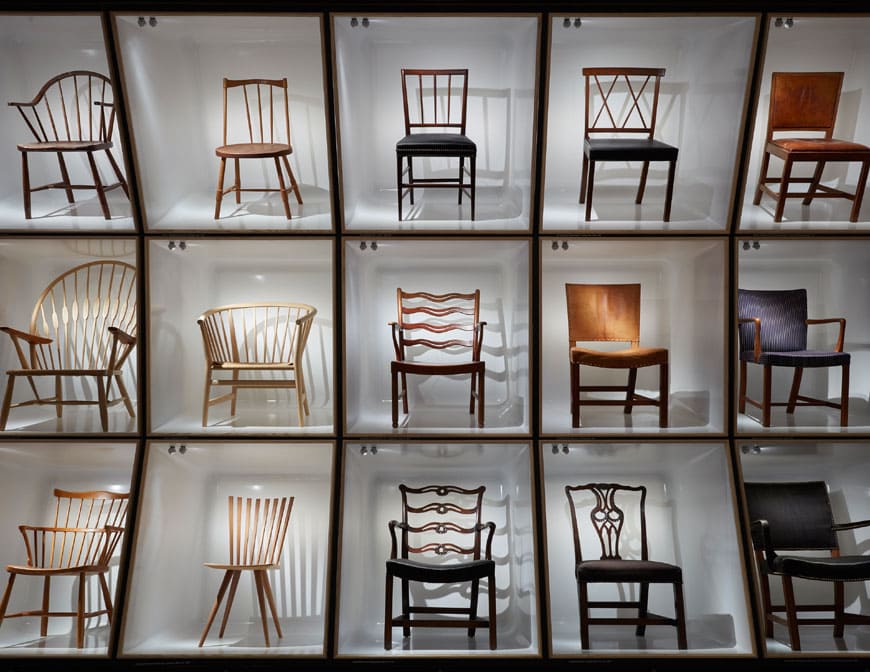
In my short time abroad, I’ve gotten a crash course in the Danes’ appreciation for and attention to detail. The Design Museum in Denmark stands as a prime example of this cultural value. The museum is home to exhibits upon exhibits of both avant-garde and every-day objects. These range from fantastical bicycles to a hall full of chairs used by most Danes. This hall of chairs (pictured above) is what truly caught my eye, and I spent at least half an hour pouring over the entire exhibit.
This exhibit exemplifies the Danish value for good design that is the result of iteration after iteration to reach the final product. However, the market for good design also is wide enough that most of the final products are valued. Any person could walk into the exhibit and choose the chair that fit them best because Danish design runs both deep and wide. What I mean by this is that Danes have a high expectation for quality of life and how hygge their homes are, but they also recognize that this looks different for each person. Coffee shops aren’t all decorated the same, living rooms don’t have the same furniture, and people spend their money differently.
In other words, the Design Museum reminded me that although the Danes share a common value of quality design, it looks different for each person and that’s totally fine. When I spoke with locals who were visiting the museum alongside me, one of the common themes was a feeling of representation while also seeing what other people liked. One older gentleman said it best: “I love seeing my childhood chair among others. I know that other people see themselves represented on the wall.” Pretty meta for a simple chair exhibit!
Visiting a well-known local landmark, monument, cultural site.
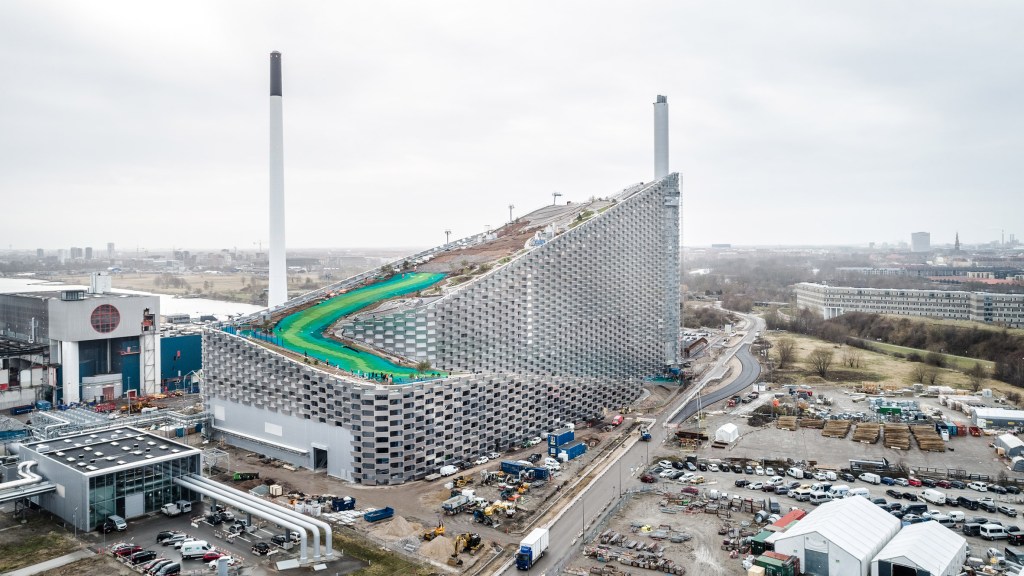
Copenhill under construction.
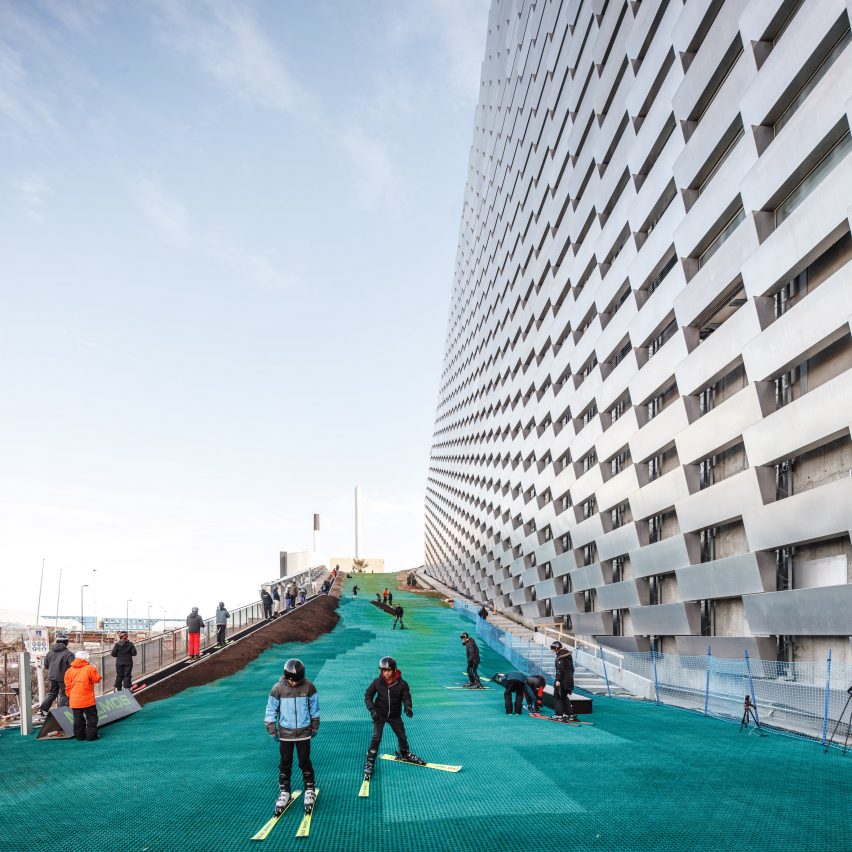
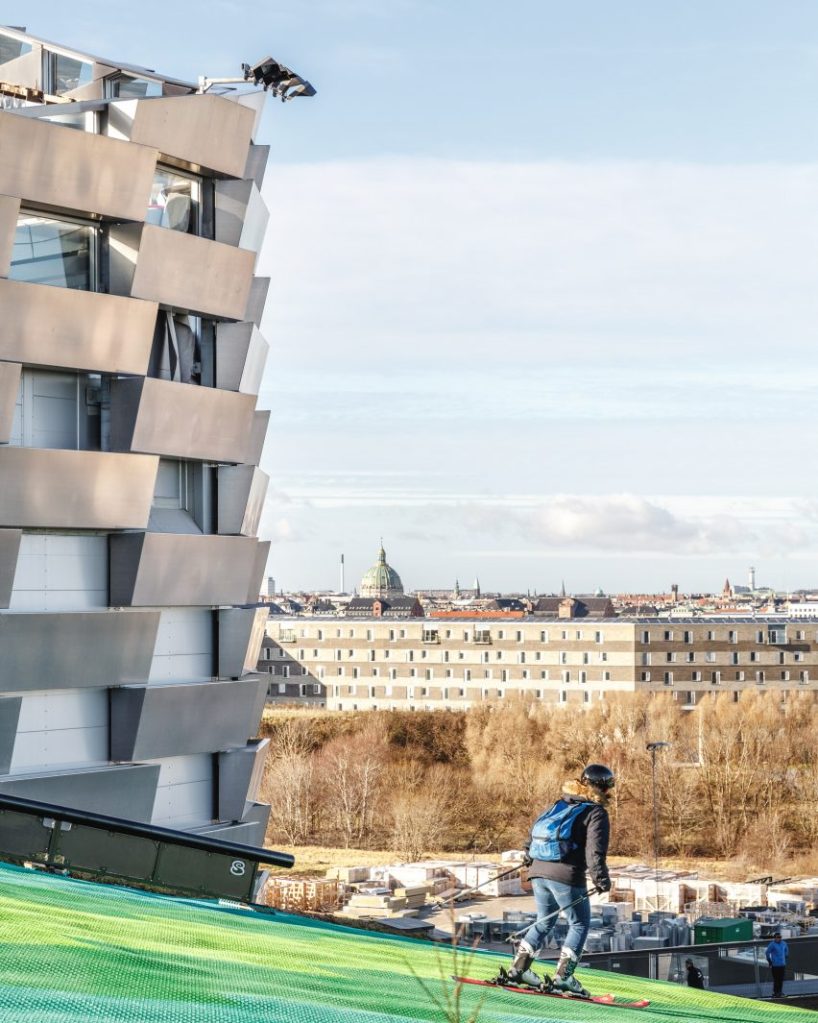
So I already know that I’m stirring the pot by calling the Copenhill a landmark, but hear me out! Some background: the Amager Bakke, or more commonly referred to as the Copenhill, is a sprawling power plant with a ski slope located on top of it. The architect behind the project, Bjarke Ingels and his studio BIG, is known for innovative new ideas. His projects are some of the most polarizing. Architects will argue endlessly. On the one hand, Bjarke is challenging what we perceive to be possible. Can we put a ski slope in one of the flattest countries on a power plant? Heck yes. On the other hand, his projects can be described as cheeky, disrespectful, and inattentive to detail. I’ll leave that up to you to decide.
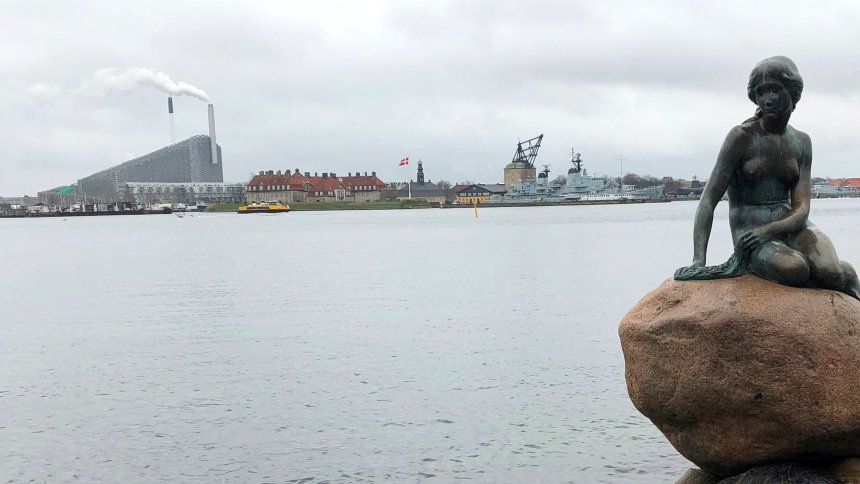
The Copenhill in the skyline behind the infamous Little Mermaid.
While the jury is out on whether it is a good building, it is undeniable that the project is present in the Copenhagen skyline. Bjarke stated himself that the project was intended to be monumental as it stands proudly in the horizon alongside the spires of the churches that date back to 1700s and earlier.
The Copenhill after recently opening.
Before visiting the building myself, I was pretty underwhelmed and had low expectations. The project ran behind schedule and seemed like it was a way to create cheap thrills. Most locals that I asked about it had some choice words that they wanted to say to Bjarke. I didn’t know much about the project beyond the fact that it was a ski slope on a power plant, two seemingly unrelated types of program.
I have to admit that upon arriving, I was also pretty underwhelmed. The building is much further from public transportation hubs than I expected, and it was a decent trek to get there. As you can see in the photo above, the side of the building is this metallic system with concrete behind it that is supposed to house a green wall for plants, but is for now relatively cold and uninviting. As you travel up the hiking path that runs alongside the slope, there are still parts that are unfinished, and many plants are still being planted.
And then I arrived at the top and my breathe was taken away. It was an incredible view that is similar to when visitors climb church towers in the city and rise above the rest of buildings. Some local groups of people sat at the top, hair blowing in the cold winter wind, enjoying their lunches. I stopped to chat and found that they had already made a regular tradition of “hiking” to the top of the building and having lunch. I was taken aback by this group of users that I didn’t know existed. The building offered a fresh, new experience that these outdoorsy people desired, but couldn’t find in the flat city.
In retrospect, I definitely didn’t give the building a fair chance. And when I step away from the criticisms about the way it looks and its unfinished nature, I am reminded of the laughter of the kids that skied down the hill beside me, an experience that they wouldn’t be able to have unless they traveled to another country. I am also reminded of the people perched at the top, enjoying the brisk wind and good company. Not too shabby, Copenhill. Not too shabby.
Service Learning Reflection
I think the connection that I can draw between the chair exhibit in the Design Museum, the Copenhill, and my service learning with the CPH volunteers is a deep-rooted passion/value for something. Danish chair designers spend years perfecting their designs in order to make the extremely mundane activity of sitting celebrated and comfortable. Bjarke Ingels worked to prove to the world that a ski slope on a power plant is possible. CPH volunteers organizes almost 2000 people annually to make sure that film festivals, Christmas celebrations, and sustainability conferences go on without a hitch.
The people that I volunteer with are decorated citizens with their own diverse passions organized around a common desire to serve. It’s been a powerful reminder to continue to hone my own passions and figure out what my focus will be. I’ve loved that even halfway around the world, I am able to find people who stoke my own inspiration in a flame!






 Follow Me to DenMARK