Touring Local Landmarks and Museums
Fair warning! Another long blog below!
What Student Tourists Do and Learn from Travel
George Gmelch is an anthropology professor at the University of San Francisco that specializes in studying the way that students engage with other cultures via study abroad experiences. In his article “What Student Tourists Do and Learn from Travel”, he writes about different trends that he sees in the way that students learn from studying abroad – and my goodness – it resonated with me! With 28 days left in my time in Denmark, here are some of my preliminary thoughts on the experience:
“The journey itself was much less important to the students than the destination.” I am entirely guilty of this! During my travel both in Denmark and in the larger part of Europe, you would find me watching whatever movie or show I had recently downloaded on Netflix. Looking back, this meant that I missed two things: the changing landscape outside the bus, train or plane that I was riding in, and any interactions with local people. What a shame! One of my favorite memories of Scotland was when Taylor told me to turn my phone off and watch the city of Edinburgh disappear as we sped through the green, rolling hills of St. Andrews.
“Americans approach their leisure activity much like work…they exhaust themselves running about trying to get in as much as they can.” Coming into my time in Denmark, I knew that I wanted to be intentional with the way I spent my weekends, setting them aside so that I could be with my host family at a birthday party, instead of in a new country. While this means that I haven’t seen nearly as many different places as my fellow students at DIS, it does mean that I have had more time to connect with my host family and see the world of Denmark through their eyes. Furthermore, I’ve found myself to be more energized and less abroad fatigued than some of my fellow students who have seen new countries every weekend. That said, everyone has different study abroad goals! I just think that it’s important to be honest with yourself and recognize the value of investing time into exploring your host country.
“I was surprised by the superficiality of their engagement with the cultures they visited and how little meaningful contact they had with local people.” I’m also completely guilty of avoiding contact with local people and seeking out the familiar. When my class traveled to Germany, we spent lunch time at a local rest stop. Instead of stepping up to the plate and ordering a sandwich at a local deli, I made a beeline for the McDonalds! Instead of embracing the unfamiliar, I desperately bought over-priced chicken nuggets to avoid a potentially embarrassing, but arguably more rich cultural interaction with a local vendor. Many times a day, I choose the easier way out, but for the next 28 days, I want to choose the “harder” path and engage my host culture more fully! This starts with willingness to shower with my local soccer team!
Gmelch also seeks to understand why student tourists experience growth. He concludes “Personal development is different from cognitive development. Personal development is the unfolding, growth, evolution, expansion and maturation of the individual self.” I would fully agree with describing my study abroad experience as “unfolding”. When I got onto the plane at LAX, I began the process of unfolding myself and embracing the experience of entering a foreign and unfamiliar environment. What would my host family be like? What kind of food would I eat? How would I handle the cold? Would I enjoy my classes? These were some of the questions that wanted to keep me from crossing the ocean to arrive, but I accepted the unknown and traveled. And I’m so glad I did! It was a powerful experience of taking a risk and realizing that my host family was actually incredible, that the food I ate was fantastic and less foreign than expected, that with the cold comes with the Christmas season, and that my classes would be amazing! However, I think that the word “unfolding” is a great way to describe the first couple of weeks in a new environment. It can be so intimidating!
“Traveling/life abroad is not PREDICTABLE.” This is my study abroad thesis! I am Captain I-need-to-know-what’s-coming, and this semester has been anything but. Sure, I knew what the big pieces would look like, but the day-to-day was unknown, and that terrified me. That said, because of my time abroad, I have grown to be incredibly more flexible (there’s still a lot of work to do, don’t get me wrong). Changes in the plan are no longer the end of the world because changes in the plan happen all the time! I have learned to embrace the unpredictable nature of studying abroad and have found myself enjoying the challenges in my path.
One of the thing Gmelch also encourages student tourists to do is to reflect on their visits to museums and other cultural landmarks, so see some of my thoughts below!
Museum Day!

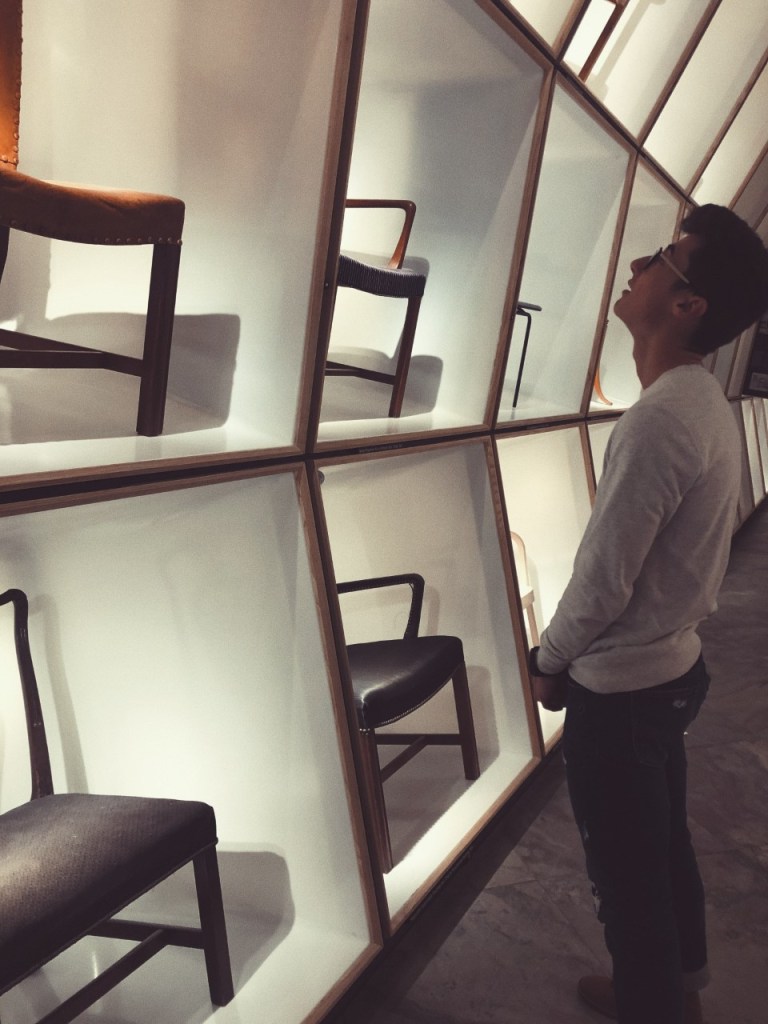
In my short time abroad, I’ve gotten a crash course in the Danes’ appreciation for and attention to detail. The Design Museum in Denmark stands as a prime example of this cultural value. The museum is home to exhibits upon exhibits of both avant-garde and every-day objects. These range from fantastical bicycles to a hall full of chairs used by most Danes. This hall of chairs (pictured above) is what truly caught my eye, and I spent at least half an hour pouring over the entire exhibit.
This exhibit exemplifies the Danish value for good design that is the result of iteration after iteration to reach the final product. However, the market for good design also is wide enough that most of the final products are valued. Any person could walk into the exhibit and choose the chair that fit them best because Danish design runs both deep and wide. What I mean by this is that Danes have a high expectation for quality of life and how hygge their homes are, but they also recognize that this looks different for each person. Coffee shops aren’t all decorated the same, living rooms don’t have the same furniture, and people spend their money differently.
In other words, the Design Museum reminded me that although the Danes share a common value of quality design, it looks different for each person and that’s totally fine. When I spoke with locals who were visiting the museum alongside me, one of the common themes was a feeling of representation while also seeing what other people liked. One older gentleman said it best: “I love seeing my childhood chair among others. I know that other people see themselves represented on the wall.” Pretty meta for a simple chair exhibit!
Visiting a well-known local landmark, monument, cultural site.
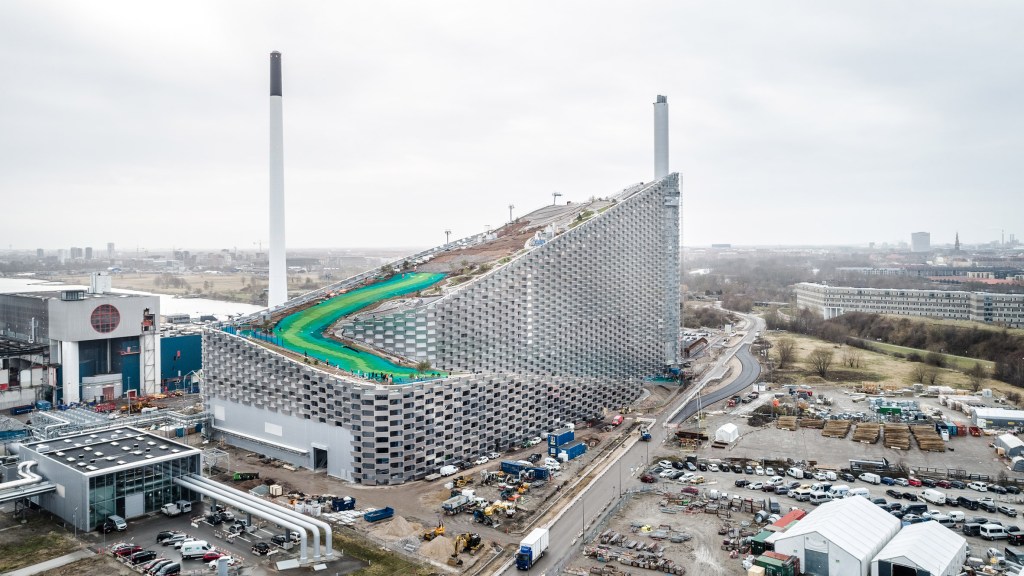
So I already know that I’m stirring the pot by calling the Copenhill a landmark, but hear me out! Some background: the Amager Bakke, or more commonly referred to as the Copenhill, is a sprawling power plant with a ski slope located on top of it. The architect behind the project, Bjarke Ingels and his studio BIG, is known for innovative new ideas. His projects are some of the most polarizing. Architects will argue endlessly. On the one hand, Bjarke is challenging what we perceive to be possible. Can we put a ski slope in one of the flattest countries on a power plant? Heck yes. On the other hand, his projects can be described as cheeky, disrespectful, and inattentive to detail. I’ll leave that up to you to decide.
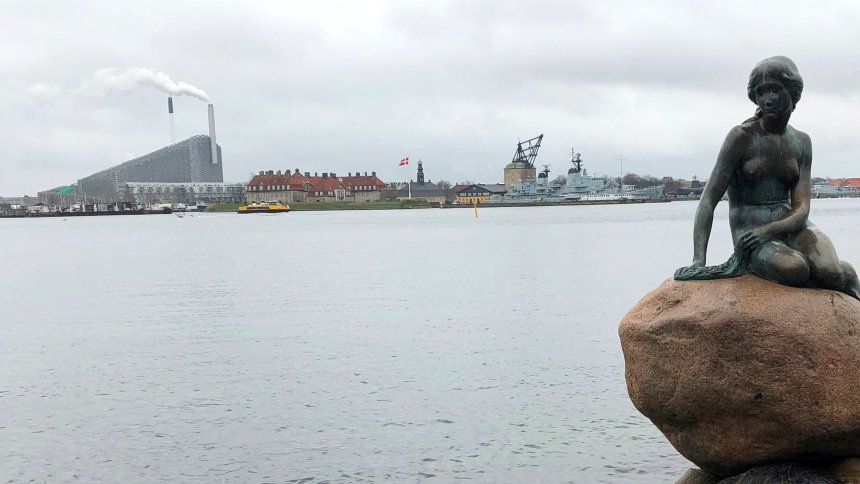
While the jury is out on whether it is a good building, it is undeniable that the project is present in the Copenhagen skyline. Bjarke stated himself that the project was intended to be monumental as it stands proudly in the horizon alongside the spires of the churches that date back to 1700s and earlier.
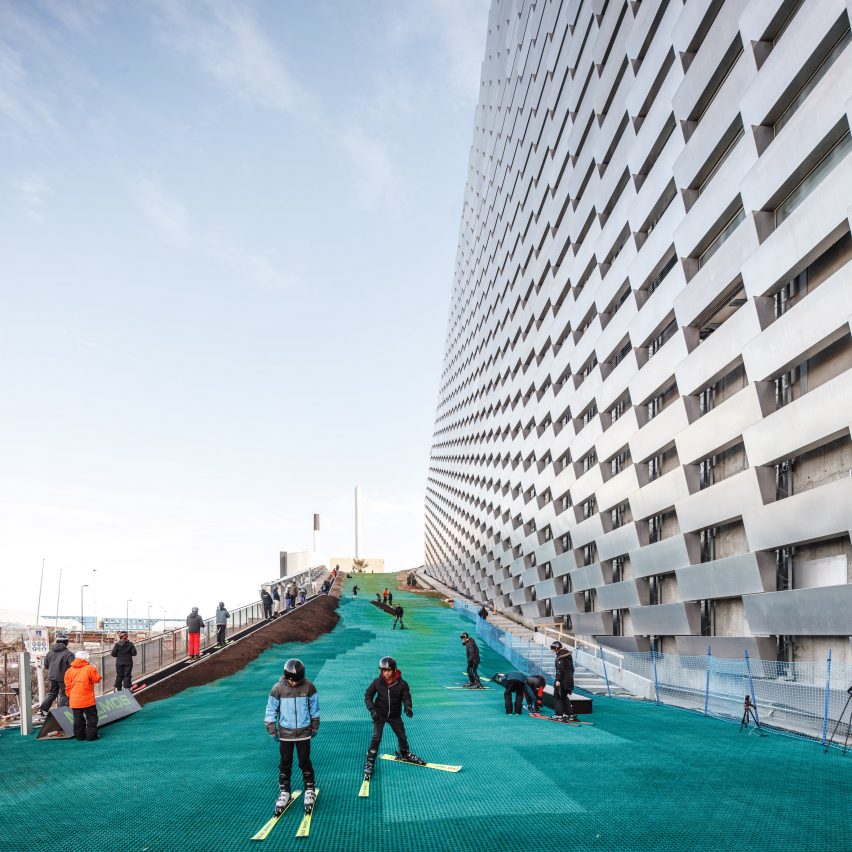
Before visiting the building myself, I was pretty underwhelmed and had low expectations. The project ran behind schedule and seemed like it was a way to create cheap thrills. Most locals that I asked about it had some choice words that they wanted to say to Bjarke. I didn’t know much about the project beyond the fact that it was a ski slope on a power plant, two seemingly unrelated types of program.
I have to admit that upon arriving, I was also pretty underwhelmed. The building is much further from public transportation hubs than I expected, and it was a decent trek to get there. As you can see in the photo above, the side of the building is this metallic system with concrete behind it that is supposed to house a green wall for plants, but is for now relatively cold and uninviting. As you travel up the hiking path that runs alongside the slope, there are still parts that are unfinished, and many plants are still being planted.
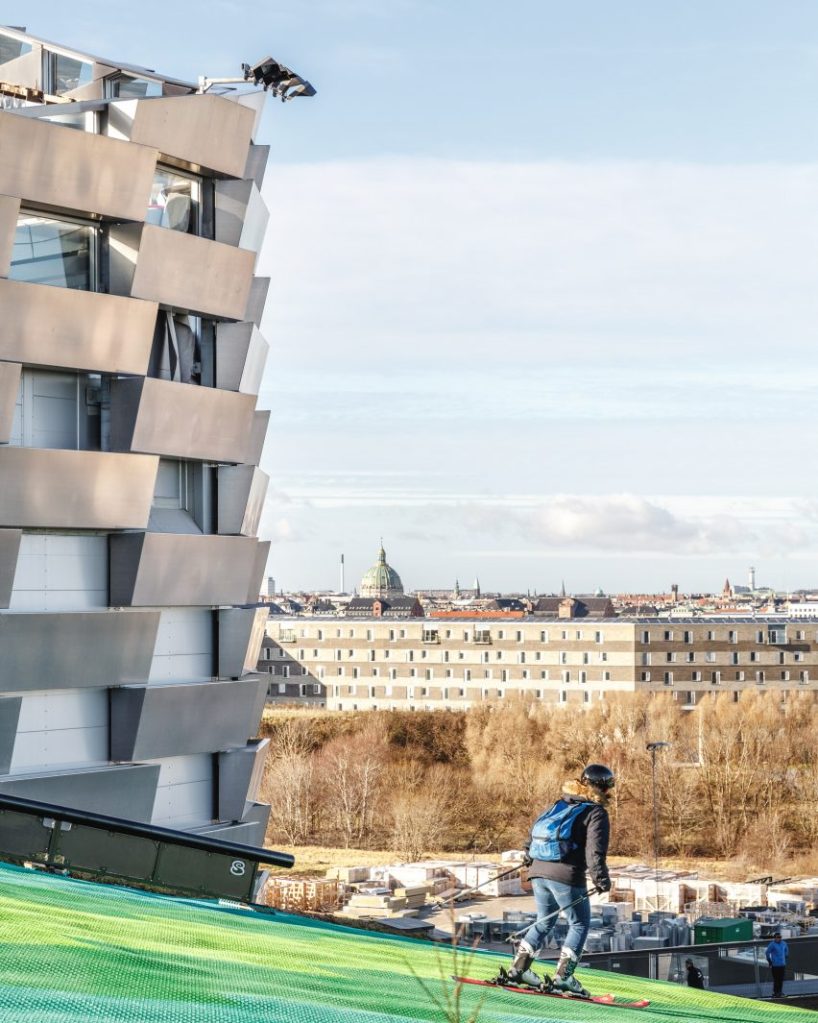
And then I arrived at the top and my breathe was taken away. It was an incredible view that is similar to when visitors climb church towers in the city and rise above the rest of buildings. Some local groups of people sat at the top, hair blowing in the cold winter wind, enjoying their lunches. I stopped to chat and found that they had already made a regular tradition of “hiking” to the top of the building and having lunch. I was taken aback by this group of users that I didn’t know existed. The building offered a fresh, new experience that these outdoorsy people desired, but couldn’t find in the flat city.
In retrospect, I definitely didn’t give the building a fair chance. And when I step away from the criticisms about the way it looks and its unfinished nature, I am reminded of the laughter of the kids that skied down the hill beside me, an experience that they wouldn’t be able to have unless they traveled to another country. I am also reminded of the people perched at the top, enjoying the brisk wind and good company. Not too shabby, Copenhill. Not too shabby.
Service Learning Reflection
I think the connection that I can draw between the chair exhibit in the Design Museum, the Copenhill, and my service learning with the CPH volunteers is a deep-rooted passion/value for something. Danish chair designers spend years perfecting their designs in order to make the extremely mundane activity of sitting celebrated and comfortable. Bjarke Ingels worked to prove to the world that a ski slope on a power plant is possible. CPH volunteers organizes almost 2000 people annually to make sure that film festivals, Christmas celebrations, and sustainability conferences go on without a hitch.
The people that I volunteer with are decorated citizens with their own diverse passions organized around a common desire to serve. It’s been a powerful reminder to continue to hone my own passions and figure out what my focus will be. I’ve loved that even halfway around the world, I am able to find people who stoke my own inspiration in a flame!

And stay tuned for the Denmark national game!


I love your humility to be corrected, when you realized you shortchanged Copenhill. There’s a life lesson there, that we as humans can be so quick to access people and things as valuable or not, but if we look closer, there’s more to be learned, gained beyond the surface judgement. Way to go! I’m glad that you’re taking this month to go for it and take advantage of engaging the people and culture of wherever you are. Love you!
LikeLike